Round-the-clock access, fast execution, and reliable market liquidity are the main reasons institutions keep comparing the best crypto futures trading platforms. A strong venue lets a trader hedge exposure, manage financial risk, or express a view on Bitcoin and Ethereum price moves without holding every underlying coin directly. The better platforms also stand apart through compliance standards, deeper books, and tooling that holds up under large order flow.
This piece looks at the leading crypto derivative venues built for professional use and active institutional desks.
For 2026, the strongest Bitcoin futures choices on this page are Binance Futures, MEXC, Bybit, Kraken Futures, and D2X. Binance Futures stands out as the best overall pick for Bitcoin futures because it combines leading market liquidity with broad contract support, while MEXC is the lowest-fee option listed here at 0.00% maker and 0.02% taker.
Crypto Derivatives Exchange Basics
A crypto derivatives exchange is a marketplace where participants trade contracts tied to a cryptocurrency rather than the spot contract itself. Instead of buying the asset outright, the trader deals in a derivative whose value tracks the underlying market.
That structure gives investors a way to trade volatility and short-term price action without moving coins into a wallet. Traditional venues such as CME Group and Eurex list crypto futures and options, though they do not run all week. That gap matters because weekend moves can create meaningful risk before those futures exchange sessions reopen. Crypto-native venues stay open 24 hours a day, 7 days a week. I find that flexibility useful, though it also means risk management needs to be tighter and monitoring more consistent.
A data platform such as Laevitas can also help by tracking flow, open interest, and shifts in positioning across major markets.
Different Crypto Derivative Products
Crypto derivatives derive value from an underlying asset, and the buyer takes exposure through a contract instead of direct ownership. The main products used on these venues include futures, perpetual futures, and options. Each one serves a slightly different trading strategy.
Futures
Crypto futures are contracts that set a future buy or sell price for a specific cryptocurrency on a fixed date. They allow speculation on market direction without requiring ownership of the underlying asset. In practice, they are used to express directional views or to hedge an existing portfolio against a sharp move.
Leverage is a major feature here, letting a trader control a larger position with less posted capital. That can improve capital efficiency, though it also raises risk quickly if the market moves the wrong way. Institutions also use futures to offset spot or OTC exposure. Regulated venues such as CME Group and Eurex offer liquid BTC and ETH contracts, but their weekday schedules still leave weekend gap exposure.
Perpetual Swaps
This crypto derivative works much like a futures contract, except there is no expiry. The position can stay open indefinitely, which is why perpetual futures have become such a popular instrument across the digital asset market.
To keep the contract price close to spot, exchanges use a funding mechanism that transfers value between longs and shorts. It works in a similar way to a swap or CFD-style pricing adjustment. The product is efficient and very liquid, though high leverage and constant market access can turn normal volatility into outsized losses for less experienced users.
Options
Crypto options give the holder the right to buy or sell a cryptocurrency at a set strike price before expiry or at expiry, depending on the contract terms. The buyer pays a premium and can choose not to exercise if the trade setup no longer makes sense.
That limited downside is a big reason options remain useful for risk management. A call gives upside exposure, while a put can act as portfolio protection during sharp drawdowns. Compared with futures, options offer a different way to structure speculation because the loss profile is clearer at entry.
They also support more advanced positioning. I usually see professionals use them for income overlays or volatility trades rather than simple directional bets. In a fast market, that flexibility can matter a lot.
Why Trade Crypto Derivatives
Derivatives can broaden an investment approach and give a trader more control over risk. They are used for hedging, for short exposure, and for tactical speculation around fast price moves. Picking the right venue depends on execution quality, margin design, and how well the platform matches your own risk tolerance.
For Bitcoin futures, the practical first check is simple. Start with liquidity and fee structure, then confirm whether the venue fits your jurisdiction or workflow. On this page, Binance Futures leads on liquidity, while MEXC is the cheapest on listed maker and taker fees.
| Platform | Leverage BTC | Maker Fee | Taker Fee | U.S. Access | Key Features | 24h Volume |
|---|---|---|---|---|---|---|
| MEXC | Up to 500x | 0.00% | 0.02% | Limited | Broad BTC contract range and fast interface | Not stated on page |
| Binance Futures | Not stated on page | Competitive | Competitive | Limited | High open interest and deep market liquidity | Usually among the biggest |
| Bybit | Up to 100x | Not stated on page | Not stated on page | Limited | Strong charting and testnet access | Not stated on page |
| Kraken Futures | Up to 50x | Not stated on page | Not stated on page | Available with limits for some users | Security focus and regulated footprint | Not stated on page |
| D2X | Not stated on page | Not stated on page | Not stated on page | No | MiFID II venue with EUR BTC futures | Not stated on page |
Best Crypto Derivatives Exchanges
MEXC
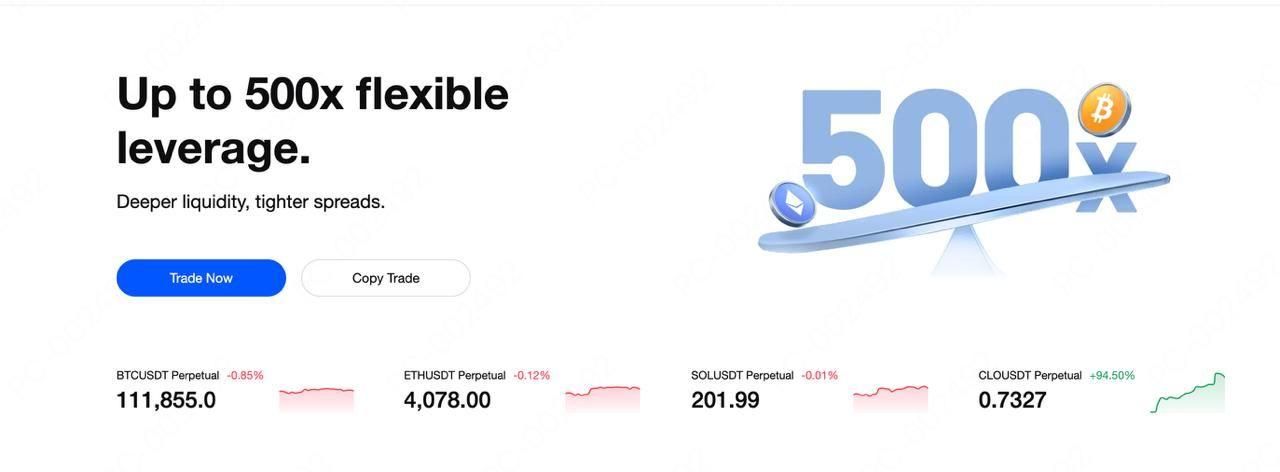
MEXC Futures is heavily focused on perpetual futures with no expiry and supports a very broad contract lineup. The venue offers USDT-M, COIN-M and USDC-M products across more than 600 pairs, covering major markets such as Bitcoin and Ethereum as well as smaller names.
The exchange advertises leverage up to 500x on BTC contracts and very low fees, with 0.00% maker and 0.02% taker pricing. Its matching engine is rated for 1.4 million trades per second, which speaks to execution capacity and market liquidity. In testing, the interface feels quick and TradingView integration makes chart work straightforward on desktop or mobile app.
Why Choose MEXC?
- 600+ futures pairs - broad market coverage
- Low fees - 0.00% maker and 0.02% taker
MEXC Futures is a strong option for active users who want high leverage and tight costs. For Bitcoin futures, it is the lowest-fee platform named on this page.
D2X
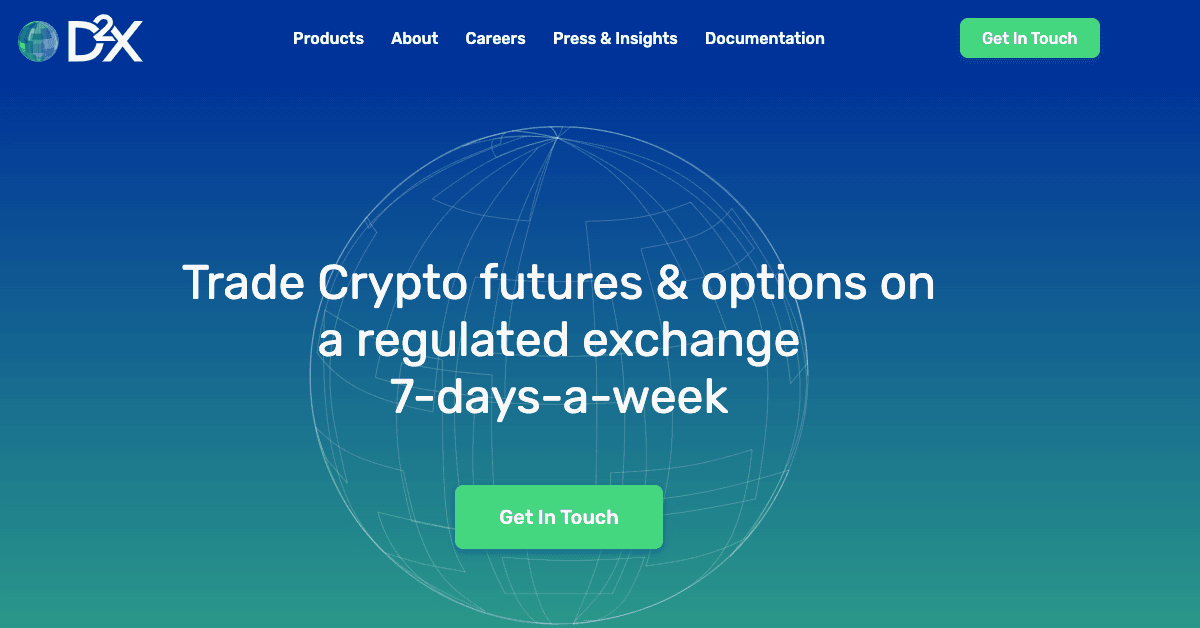
D2X became the first MiFID II-regulated venue for crypto futures and options when it went live in December 2024. Based in Amsterdam, it is aimed squarely at the European institutional market and started with EUR-denominated contracts. The setup is designed to bridge traditional market structure with crypto-native access, including off-exchange collateral handling and stronger counterparty protections.
The platform runs under an MTF license from the Dutch Authority for the Financial Markets and trades 7 days a week. Initial products include BTC-EUR and ETH-EUR, with USD contracts expected to follow. If the question is which platform is best for crypto futures trading for a regulated European workflow, D2X is one of the more interesting answers because compliance is central to the venue rather than an afterthought.
https://d2x.com/
Coincall
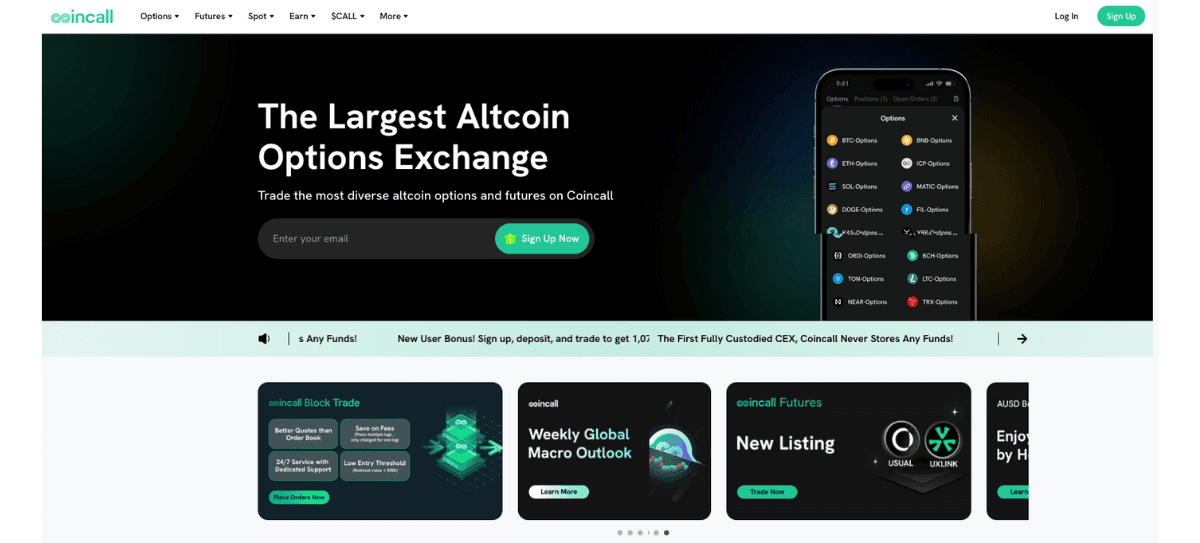
Launched in 2022, Coincall offers spot, options, and perpetual futures alongside tools such as TP and SL orders. The platform serves newer users as well as institutional desks, with a particular emphasis on options.
Those order controls help manage volatility with tighter execution rules during unstable sessions. Coincall also uses third-party custodians for client fund protection. For desks focused on option flow and structured risk management, the workflow feels more tailored than many generalist exchanges.
https://www.coincall.com/
HTX
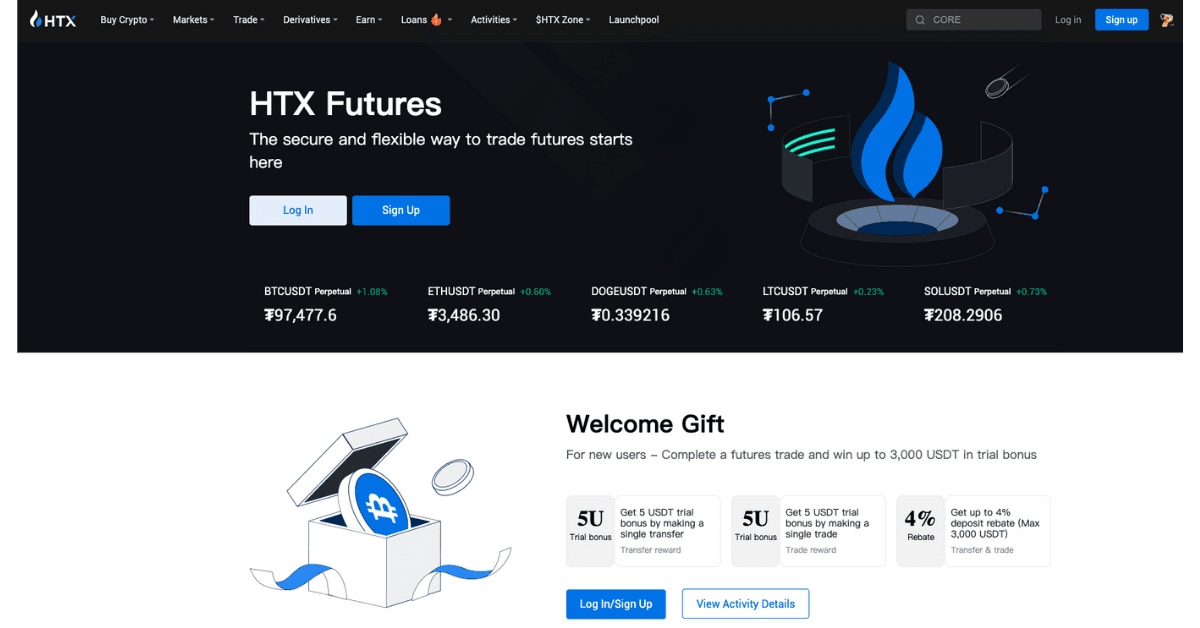
HTX, previously Huobi, supports a broad derivatives menu for retail and institutional users. Products include perpetual swaps and dated futures, with leverage up to 200x. The venue also lists European and American-style options, which gives more flexibility for desks building structured positions.
The platform includes chart customization, technical indicators, and API access for automated trade execution. On the risk side, it supports isolated margin and cross-margin, while account security relies on 2FA and encryption controls. HTX also includes an Earn area, though the derivatives desk is the main attraction for most professionals.
Strong liquidity and high turnover help reduce slippage, and the exchange supports a large set of cryptocurrencies for broader portfolio diversification. Copy trading and crypto-backed borrowing extend the use cases, though experienced users will probably focus more on futures and options flow.
https://www.htx.com/futures
Thalex
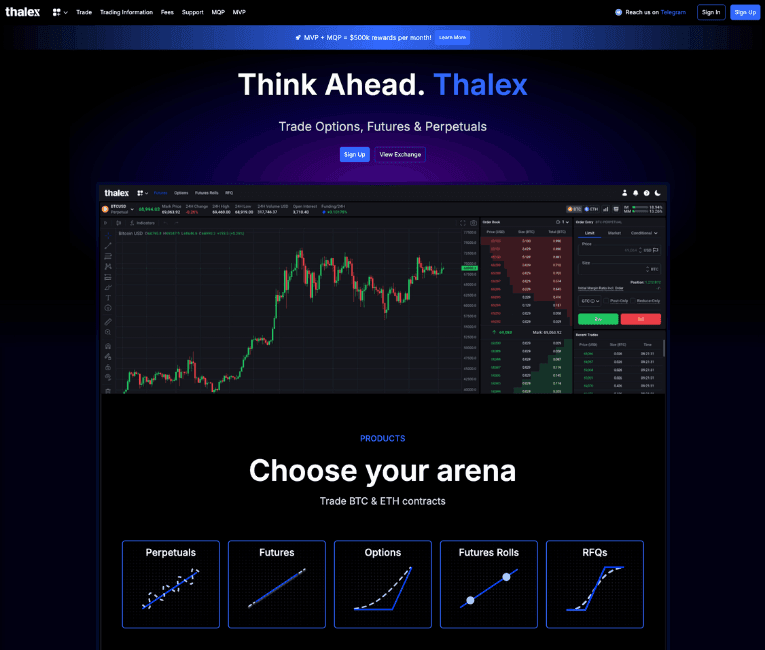
Thalex launched in 2023 and quickly built a name with institutional users. It specializes in stablecoin-settled options, futures, and perpetual contracts, which can reduce settlement friction and simplify pricing for some desks. The exchange has also integrated with Bitfinex and Bitstamp, helping expand access.
Fees are low at 1 bps for maker and taker, and the venue uses portfolio-based margining to improve capital efficiency. Volume since launch has passed $2 billion, with most of that activity coming from institutional clients. From a usability angle, the platform feels purpose-built rather than overloaded.
Thalex also supports multi-leg execution through RFQ workflows and dedicated books for future rolls. Its liquidation setup uses automated delta hedging and auction logic to reduce market disruption. Liquidity support from firms such as Flow Traders and Wintermute adds depth, which matters for larger contract sizes.
https://www.thalex.com/
OKX Nitros
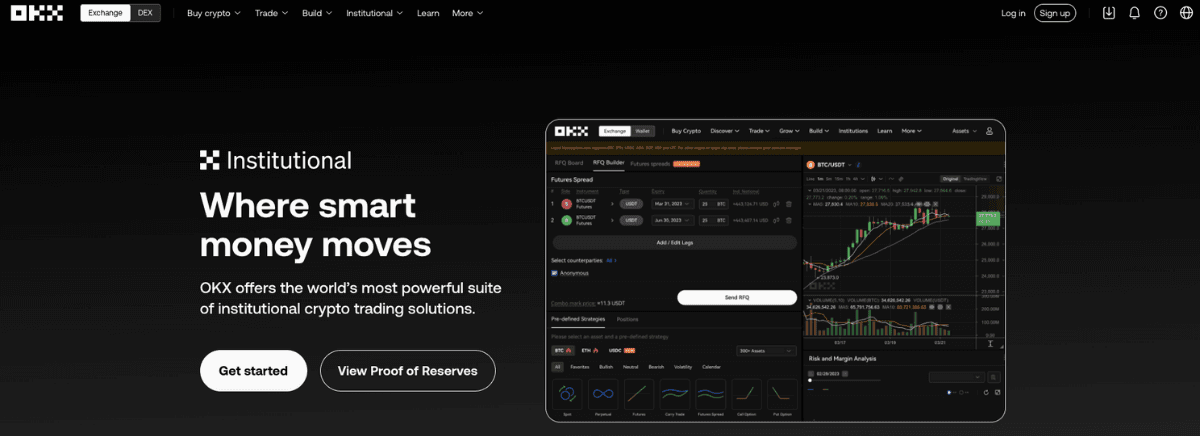
OKX combines a clean interface with broad trading access across spot and derivatives. The exchange lists more than 300 spot markets and over 500 pairs, which gives institutions room to manage cash and derivative exposure on the same venue.
Its Web3 wallet and multi-chain support stand out for desks moving collateral across networks. Strong API coverage also makes OKX appealing for algorithmic trading and scalable portfolio management. Among the biggest venues, OKX is usually one of the first names I check for liquidity and tooling.
https://www.okx.com/institutions
Paradigm
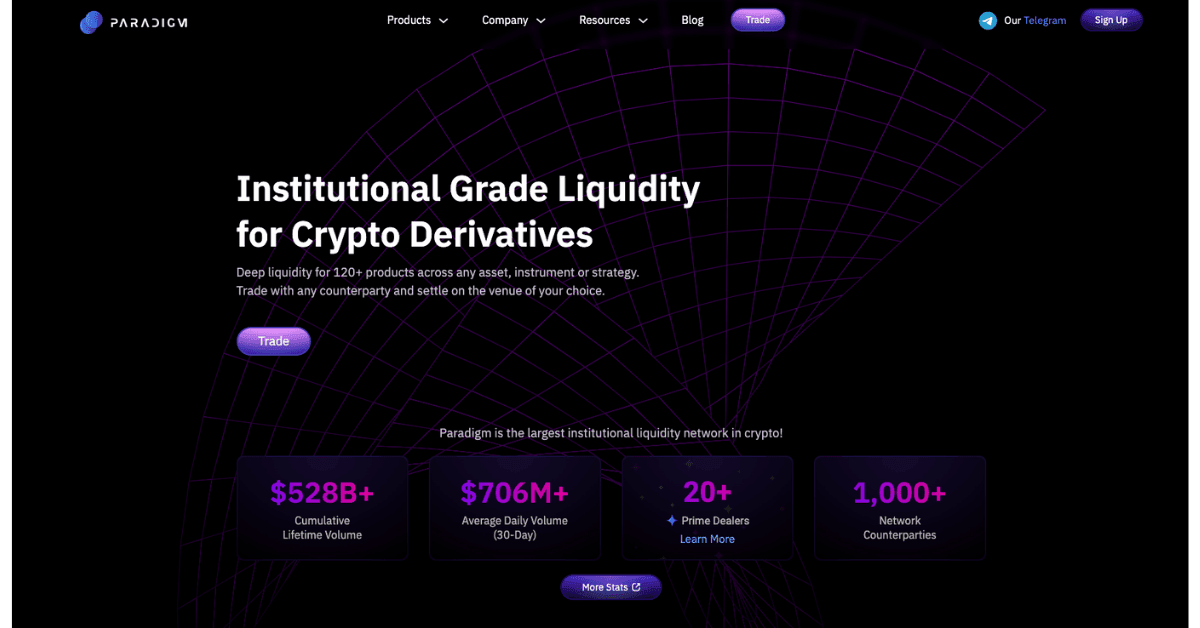
Paradigm is built around large block execution and multi-leg crypto derivative strategies. Its tools support delta-neutral execution, which can help institutions hedge market swings while keeping slippage under control. The platform connects users to liquidity across more than 120 products.
The non-custodial model is another major draw. Funds remain with settlement partners such as centralized exchanges or on-chain protocols, which gives institutions more control over asset custody. Zero-fee trading adds to the appeal for desks that turn over size frequently.
https://www.paradigm.co/
BitMEX
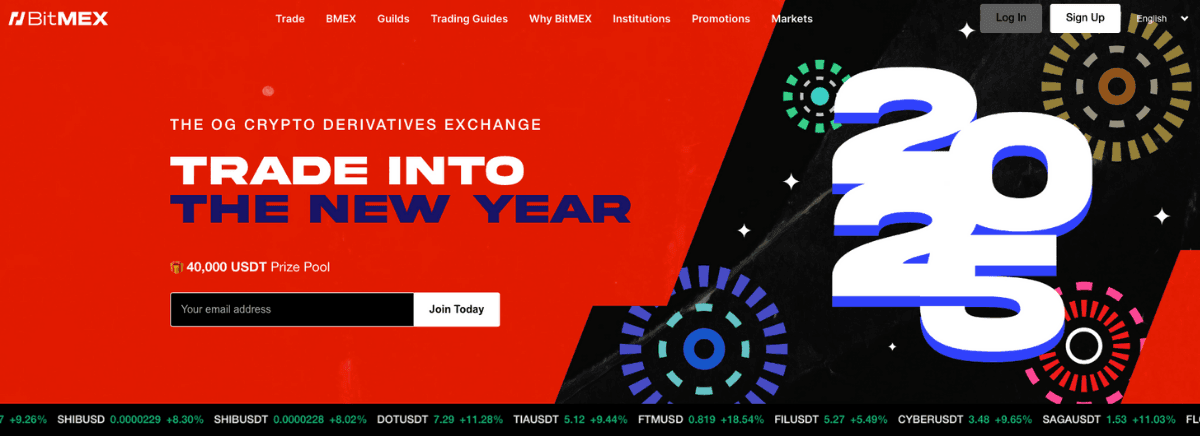
BitMEX still has a recognizable place in crypto derivatives. It offers up to 100x leverage on BTC and ETH contracts, along with futures and perpetual swaps. Execution remains fast, and fees are competitive enough for active volume.
There is also a solid educational section, which makes the venue easier to approach than its reputation suggests. Corporate clients get dedicated support and institutional consulting. The mobile app is lighter than the web version, though it is still practical for checking positions away from the desk.
Its early image was shaped by extreme leverage and weak KYC controls. That has changed. The exchange now emphasizes compliance and identity verification, which is important for professional participants and firms in jurisdictions such as the United States.
https://www.bitmex.com/
Phemex
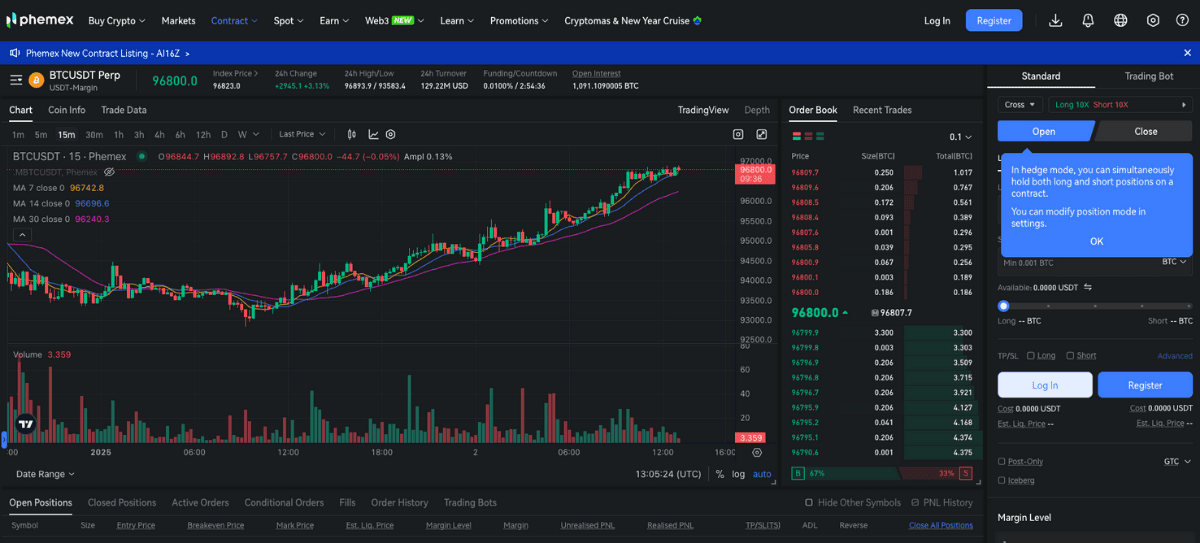
Phemex started with a stronger reputation in perpetual trading, though it has grown into a broader exchange since then. Users can trade a large number of cryptocurrencies, and the venue is built to handle meaningful volume.
It also includes copy trading and promotional contests. Compared with some rivals, the derivatives range is still narrower, so it may fit better as a practical futures venue than a full-spectrum options or structured products platform.
https://phemex.com/
Deribit
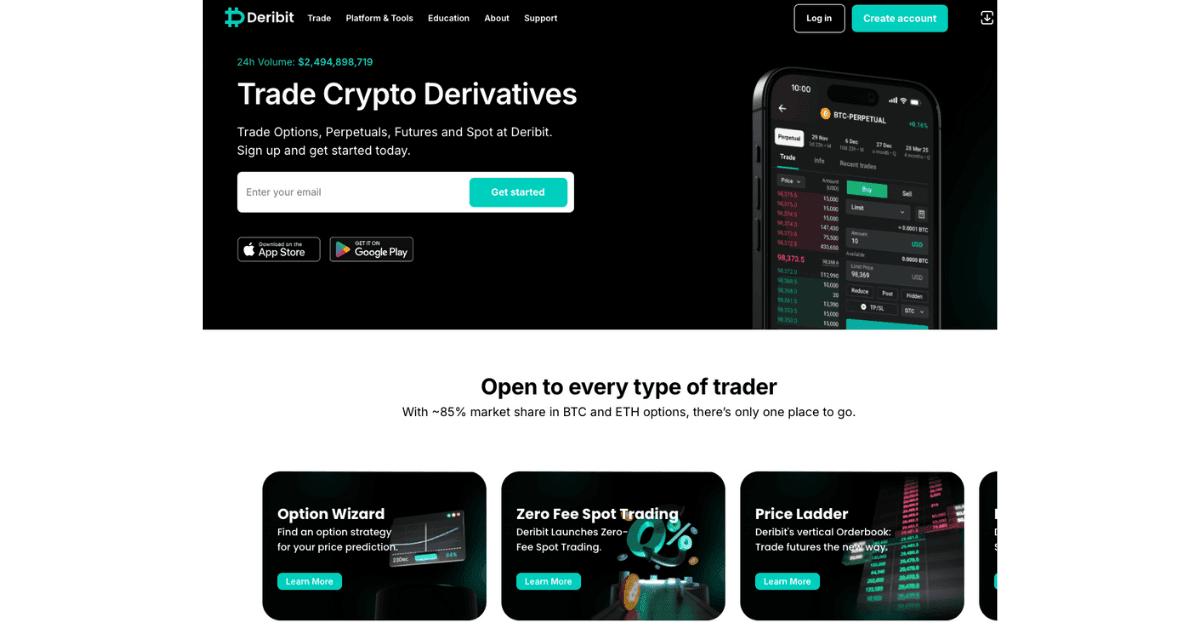
Deribit remains one of the most established names for crypto options, and that focus gives it a distinct place in the market. It also offers BTC and ETH futures, which broadens its appeal beyond pure options flow.
The trade-off is that the venue is more crypto-native in its funding design. Spot functionality is limited, and fiat deposits or withdrawals are not available. If your desk mainly works in crypto collateral and wants deep option markets, Deribit is still highly relevant. If you need easier currency rails, it may feel restrictive.
https://www.deribit.com/
PrimeXBT
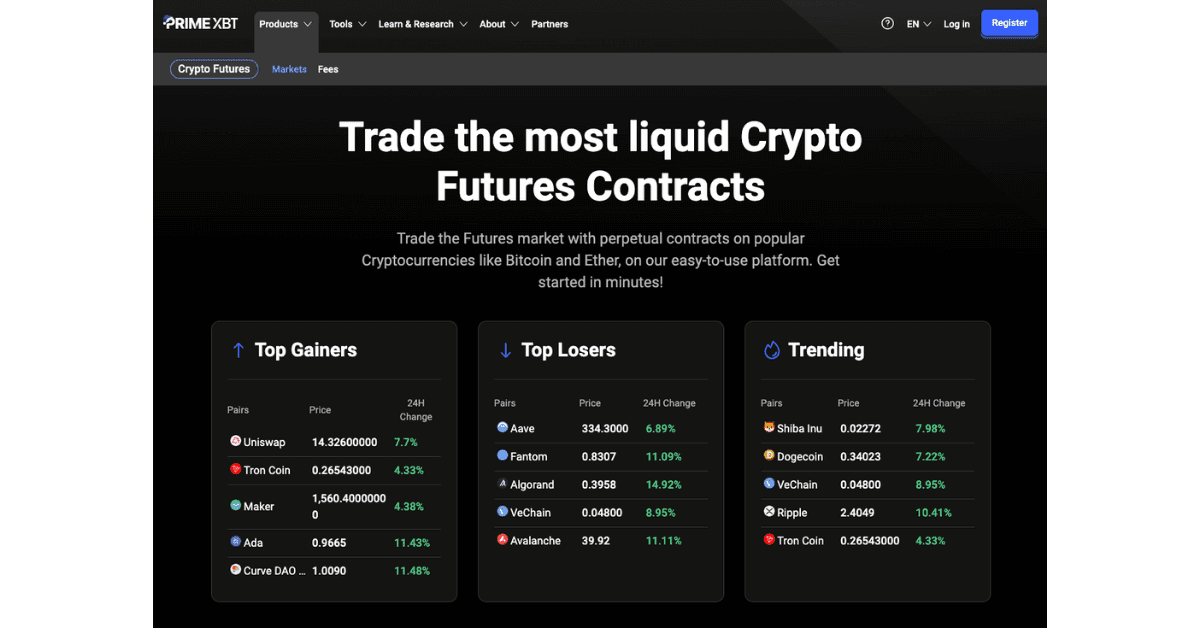
PrimeXBT gives users access to crypto along with forex, commodities, and stock index markets. That multi-asset setup appeals to investors who want broader macro exposure from one account. On crypto, leverage can reach 100x, and the interface is customizable enough for active use.
Its core products are margin trading and crypto CFDs. That means users can borrow against capital or trade directional price moves through a contract without taking ownership of the underlying asset. For cross-market speculation, the platform has a different profile from a pure futures exchange.
https://primexbt.com/crypto-futures/markets
Binance Futures
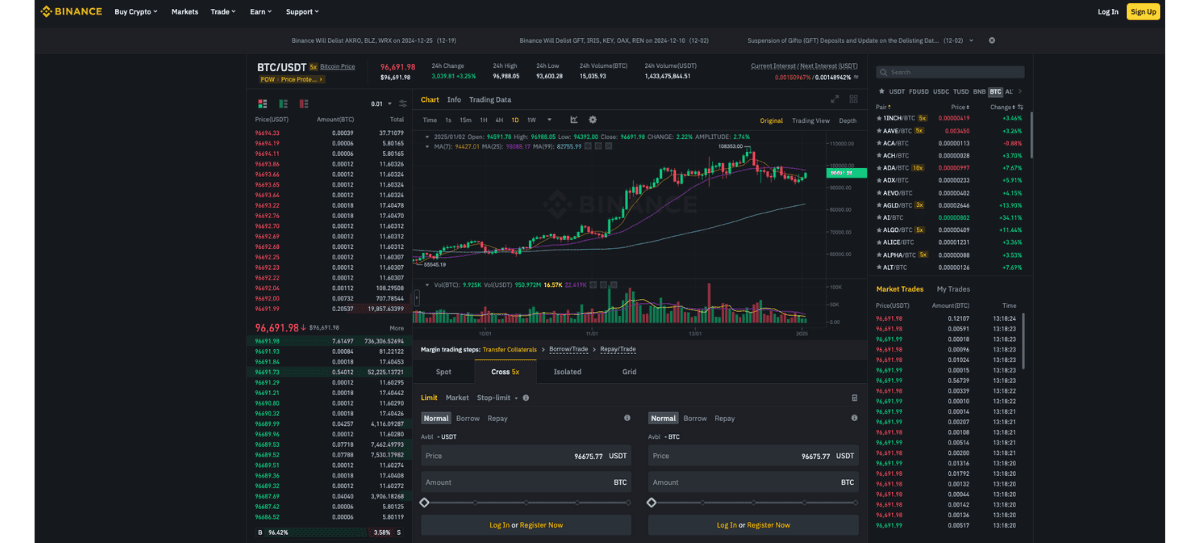
Binance uses funding payments on perpetual contracts to keep futures prices close to spot. On Binance Futures, the interest component is fixed at 0.03% per day, and the premium element shifts with market conditions.
For sheer size, Binance is usually viewed as the biggest crypto derivatives exchange. It tends to lead on open interest and 24-hour volume, which is why many desks treat it as the best platform for liquidity. Standard futures fees are generally competitive, and the venue supports both USD-M and COIN-M contracts. It also offers options plus cross-collateral tools that can reduce liquidation pressure during volatile sessions.
For Bitcoin futures on this page, Binance Futures is the best overall choice. The main reason is liquidity. It is also the clearest answer if the priority is tight execution on larger BTC size.
https://www.binance.com/
Bybit
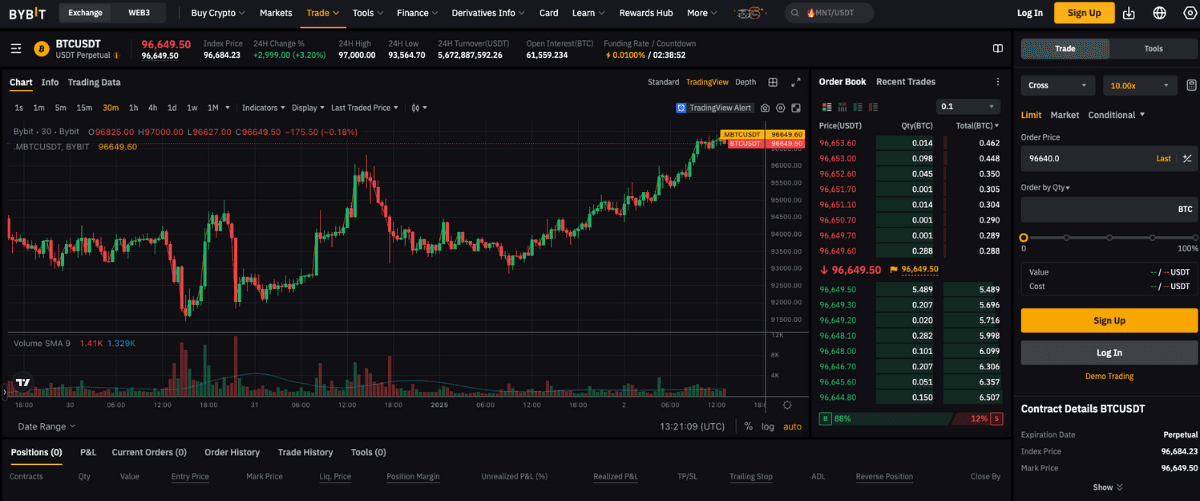
Bybit supports leverage up to 100x and has built a strong reputation around platform performance. The exchange says its infrastructure can process up to 100,000 transactions per second, which lines up with its push toward institutional-scale flow.
Its charting package is one of the better ones in the sector, and downloadable trade data is useful for strategy review. Bybit also offers a testnet, which makes it easier to rehearse execution logic before live deployment. That sandbox is handy if you are assessing how to choose the best crypto futures trading platform and want to test UI behavior before committing capital.
https://www.bybit.com/
Bitget
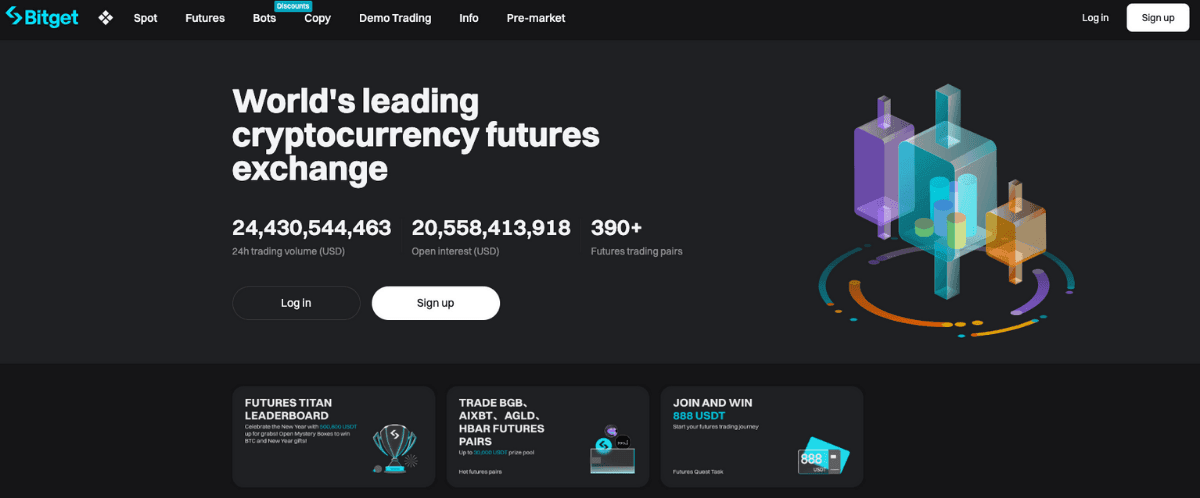
Founded in 2018, Bitget ranks among the largest exchanges by derivatives volume. It offers futures with leverage up to 125x across a wide set of cryptocurrency markets.
Its most recognized product is copy trading, which lets users mirror selected accounts automatically. That feature has driven broad adoption, though the rest of the platform is also fairly mature.
Technical tools include Quanto Swap products for cross-asset margin use and a demo environment for testing. Automated grid systems are available as well for spot and futures workflows.
Security relies on cold storage and an insurance fund. Futures fees begin at 0.02% maker and 0.06% taker.
The interface offers plenty of depth, though newer users may need more time to get comfortable with the layout.
https://www.bitget.com/futures
Kraken Futures
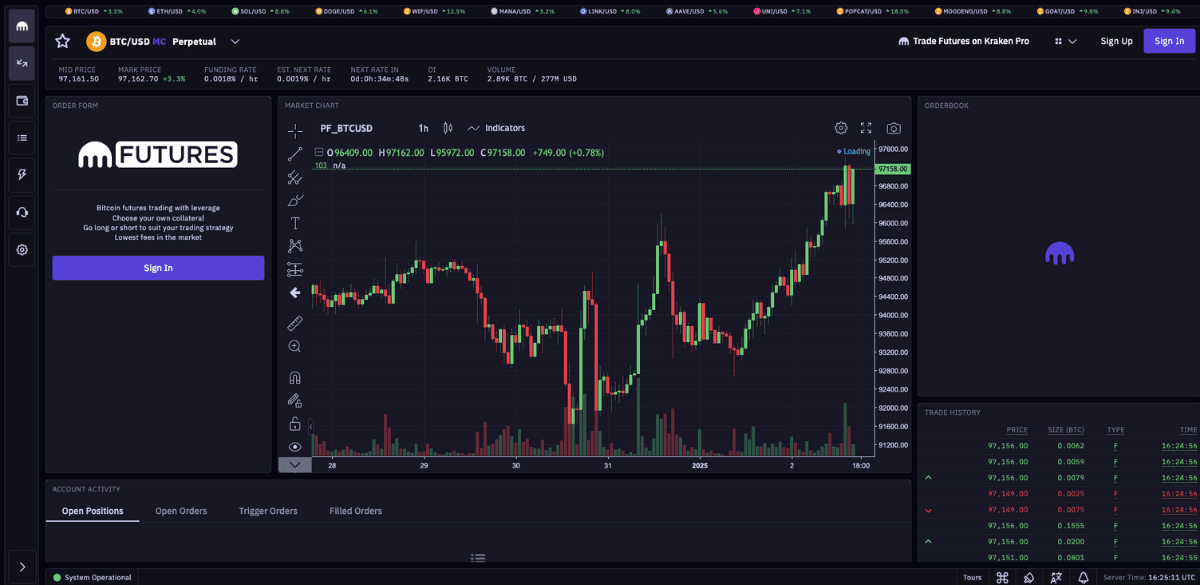
Kraken is widely known for solid security, clean design, and dependable support. Leverage tops out at 50x, which is lower than some competitors, though the exchange balances that with a broad selection of cryptocurrencies and a well-regarded pro interface.
Kraken Pro includes advanced order handling and competitive pricing for higher-volume users. Its liquidity services are useful for institutions working larger tickets, and the company has a strong regulatory footprint across the United States and other jurisdictions. For firms that prioritize compliance and operational stability, Kraken deserves serious consideration.
There are still a few funding limitations for some US customers because bank connectivity is not universal. In cases where Trustly is unsupported, a wire transfer may be needed. Even with that friction, Kraken remains one of the steadier choices for futures trading.
https://futures.kraken.com/trade/futures/PF_XBTUSD
Laevitas A Resource for Crypto Derivatives Insights
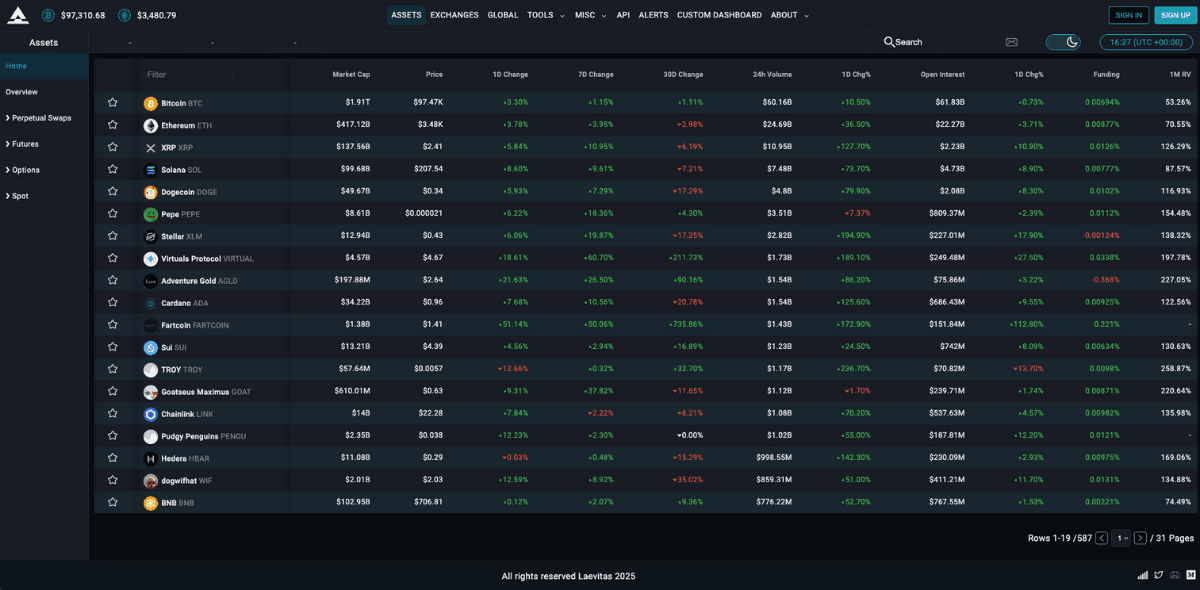
Laevitas is not an exchange. It is an information portal included here because it helps track derivatives volume, open interest, and liquidity across major venues. For institutions building a trading strategy, that kind of cross-market visibility is genuinely useful.
The platform shows open interest and volume across at least 10 exchanges offering futures. It also covers large assets such as BTC and ETH as well as smaller DeFi-related markets, which helps when comparing where activity is building.
Bitcoin is usually the best crypto for futures trading because liquidity is deeper and spreads are tighter than most alternatives. Ethereum is the closest second. That stronger BTC market depth is a practical reason institutions keep using Bitcoin futures first.
Potential users should note that public review coverage is limited, and subscriptions are non-refundable. Even so, for desks that care about flow data and market structure, Laevitas can add useful context beside the exchange screen.
https://app.laevitas.ch/assets/home