A 10% swing in a single session is normal for a digital asset, which is why risk management in crypto trading has to be built in before any order goes live. The goal is simple - protect capital, define exits early, and keep one bad trade from damaging the whole portfolio.
That mindset matters even more in crypto than in stock or commodity markets because trading runs all day and market sentiment can flip fast. On BingX, experienced users lean on tools such as Stop-Loss, Take-Profit, and Copy Trading to cap exposure while staying active during sharp price moves.
This piece breaks down seven practical rules that help traders control risk, handle volatility, and make cleaner decisions under pressure.
Understanding Risk Management in Crypto Trading
Risk management in crypto trading means deciding in advance how much money to put at risk and where to exit if the market moves against you. Losses still happen. The difference is that controlled losses are easier to recover from and far less likely to derail an account.
That principle applies on both spot and futures markets. In high-volatility conditions, leverage can magnify returns, but it can also accelerate drawdown or liquidation. A disciplined trader sets the maximum acceptable loss before entry and uses tools such as Stop-Loss orders or margin controls so emotions do not take over mid-trade.
If you are trading Bitcoin for a swing move or taking quick entries on an altcoin, solid risk management keeps a single position from overwhelming the rest of your investment capital. It turns trading into a process instead of a reaction.
Rule 1 Protect Capital First
The first rule is straightforward - never risk more than you can realistically absorb. A lot of active traders cap risk on each trade at about 1% or 2% of account value. That size may feel small, but it helps preserve staying power during a rough streak.
Take a $1,000 account. If the loss limit is $20 per trade, the account has room to withstand several bad entries without forcing desperate decisions. Position size starts with that loss cap. If the entry and stop are $10 apart, you can only trade 2 units because 2 times $10 equals the $20 risk limit. I have found this is where many newer traders underestimate the math. A manageable drawdown is much easier to repair than a large hit.
On BingX, the Margin Calculator is useful before opening a position because it shows how leverage changes potential profit and loss. That makes risk assessment more concrete and helps match trade size to the amount of capital you are prepared to expose.
The aim is longevity. Smaller, measured risk keeps you in the market while overexposed traders get pushed out. It also helps to skim profits out on a schedule or move part of gains into a separate balance. That reduces the chance of giving back everything during a rough week.
Rule 2 Use Stop-Loss and Take-Profit Orders
Good trading habits rely on structure more than hope. Stop-Loss and Take-Profit orders are core tools because they automate exits and reduce the urge to improvise during a fast move.
A Stop-Loss closes the trade once price reaches a defined level, which limits downside if the market turns. A Take-Profit locks in gains at your target before momentum fades or reverses. On BingX Futures and within Spot Grid setups, both can be placed at entry, which is the cleanest way to do it. They matter most when the market is moving too fast for manual execution or when you cannot watch the screen.
Say you open a BTC/USDT long at $100,000. You might set a Stop-Loss at $97,000 and a Take-Profit at $105,000. Before the trade starts, you already know the price zone where you are wrong and the zone where you will bank the move.
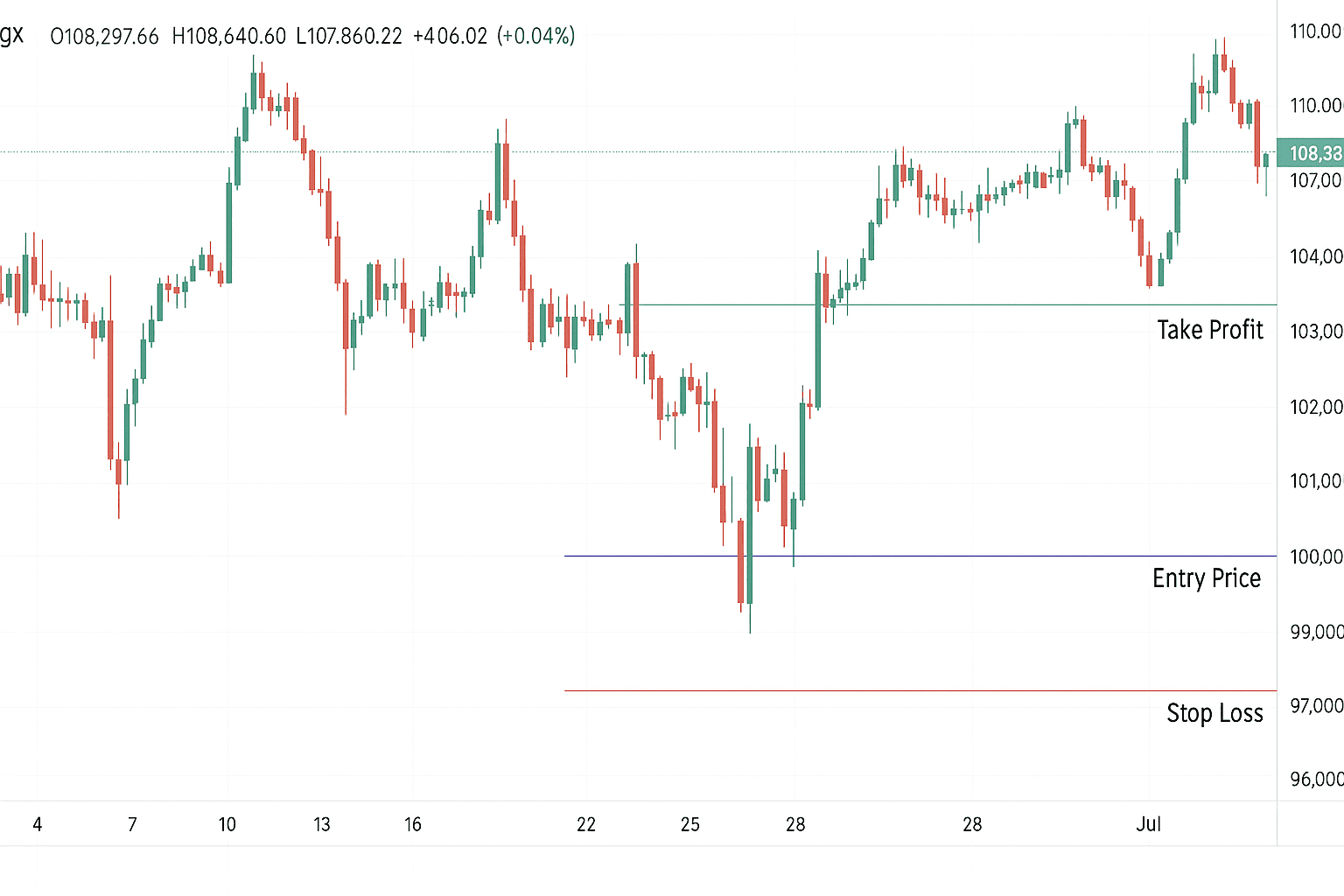
One rule matters here more than anything else - do not push the stop farther away because you want the market to come back. In real trading, that habit damages accounts fast.
Some platforms also offer guaranteed stops. A guaranteed stop is an exit that is filled at the exact stop price even if the market gaps or slips through it. That extra protection is most useful around major news or very thin conditions, when a regular Stop-Loss may fill worse than expected. The trade-off is usually a higher fee or tighter platform rules, so they make the most sense when slippage risk is the bigger threat.
Rule 3 Use a Sensible Risk-Reward Ratio
A trade should offer enough upside to justify the downside. That is the point of the risk-to-reward ratio, and many experienced traders look for at least 1:2. In simple terms, risking $1 to potentially make $2 creates positive expectancy even if your win rate is far from perfect.
If your setup risks $50 to target $100, a few losing trades do not automatically break the strategy. Larger winners can offset smaller losses over time. That shift from guessing to planning is a major part of effective management.
On BingX, charting tools help map Stop-Loss and Take-Profit zones before an order is confirmed. Seeing the distance visually makes it easier to judge whether the setup is worth taking, especially in a market where volatility can distort judgment.
Rule 4 Diversify and Keep Leverage in Check
Diversification reduces dependence on a single coin or setup. Instead of placing all capital into one Cryptocurrency, many traders spread exposure across different assets or use more than one approach. A portfolio might hold spot positions for slower moves and use futures for shorter-term trades.
Leverage needs the same level of restraint. High leverage can make small price changes feel dramatic, which also means a minor adverse move can trigger liquidation. That is especially dangerous in thin markets where market liquidity is weaker and slippage grows.
BingX gives users plenty of flexibility with leverage, but moderation usually works better than aggression. Leverage is a tool for management, not a shortcut to easy money. Paired with sensible diversification, it helps an investor stay active without letting one move decide everything.
Rule 5 Plan Every Trade Before Entry
Consistency usually starts before you click buy or sell. Each trade should have a defined entry, a stop level, a profit target, and a position size. You also need a clear reason for the trade so you can judge later if the setup was valid or rushed.
- Set the entry and the invalidation level first.
- Define the cash loss limit and check that position size fits it.
- Confirm the risk-reward ratio before placing the order.
- Check current market conditions and decide what cancels the setup.
- Write down the plan so the trade is judged against rules, not mood.
For example, if you want to buy ETH/USDT at $3,000, place a Stop-Loss at $2,940, and aim for $3,150, the trade already has structure. If Ethereum fails to hold the setup, the exit is predetermined and there is less room for emotional drift.
Keeping a journal helps more than many traders expect. A simple spreadsheet or notes log can reveal patterns in execution, timing, and risk control. Over enough trades, that record becomes one of the best tools for refining strategy and improving risk assessment.
Rule 6 Control Emotion and Avoid Revenge Trading
Emotional trading is one of the fastest ways to turn a small loss into a large one. After taking a hit, some traders increase position size or jump straight back into the market to recover money. That reaction is known as revenge trading, and it usually makes judgment worse.
Picture a 3% loss on a BTC/USDT short. If frustration pushes you into a bigger follow-up trade, the next mistake can expand that drawdown quickly. The issue is not analysis at that point. It is psychology.
A better response is to step away, reset, and stick to a daily loss cap. Some traders also reduce size when they cannot actively monitor the market, which is useful in crypto because price can move hard while you are offline. Automated alerts or time-based exits can help here, and some traders use bots only to execute pre-set rules. On BingX, Copy Trading can also help beginners observe how disciplined traders manage exposure without panic.
Psychology is part of risk management. FOMO and confirmation bias can push entries late or keep traders in weak positions too long. Simple guardrails help - a fixed daily loss limit, plus a rule that no new trade is opened right after a stop-out.
Rule 7 Keep Learning and Adjusting
Markets change. A setup that worked in one volatility regime may underperform later, especially when liquidity risk rises or sentiment shifts across the Blockchain sector. Strong traders review their own history, test ideas again, and update methods instead of trading on autopilot.
BingX Academy is useful for that ongoing process because it offers tutorials and market explainers that help users sharpen technique. Demo trading also gives beginners a practical way to test entries and exits under live price conditions without putting capital on the line.
Small improvements in timing or order placement can make a meaningful difference over time. The important part is steady adjustment backed by data.
Common Mistakes That Damage Risk Control
Even skilled traders can weaken a solid system through repeat errors. One common problem is over-leveraging, where a position becomes too sensitive to a routine move in price. Another is ignoring Stop-Loss rules, either by skipping them or by moving them after entry.
Some traders also take impulsive trades with no clear plan, especially after hype builds around a low market capitalization coin. Others fail to track performance, which hides weak spots in win rate or risk-reward consistency. Without review, it is hard to improve.
Crypto risk management also needs a broader view of market threats. Volatility is obvious, but liquidity risk matters too, especially in smaller assets where execution can slip. Security issues, regulation changes, and platform-side operational problems also deserve attention during risk assessment.
| Risk Type | Description | Example |
|---|---|---|
| Market risk | Fast price swings can hit stops or change the trade quickly. | Bitcoin drops sharply after a news event. |
| Liquidity risk | Thin order books can cause poor fills or slippage. | A small coin moves through your stop in a rush. |
| Security risk | Wallet, account, or protocol failures can damage capital. | A compromised account leads to unauthorized orders. |
| Regulatory risk | Rule changes can affect access or trading conditions. | An exchange restricts products in a region. |
| Operational risk | Platform outages or user errors disrupt execution. | You cannot close a trade during a system issue. |
| Psychological risk | Emotion can override the original plan. | Revenge trading after a loss increases drawdown. |
| Counterparty risk | The platform or issuer may fail to meet obligations. | Funds are stuck during an exchange withdrawal freeze. |
| Technology risk | Code bugs or smart contract flaws can create losses. | A protocol exploit drains collateral from a vault. |
One way to assess that exposure is with a simple framework. Start by rating the chance of a problem and the damage it could cause. Then decide which risks need a control before entry, such as smaller size or no trade at all. Scenario analysis helps too. If price gaps, if liquidity dries up, or if the platform fails, you should already know your response.
Research helps reduce that exposure. Before buying a coin, check whether the project has a credible use case, reasonable token design, and a team that can be verified.
- Read the project documents and confirm the use case makes sense.
- Check token supply and unlock terms for dilution risk.
- Verify whether the team or company can be independently identified.
- Look for recent security audits or known exploit history.
- Check if the roadmap still matches current development activity.
- Review exchange listings and community activity with caution.
That process will not remove risk, though it can lower the odds of buying into pure hype.
Some traders also use portfolio trackers to monitor concentration and volatility alerts to flag sudden changes. For security, keeping long-term holdings in cold storage can cut platform exposure. In smart contract markets, code can enforce risk rules directly. A smart contract is a self-executing program on the Blockchain, and it can handle actions such as automatic exits or escrow release when set conditions are met.
Conclusion
The traders who last in crypto usually have one habit in common - they protect capital first and treat each trade as part of a wider plan. Fast-moving markets reward preparation far more than bravado.
By limiting downside, using automated exits, and keeping the risk-to-reward ratio realistic, you give your portfolio a better chance to compound over time. No one can predict every move in Bitcoin, Ethereum, or any other digital asset. Good management is what keeps you ready for the next opportunity.
FAQs on Risk Management in Crypto Trading
1. How Should Risk Management Be Defined for Crypto Traders?
It means controlling exposure on each trade and deciding exit points before entry. The purpose is to reduce damage from losses so the account can continue operating through normal market swings.
2. Why Does It Matter More in Crypto Markets?
Crypto trades around the clock, price moves can be sharp, and leverage can magnify every mistake. That mix makes structured protection much more important than in many traditional markets.
3. How Can BingX Help Reduce Trading Risk?
BingX includes tools such as Stop-Loss, Take-Profit, a Margin Calculator, and Copy Trading. These features help traders set limits early and automate parts of execution that are easy to mishandle under stress. Outside the platform, traders often add portfolio trackers or volatility alerts, and many keep long-term holdings in cold storage for extra security.
4. What Risk-to-Reward Ratio Do Many Traders Target?
A common benchmark is 1:2 or better. That means the potential reward is at least double the amount at risk, which can support long-term performance even with a modest win rate.
5. Which Mistakes Show Up Most Often?
The usual trouble spots are excessive leverage, weak stop discipline, and emotional decision-making. Chasing a hype-driven asset without research also adds unnecessary risk to any portfolio.