Every crypto trade starts with a directional call. You either expect the price to rise or you expect it to fall. That is the core of long and short in crypto trading. Going long means buying an asset to benefit from upside. Going short means taking a position that gains if the market drops. In practice, both setups can involve margin, leverage, and real liquidation risk, so it helps to understand the mechanics before putting money on the line.
A trading position reflects your market view on a Cryptocurrency such as Bitcoin or Ethereum. If you think the asset will appreciate, you open a long. If you expect weakness, you open a short. The position you choose affects your entry, your exit, and the way you handle risk management.
These ideas show up across spot markets and derivatives. On most trading screens I have checked, the difference becomes obvious fast - a buy opens long exposure, while a sell or short order creates downside exposure through a futures contract or another Derivative.
Trading Positions Explained
A position is simply the direction of your Trade. Long exposure means you want the price higher after entry. Short exposure means you want it lower.
That sounds simple, but the tool behind the trade matters. In spot trading, a Trader buys the coin directly. In futures or margin markets, the exposure can come from a Contract instead of ownership. The profit logic is similar, though the risk profile can change a lot once Leverage enters the picture.
In crypto futures, you are usually not buying the underlying coin itself. You are trading a contract tied to the asset price, so the position tracks market movement without giving you direct ownership of Bitcoin, ETH, or another token.
How a Long Position Works
A long position in crypto means buying a coin or token because you expect the market to move up. This is the most familiar setup and usually the first one beginners try. It also fits the natural bias of a growth phase, where a strong Market trend pushes prices higher over time.
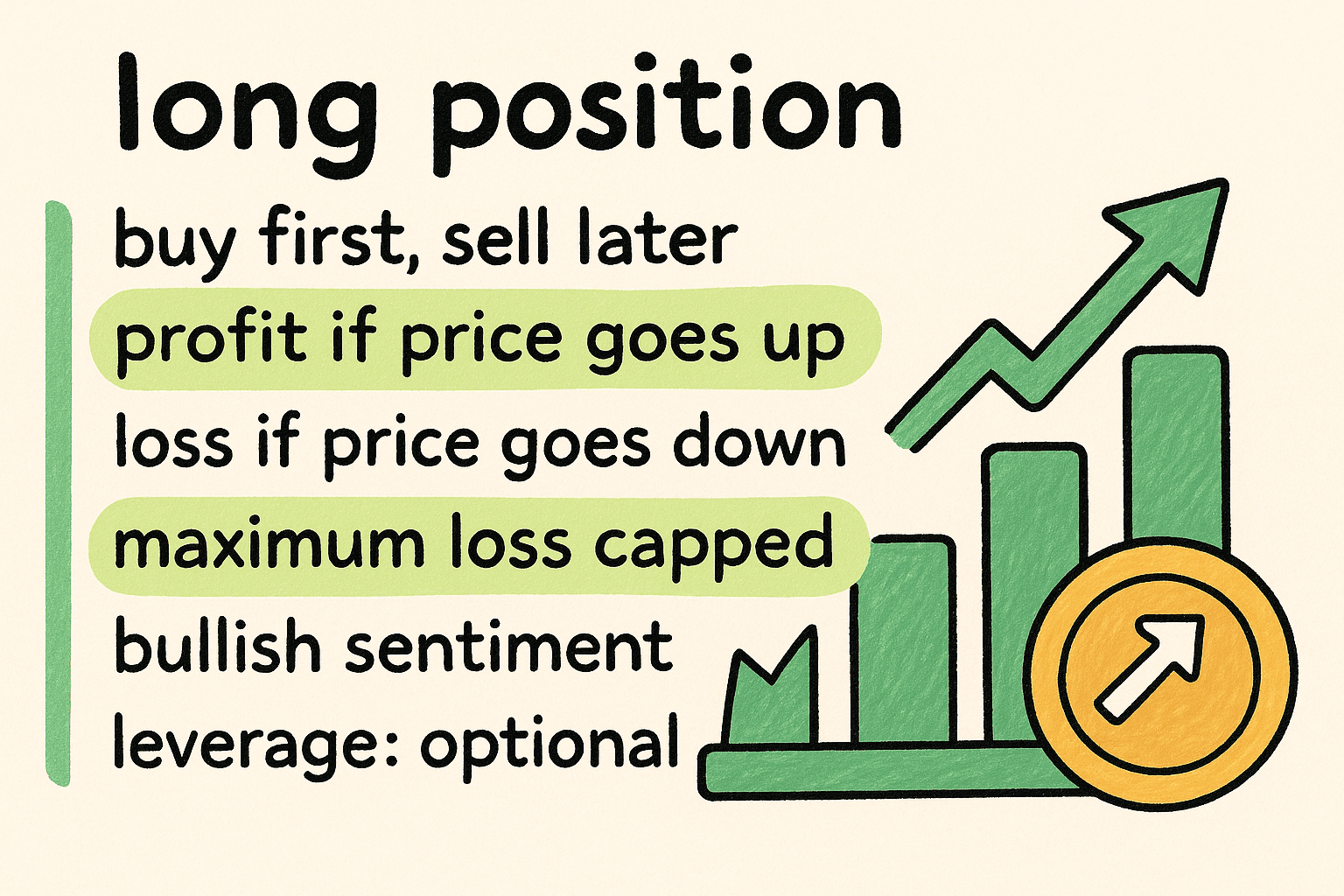
Your gain on a long trade is the difference between the buy price and the sell price, after fees. If you buy ETH at 2,000 USD and later sell at 2,500 USD, the gross profit is 500 USD per ETH.
The attraction is easy to see. Upside on a long can keep expanding while the asset keeps rising. The amount you make still depends on position size, so a larger Investment creates larger swings in both directions.
Say you buy 100 SOL at 100 USD because network activity looks healthy. If the price climbs to 130 USD and you exit, you keep 30 USD per token, or 3,000 USD total.
If SOL drops to 80 USD and you close there, the loss is 20 USD per token, which works out to 2,000 USD overall.
When Traders Go Long
Traders usually go long when Market sentiment looks constructive. That may follow bullish news, or a chart breakout with momentum behind it.
- A major upgrade or new partnership can support demand
- Broader confidence can lift Bitcoin and the rest of the market
Pros and Cons of a Long Position
- Pros - upside has no fixed cap, and the setup is easier for newer traders
- Cons - losses hit when price falls, and volatility can test your patience
How a Short Position Works
A short position in crypto means you expect the price to fall. In the classic version, you borrow the asset through a Broker or exchange, sell it at the current price, then buy it back later at a lower level. After you return the Loan, the difference is your Profit.
For example, if you short Bitcoin at 30,000 USD and cover at 25,000 USD, the gain is 5,000 USD per BTC before fees and borrowing costs. This is why short sellers look for weak charts or bad news.
A clear futures example helps here. Suppose BTC trades at 30,000 USD and you open a 1 BTC long futures position with 10x leverage. You post 3,000 USD as margin. If BTC rises to 31,000 USD, the contract gains 1,000 USD. On your margin, that is roughly a 33 percent return before fees. If BTC falls to 29,500 USD instead, the loss is 500 USD, and your available margin drops by that amount.
The short side uses the same contract logic in reverse. If you open a 1 BTC short at 30,000 USD and cover at 28,500 USD, the gain is 1,500 USD before fees. If price rises to 31,000 USD, the position loses 1,000 USD. With leverage, that loss comes out of margin fast, which is why liquidation levels matter.
Shorting is riskier than going long. A long can only lose what the asset falls toward zero. A Short in finance has no built-in ceiling on losses because the price can keep rising. On leveraged platforms, that can end in a margin call or Liquidation very quickly.
Imagine you short 10,000 DOGE at 0.10 USD because hype looks exhausted. If the price slips to 0.06 USD, buying it back there leaves a 400 USD gain. If DOGE pushes to 0.15 USD instead, the trade loses 500 USD, and the damage keeps growing if the rally continues.
This is why short positions in crypto trading can work well in a downtrend, but they demand tighter control.
Some platforms also offer CFDs for crypto price exposure. A CFD is a contract for difference between your entry price and exit price. To short with a CFD, you open a sell position on the contract, then close it later by buying it back through the same platform. You never hold the underlying coin, and the main differences versus exchange futures are the platform structure and fee model. The risk is still high because leverage and fast price moves can drain margin quickly.
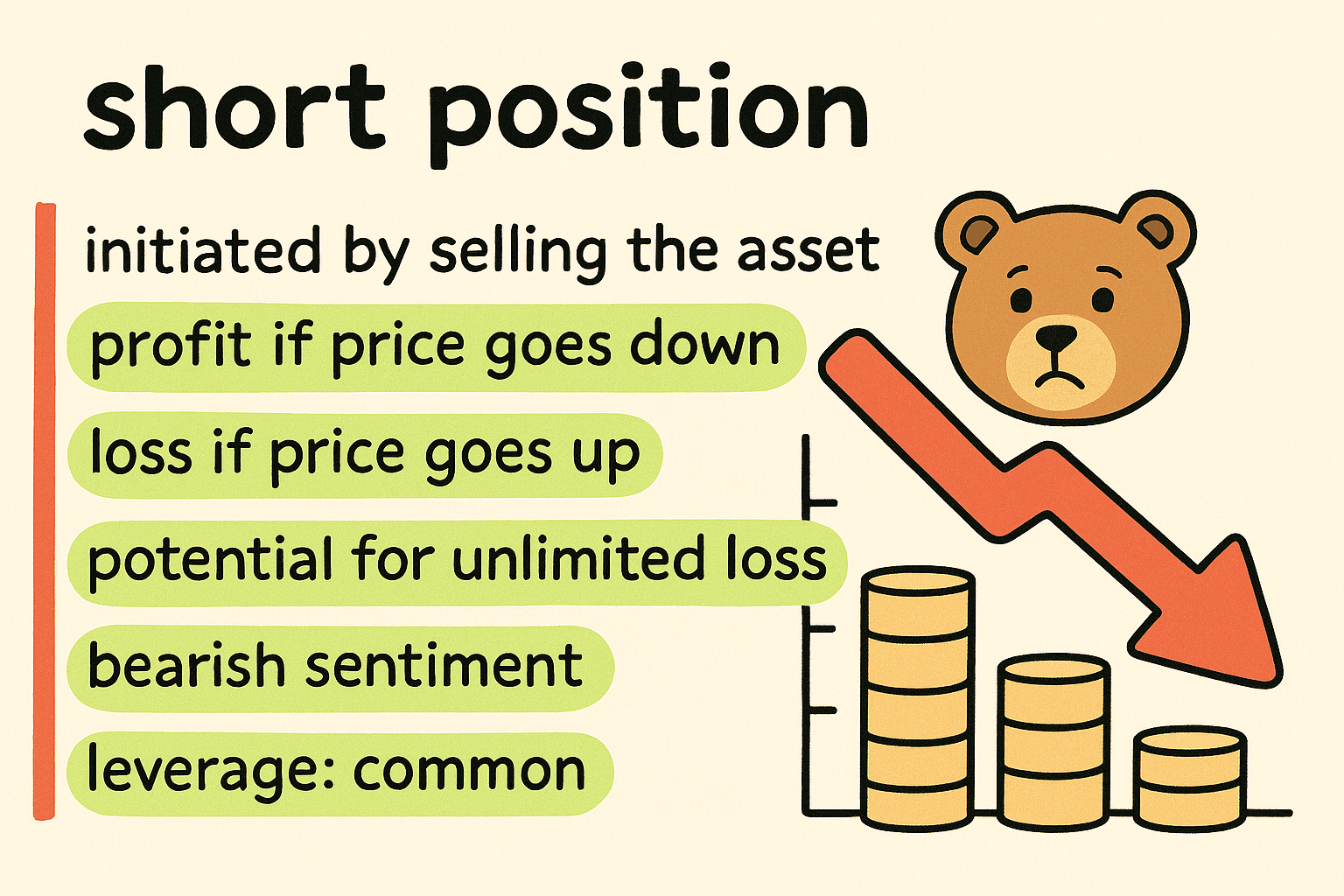
When Traders Go Short
Traders go short when they believe an asset is overpriced or vulnerable. I usually see this setup after a serious negative catalyst, or when the chart keeps failing at resistance.
- Security incidents or harsh regulation can pressure price
- Broad panic can trigger a fast sell-off
Pros and Cons of a Short Position
- Pros - you can profit from falling prices, and a short can Hedge a long-term holding
- Cons - the structure is more complex, and the risk can become unlimited
Long vs. Short Positions
Long and short positions are the two basic ways to express a view in crypto. One targets an advance in price. The other targets a decline. Both depend on timing and execution, and both may involve Leverage through a Derivative or a Futures contract.
Is it better to trade long or short in crypto? There is no universal winner. A long usually suits rising conditions and a simpler workflow. A short can be useful in a falling market or as a Hedge. The better choice depends on your read of market sentiment and on how much Risk you can handle.
| Aspect | Long Position | Short Position |
|---|---|---|
| Goal | Profit if price rises after entry | Profit if price falls after entry |
| Risk | Loss is limited to the amount committed | Loss can grow if price keeps rising |
| Execution | Usually starts with a buy order | Usually starts by selling borrowed or contract exposure |
| Tools | Common on spot markets | Usually done through margin or futures |
When both sides are active, volume usually expands and price action gets sharper. On active exchanges, I often notice this during fast BTC sessions where buyers and sellers keep flipping control.
How to Open and Close a Position
Opening a position means entering the market based on your expected future price. Closing means exiting the trade and realizing a gain or loss.
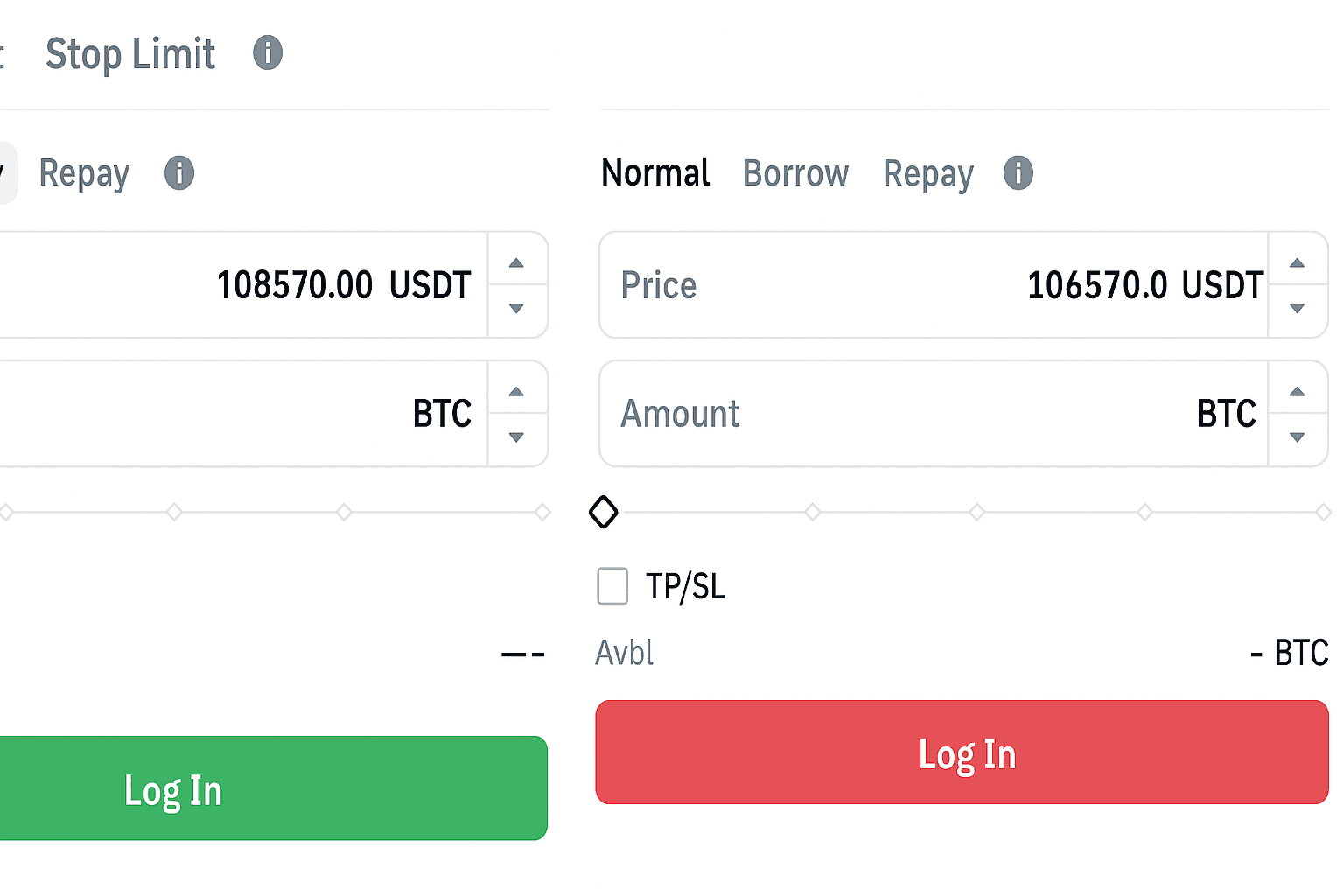
Start by choosing a reliable platform that supports the setup you want. Some exchanges focus on spot, while others offer Margin and futures. The interface matters more than many people expect. If the order panel is confusing, mistakes happen fast.
Next, fund the account with fiat or crypto and verify any Margin requirement if you plan to use Leverage. After that, analyze the chart and the broader news flow to decide whether the better case is a long or a short.
To go long, place a buy order. To go short, use the exchange tool for borrowed exposure or a derivatives market. Before you submit, set risk controls such as stop-loss and take-profit orders. Good platforms make this easy inside the order ticket, and I always check that screen twice before confirming.
Once the trade is live, monitor price behavior and adjust only if the market gives you a valid reason. To close a long, sell the asset. To close a short, buy it back and repay the borrowed amount.
Managing Risk on Long and Short Trades
Risk management matters in every crypto market, but it matters even more when Volatility spikes. Small price moves can become large account swings if Leverage is involved.
For a long, support near your entry helps define the invalidation point. If sentiment looks weak, reduce size. That keeps one bad move from doing too much damage.
For a short, resistance usually becomes the key reference. Because losses can expand fast on the upside, sizing needs more care. If you are using Margin, know the liquidation level before you open the trade. I have found that many platforms show it clearly, but some hide it behind extra tabs, so it is worth checking before entry.
Low-liquidity periods can also make exits messy. Thin order books increase slippage and can make stops less reliable. A disciplined exit plan usually matters more than finding the perfect entry.
Long Short Ratio in Crypto
A lot of traders ask about the long-short ratio in crypto. It is useful, but it gets misunderstood. Every derivatives market matches longs and shorts in total notional terms, so the ratio does not mean one side holds more total market value than the other side. It usually reflects positioning from a specific angle, such as the number of accounts leaning long versus short, or aggressive buy flow versus aggressive sell flow.
An exchange account long-short ratio measures how many exchange accounts are net long compared with how many are net short. If an exchange shows a reading of 1.5, that usually means there are 1.5 long accounts for every short account in that dataset. It is a sentiment gauge, not a measure of total money. A high reading can show bullish crowding, while a low reading can show heavier bearish positioning.
A good long-short ratio in crypto depends on the metric and the timeframe. Readings near 1.0 usually point to a more balanced market. A stretched reading matters more when price is already pressing into support or resistance, because crowded positioning can unwind fast. I treat it as a context tool in long and short in crypto trading, not a trigger by itself.
The taker buy-sell version works a little differently. Exchanges build it from aggressive buy volume versus aggressive sell volume over a set period. It is usually shown as a rolling ratio on derivatives dashboards. If taker buying stays above taker selling, short-term bullish pressure is stronger. If the ratio flips the other way, bearish pressure is stronger. The catch is that it can change very fast, so one spike does not say much without price confirmation.
Long-short ratios work best as a sentiment filter beside price action, not as a standalone signal.
Top trader account long-short ratio narrows the same idea to a smaller group that the exchange classifies as top traders. The exact rule differs by venue, but it usually points to accounts with larger size or heavier activity. Because of that filter, the ratio can look very different from the general account ratio. If general accounts lean heavily long while top traders stay balanced or lean short, that can hint at a split between retail enthusiasm and larger players taking the other side.
On Binance and OKX, BTC long-short data is usually split into general accounts and top trader accounts, which makes that divergence easier to spot. A higher retail ratio with a flatter top trader ratio can suggest smaller traders are chasing upside while larger accounts stay cautious. If the top trader ratio turns more bullish than the public account ratio, the read changes and stronger hands may be adding exposure.
Bybit also publishes BTC positioning metrics, though the display format can differ from the account split used elsewhere. The same basic read still applies. If broader users get one-sided while larger or more active accounts stay less aggressive, sentiment may be running hotter in retail than in whale-style positioning. That does not predict the next move on its own, but it helps frame who is pressing the market.
Tax Treatment of These Trades
Taxes on long and short crypto trades generally follow the same broad logic used for other assets. Once you close a profitable position, you may create a taxable event.
Good records matter here. Track entry price, exit price, holding period, and the type of trade. Short activity can get messy faster than spot buys, so software and a tax professional can save time if your history is active.
Common Mistakes on Crypto Exchanges
- Ignoring the broader market
- Using Stock market habits in crypto
- Jumping into Margin too early
- Opening a short without a clear invalidation point
- Chasing tiny price moves
- Blindly copying another Trader
- Forgetting platform costs
Final Words
Long and short trading gives you two ways to engage with price movement in digital assets. A long position tries to capture upside. A short position in crypto aims to profit from weakness. Both can work, but each asks for a different mindset around Risk, execution, and timing.
If you plan to use borrowed money, treat the trade with extra care. Learn how the Contract works, know your margin terms, and keep your position size reasonable. In real trading, simple discipline usually matters more than a bold forecast.
FAQ
Can I Lose More Than I Invested When Shorting a Cryptocurrency?
Yes. Short positions can lose more than the initial amount committed because the asset can keep rising. If Leverage is involved, the platform may trigger Liquidation before you can react.
Do I Need a Special Account to Open a Short?
Usually yes. Most exchanges require a Margin or futures account for short exposure because the trade depends on borrowing or on derivatives infrastructure.
Can I Hold a Long and a Short at the Same Time?
Yes, if the platform supports hedged positions. Some traders use that structure to Hedge an existing Investment during unstable conditions.
How Do I Know When to Go Long or Go Short?
Base the decision on market structure and sentiment. Go long if you expect price appreciation. Go short if bearish pressure looks stronger and you have a clear risk limit.
Can I Short Crypto on Every Trading Platform?
No. Shorting is usually available only on exchanges that support Margin or derivatives.
How Do Stop-Loss and Take-Profit Orders Help?
They automate exits at preselected levels. That helps protect capital and lock in gains without needing constant manual action.
Which Is Better: Long or Short Trading?
Neither is automatically better. The stronger choice depends on the market condition and on your tolerance for Risk. In a rising market, going long is often simpler. In a weak market, a short may offer a cleaner setup.