

Tangem Crypto Wallet Review
A card-shaped cold wallet that works through Near-field communication sounds almost too simple, yet that is exactly why this Tangem crypto wallet review matters. After using many hardware wallet options over the years, I see Tangem as one of the easiest ways to secure Cryptocurrency on the move, though the design also brings a few trade-offs you should understand before trusting it with serious funds.
Ledger used to be one of my main choices, and I kept a lot of respect for that brand for years. That changed once its recovery approach raised new questions about private key extraction. Even if the company remains well known, I stopped feeling fully comfortable keeping a large share of my holdings in one place. My approach now is simple - spread funds across multiple devices so any single failure causes less damage.
Over time I tested a wide range of cold storage products, from Trezor to BitBox02, and from Ellipal to the first Tangem cards. Every Cryptocurrency wallet has strengths and weak spots. The constant in all of them is the Seed. Lose it and a Hacker does not need the device at all. That point is what made Tangem stand out to me from the start.
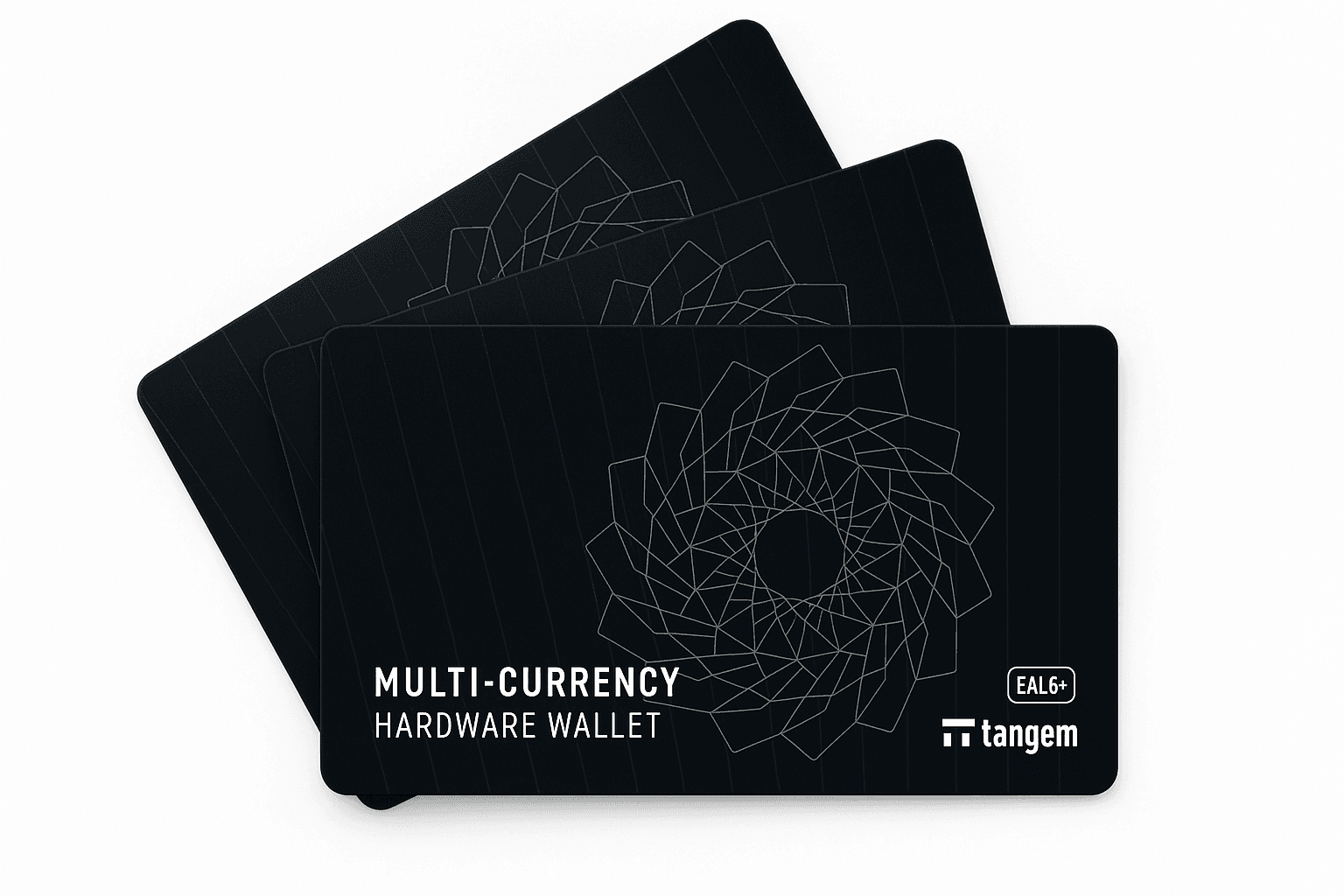
Tangem was the first Digital wallet I used that avoided the normal Seed handling process. Instead of writing down words and placing them into Computer data storage or a metal plate, the wallet can live on physical cards shaped like a Credit card or Debit card. You can keep one in a wallet or bag, which makes the whole thing feel unusually practical.
The product comes in a pack of 2 or 3 cards, and I strongly prefer the 3-card set. One card becomes your daily one, while the others act as Backup access. That setup is convenient, but it also creates obvious concerns. If too many cards are lost or damaged, recovery gets harder. The newer version addresses part of that by adding more flexibility.
First Impressions of the Tangem Wallet
The current Tangem Wallet looks cleaner than the older release, and the Mobile app is much more polished. Setup is built around a Smartphone with NFC support and the Tangem app. There are no batteries, no USB cable, and no need for a Personal computer or Desktop computer. That low-friction approach makes it feel approachable for people who would never touch more complex Computer hardware.
Tangem says nearly a million cards have been issued without a successful hack. That is a bold claim, but the overall security design does look serious. Support covers more than 37 Blockchain networks, which means access to a very large range of Coin and token assets, including Bitcoin and Ethereum.
The card format is one of the best parts of the experience. It feels like carrying a bank card rather than another gadget. I travel often, so I appreciate not dealing with cables, Bluetooth pairing, or QR scanning every time I want Authentication for a transfer. The card simply touches the phone Sensor and approves the action. For frequent movement between a wallet and an exchange, that workflow is fast enough to replace a hot wallet for me.
That ease of use also answers a common question about cashing out. Tangem itself does not convert crypto into Fiat money inside the card. To withdraw or cash out, you send Bitcoin, ETH, a Stablecoin, or another asset from Tangem to an exchange or service that supports off-ramping. In practice, it works like most self-custody tools. It stores keys and signs transactions. The conversion step happens elsewhere.
I still use the same app for older Tangem cards and the newer set, which is helpful. I also synced the wallet on two phones during testing, and that worked smoothly. Day-to-day access was quick, with the Touchscreen flow staying consistent on Android as well as on devices from Apple Inc.
New Features in the Hardware Wallet
The biggest change in the newer Tangem release is flexibility around the Seed. The first generation avoided visible recovery words entirely, which some users loved and others saw as too limiting. Now there is a standard Seed phrase option, so migrating from another wallet or reusing an existing setup is possible.
Seed Phrase Options
You can still use Tangem in its original style, where the keys are created inside the chip with a Hardware random number generator and stay hidden from you. This relies on random number generation inside the secure element, and it remains the company’s preferred method. From a pure security angle, I understand why. The less exposure there is, the less chance of a leak.
The second route is generating a 12-word Seed in the app and loading it onto the cards. This follows the BIP39 standard used by much of the wallet market. The Software converts those words into the key material behind your wallet, then stores the private data on the cards while exposing the public addresses you use on the Blockchain.
You can also import a Seed from another wallet. That matters if you are moving from an older device or trying to consolidate access. It also improves interoperability, which was one of the main weak points in the old Tangem design.
Tangem still argues that internal key generation is safer than importing or exporting a Seed, and I think that position is reasonable. A written Seed can be copied or photographed. Once another person gets it, Public-key cryptography offers no protection because the attacker already holds the secret that controls the funds.
The upside of having a visible Seed is portability. You can move to another wallet later, and you can keep the recovery words on durable offline media. The downside is obvious - it creates a single piece of information that can drain the account if exposed. It also matters if every linked card is lost or damaged. With no Seed phrase, recovery can become impossible.
The no-seed route flips that balance. A stranger who finds one card cannot simply activate the wallet on a new phone without the correct Password flow and app access. Still, if somebody somehow gets all linked cards, your Risk goes up. Tangem works best when those cards are stored apart from each other.
There is one permanent choice to note. If you set up the wallet without the Seed option at the start, you cannot add a Seed later. That is a meaningful limitation, so decide early how you want long-term recovery to work.
Access Code Recovery Control
The app uses an access code as the first barrier against unauthorized use. If you install the app on another Smartphone, that code is required, and you are prompted for it again when opening the wallet. The newer version lets you turn off access code recovery, which tightens security for anyone who wants less fallback and more control.
Transaction History
This was a very welcome improvement. Older Tangem use often meant checking a Blockchain explorer directly, which is clunky if you only want a fast look at recent transfers. The updated app now shows transaction history inside the interface, and that makes normal wallet management much easier.
Asset Tracking in the Mobile App
The app now shows price changes and daily profit or loss for individual assets. It also adds quicker actions from a press-and-hold menu, plus balance hiding for privacy in public. Sorting options and dark mode are here as well. None of that changes custody, but it does make the wallet feel more complete for regular use, especially if you hold an NFT, a Stablecoin, or a DeFi token alongside larger coins.
Setting Up the Cold Wallet
Starting is simple. Tap the card to your phone and the app prompt appears, which helps avoid fake downloads. During setup, the first card you activate becomes the main one. The rest become backups. Since the cards are physically identical, the order is decided by the setup flow rather than any printed label.
I suggest pairing all cards during the same session. The first initialization can take a little time, and you need the card to stay in contact with the phone Sensor while data moves through the communication protocol. If the phone case is thick, remove it. I did that during testing just to reduce the chance of a failed write.
If something goes wrong during setup, the main card can be reset back to its original state and configured again. That is useful early on, though it should never be done after funds have been deposited because it creates a fresh wallet. Another important limitation is easy to miss - if you begin with one Backup card only, you cannot add another later. The full card set needs to be linked at the start.
It is also possible to combine cards from separate packages, but the wallet supports a maximum of 3 linked cards. So if you buy more than one pack, one card may remain unused. This is another reason I think the 3-card option makes the most sense from day one.
Security and Trust
Is Tangem a trusted and secure wallet? Based on its design, I would say yes, within the limits of its model. The card uses a Samsung chip with EAL6+ certification, which is a serious level for secure Authentication hardware. Tangem also says the chip can sign transactions with very high input counts, which matters for certain use cases.
On the verification side, I would still separate the chip rating from the wider software stack. I did not find any mention here of an independent security audit or a third-party code review of the full mobile app and Firmware. That does not prove a problem, but it is worth noting if you compare Tangem with more established hardware wallet vendors that publish more external review material.
I also did not see any known major exploit tied to the cards themselves during my testing period, which is encouraging. Even so, the trust model still leans heavily on the Mobile app because the card has no built-in display for transaction verification. You confirm details on the phone, so the integrity of that app and device matters more than it does on wallets with their own screen.
From a security perspective, the strongest Tangem setup is still the internal-key mode. In that approach, the private keys are created inside the card and never exposed on screen. That reduces the attack surface tied to screenshots, copied phrases, and weak storage habits. It also makes brute-force attack scenarios less relevant because the attacker still lacks the actual recovery data.
Another trust question people ask is about company dependence. If Tangem disappeared and the app vanished from Google Play or the App Store, would the wallet stop working? According to the company, the app runs independently from Tangem servers, and the APK is also available through GitHub. I downloaded that file myself for peace of mind. If you use the Seed-enabled mode, portability is even stronger because migration to another wallet remains available.

After spending time with the device, I think the pros and cons are fairly easy to define.
Pros
- Easy daily use - tap the card on your Smartphone and approve the transaction.
- Strong security model - the certified chip and internal key generation reduce exposure.
- Useful portability - no USB cable or Bluetooth pairing.
- Seed support - you can now import an older wallet or export for future recovery.
- Good value - the price stays low compared with many rival devices.
Cons
- Address management is limited - you get one public key per Blockchain rather than richer address control.
- Tangem wallet fees lack flexibility - I did not see a way to manually tune the network Fee on outgoing transactions.
- No built-in display - transaction checks depend on the Mobile app.
- Phone dependence - you need an NFC-enabled Smartphone to use it comfortably.
- Recovery risk in no-seed mode - losing every linked card can lock you out for good.
- Compatibility is narrower - some third-party wallets and services support established devices more broadly.
- Long-term dependence can be a drawback - if you choose no visible Seed, future migration is less open.
Wallet Comparison
| Wallet | Supported Coins | Backup Options | Ease of Use | Security Certification | Price |
|---|---|---|---|---|---|
| Tangem | Broad support across major Blockchain networks | Card set or Seed phrase | Very easy on a Smartphone | EAL6+ secure element | Usually lower than many rivals |
| Ledger | Broad asset support | Seed phrase | Easy, with more device steps | Secure element approach | Mid-range |
| Trezor | Broad asset support | Seed phrase | Clear desktop flow | No EAL chip focus | Mid-range |
| BitBox02 | More selective asset support | Seed phrase and microSD Backup | Simple, but less pocket-friendly | Secure chip design | Mid to high |
Conclusion
The new Tangem Wallet improves meaningfully on the older cards and feels especially strong as a secure crypto hardware wallet for frequent use. It is quick, light, and genuinely simple to live with. Compared with many other crypto wallets, Tangem is less flexible in a few technical areas, yet far easier to carry and approve transactions with.
The biggest trade-off is the model itself. If you want broad third-party compatibility or on-device verification, Ledger, Trezor, or BitBox02 may fit better. If you want fast mobile access with minimal hardware friction, Tangem is still one of the more practical options I have used.