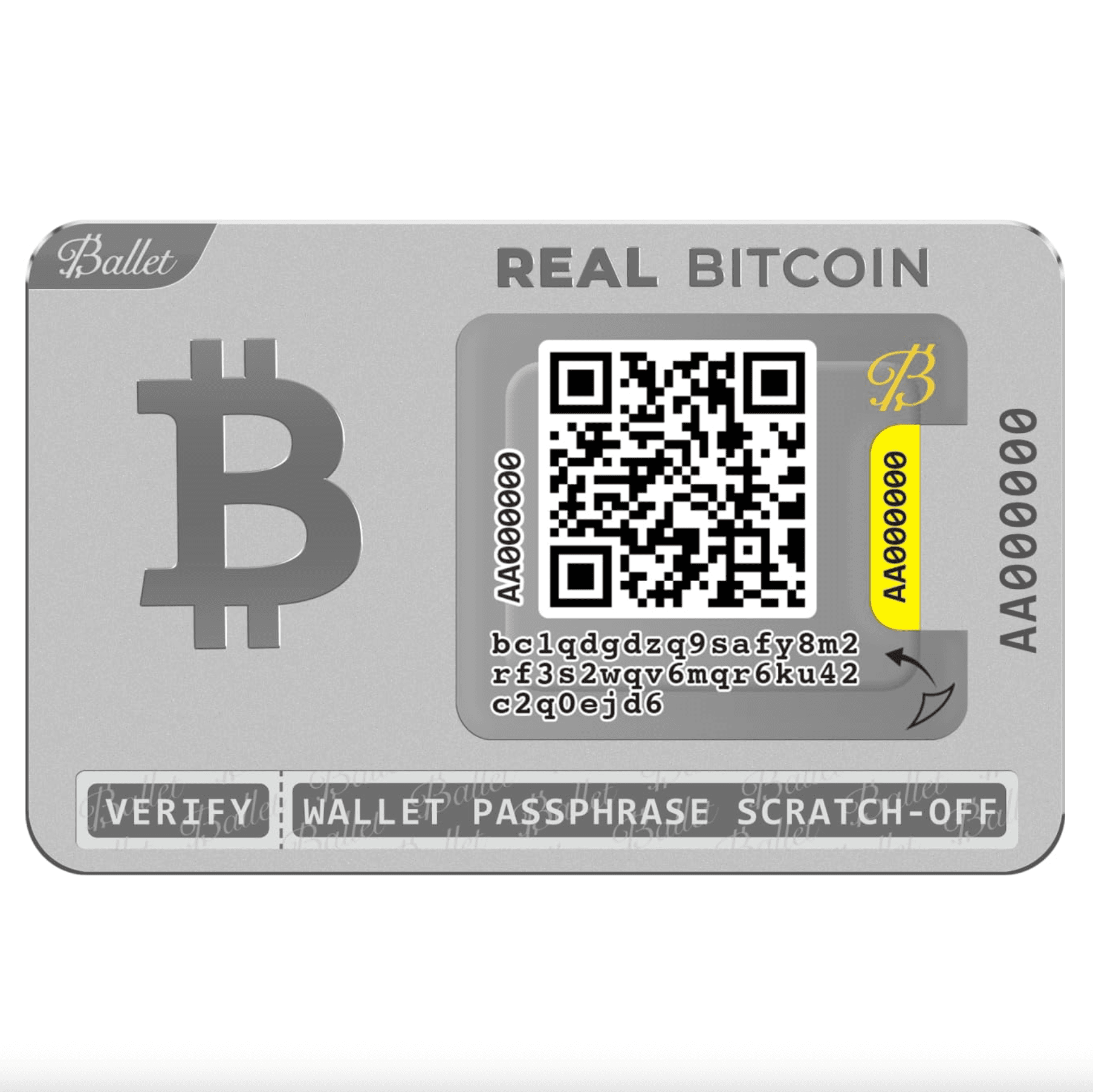


Ballet Crypto Wallet Review
A card-based cold storage wallet feels very different from the usual USB-style device, and that is exactly why this Ballet crypto wallet review matters. Ballet is built for simple offline storage, quick setup, and basic day-to-day management through a Mobile app, so it tends to fit beginners and casual holders better than power users.
It sits in the same broad Cryptocurrency wallet category as other cold storage products, yet its approach is far less technical. Instead of relying on Computer hardware with buttons and firmware screens, Ballet uses a physical card format and keeps your key material away from the Internet.
The short verdict is straightforward. Ballet is a self-custody cold wallet that works well for basic Cryptocurrency storage on the move. It is easy to understand, easy to pair with the app, and easy to carry. The trade-off is obvious too. A slim card is easier to misplace, steal, or physically ruin.
Pros
- Non-custodial design with user control
- Clean companion Mobile app
- Broad support for coins, tokens, and NFT assets
- Several wallet formats for different use cases
Cons
- The card looks valuable and is less discreet
- Physical damage remains a real risk
About the Ballet Wallet
Before getting into features, it helps to frame the product properly. Ballet was created by Bobby Lee, a familiar name in crypto, with a clear goal in mind. He wanted cold storage to feel less intimidating so more people could hold a Digital asset without dealing with complex Software.
The company keeps the design simple. Your wallet is a physical card rather than an electronic gadget, which lowers the barrier for people who are new to Blockchain tools. That simplicity is a big part of the appeal.
The Ballet wallet is roughly the size of a Credit card, and the idea is easy to grasp. It stores the materials tied to your private access offline, giving you a way to keep Ownership of your funds away from online exposure.
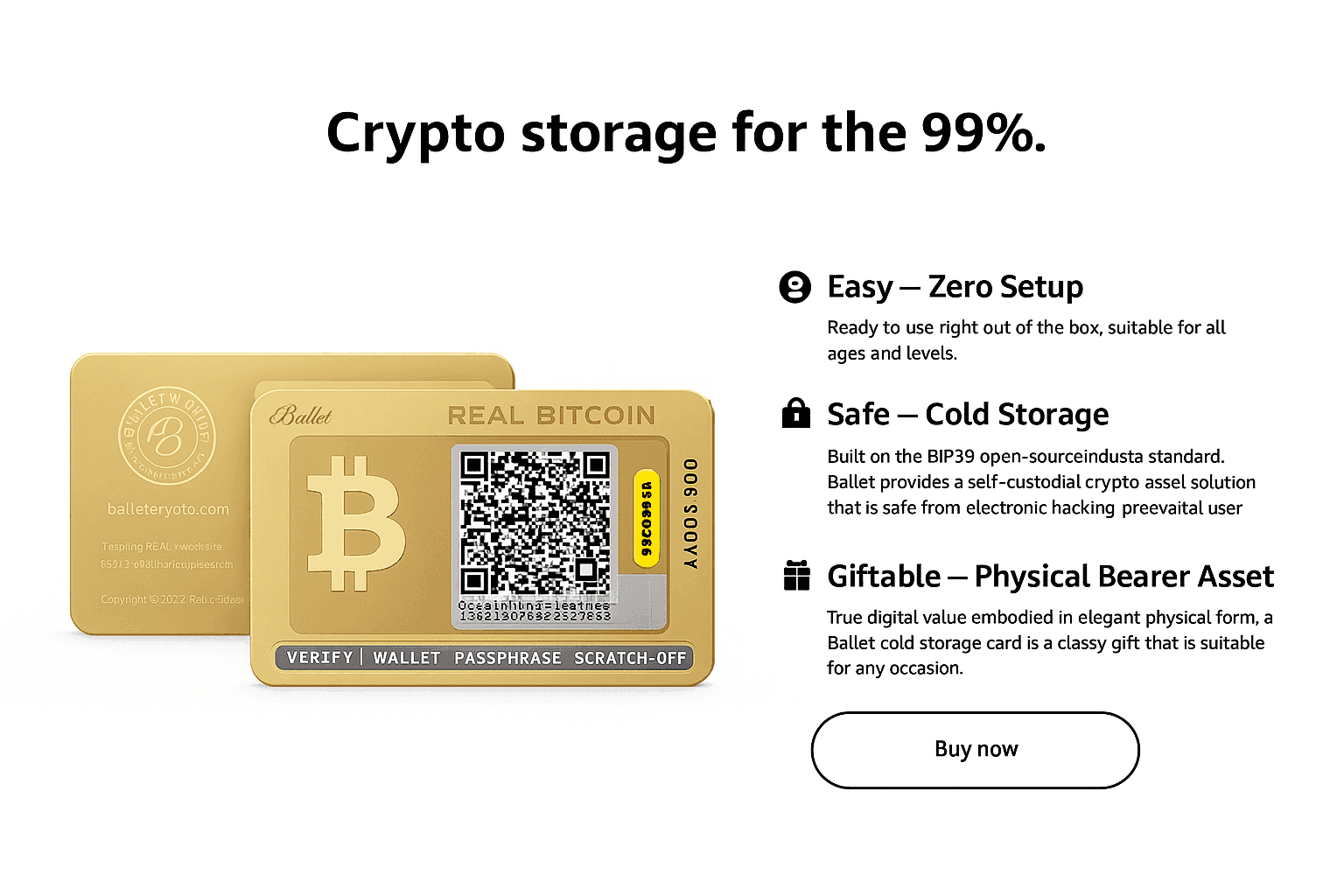
To handle balances and transactions, you use the Ballet Crypto app. The interface is simple enough that even a first-time user can check holdings or move funds without much friction. Popular assets such as Bitcoin and Ethereum are supported, and using the app felt straightforward from the first scan.
Ballet also supports NFT storage, which makes the platform more useful for people holding more than a single Coin. That wider coverage gives it everyday practicality, especially if you want one cold wallet system instead of several separate tools.
Ballet Wallet Review Pros
Once you get past the card format, the main strengths become pretty clear. Security is central to the product, yet the experience stays unusually simple. That mix is where Ballet does its best work.
Strong Security Model
On the security side, Ballet leans on offline self-custody. The wallet is non-custodial, so your Asset stays under your control rather than under company control. That matters because it reduces dependence on a provider and limits exposure to online compromise.
Unlike hot wallets that stay connected and can be exposed to Malware or network attacks, Ballet keeps critical data off the Internet. The card-based cold vault model means the key material is never sitting on a server.
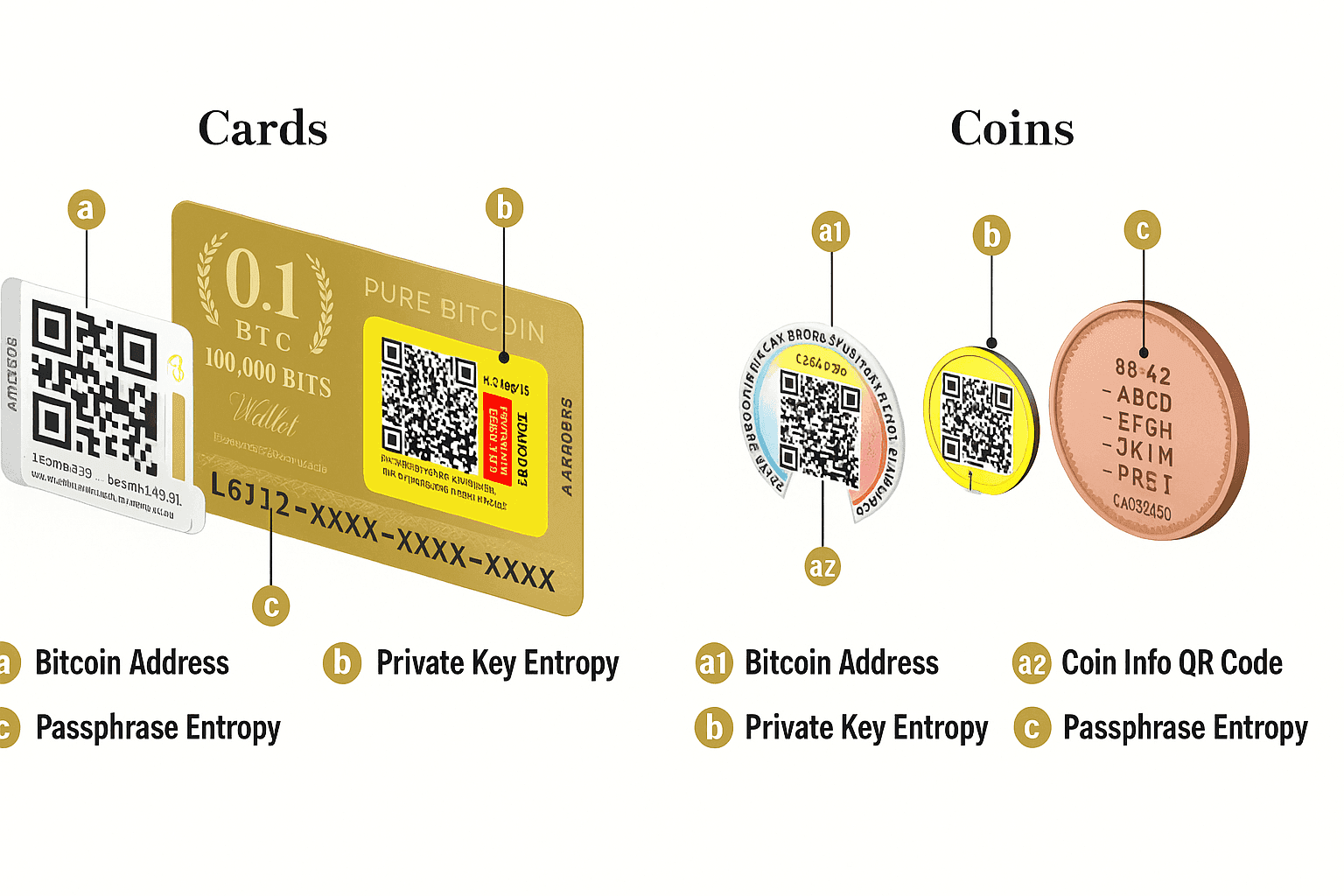
The private key information is printed onto the card and hidden beneath a tamper-evident layer. That physical separation is one of the product’s main defenses. It reduces the risk of remote interception through infected devices or bad Communication protocol flows.
Ballet also says the manufacturing process is designed so the company and its staff cannot access the complete usable key. The full alphanumeric key is not assembled during production. Instead, the user combines the embedded components to create the working secret tied to transaction approval.
To do that, you use the app to combine the encrypted private key with the Passphrase. In practice, the usable key is generated when you spend from the wallet for the first time. That design is rooted in Public-key cryptography, with the sensitive parts split until the owner actually needs them.
There is also support for air-gapped signing. That means the encrypted key details and Passphrase can be entered without a live Internet connection, which keeps sensitive information away from connected systems during the signing step.
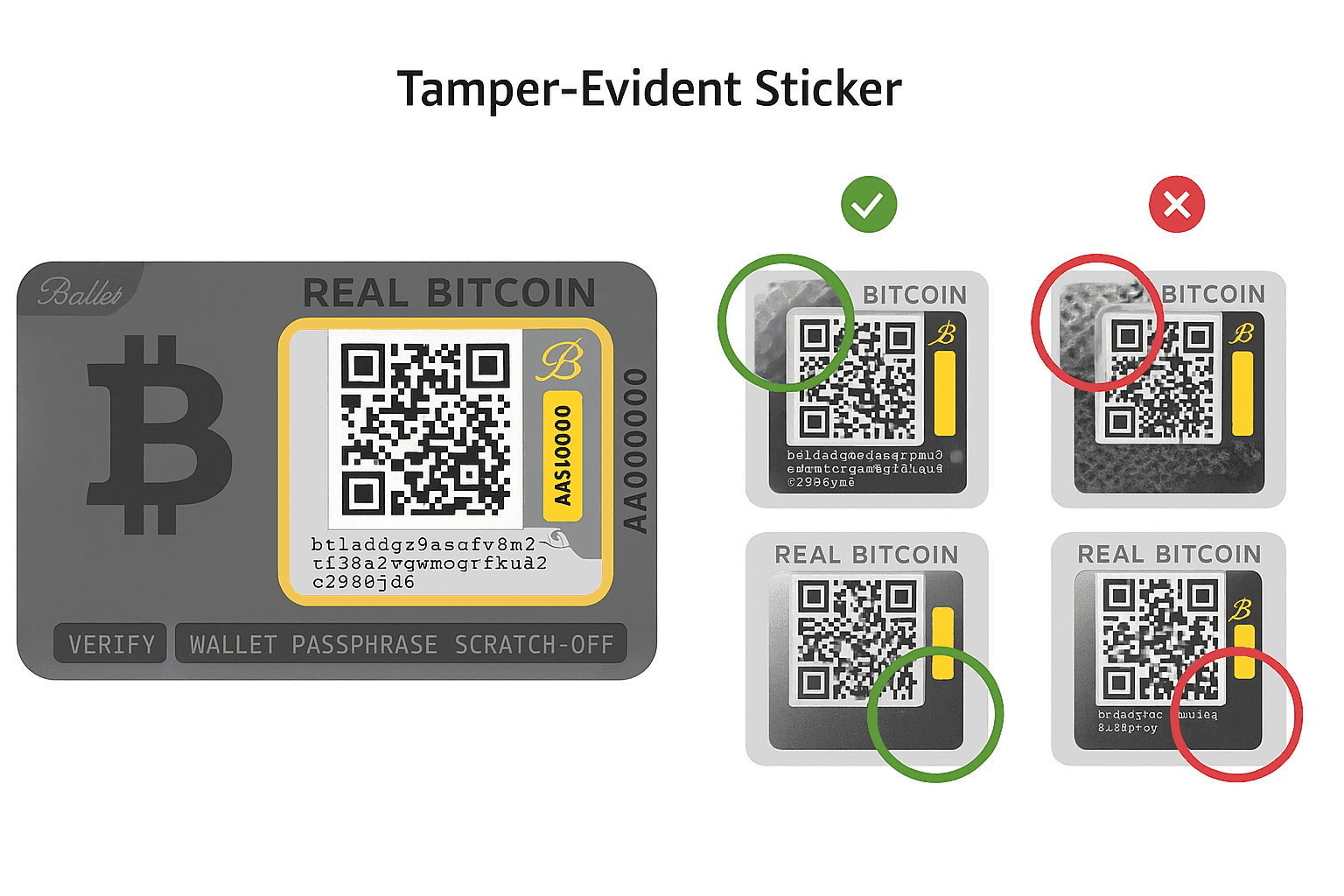
Ballet adds several authentication checks to help detect tampering and counterfeit products. The card includes visible and hidden markers that let you inspect the packaging and printed details before use. I did not find a clear mention of an independent third-party security audit or certification for this manufacturing process, so that part appears to rely mainly on Ballet’s own design claims rather than outside verification.
Taken together, these measures give the wallet more than one line of defense. From what I saw, Ballet puts real effort into keeping the physical product verifiable before you trust it with funds.
Easy Mobile App
The companion app is one of Ballet’s biggest advantages. Setup is fast. You install the app, scan the QR code on the wallet card, and the virtual version of the wallet appears in the interface within minutes.
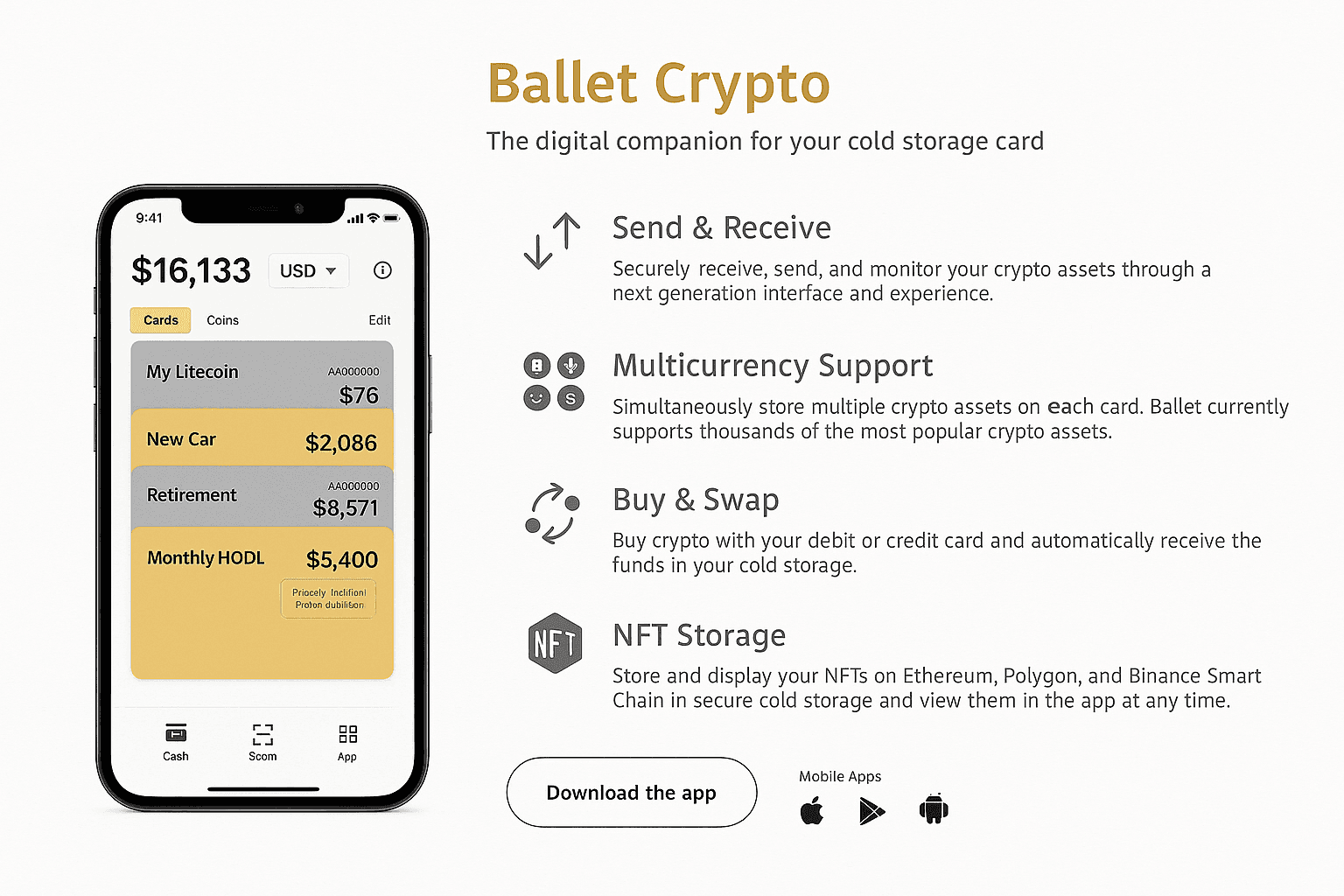
The app keeps the experience simple and readable. Sending and receiving funds is direct, and portfolio checks do not feel buried under menus. From a usability angle, this is where Ballet feels especially beginner-friendly.
- Simple transactions - send or receive crypto with minimal setup
- Built-in buying and swapping - add funds without leaving the app
If you need to buy more crypto, the app lets you do it with a Debit card or another supported payment method. Purchased assets go straight to your cold storage wallet, which removes a few extra steps and makes the process feel smoother.
Wide Crypto Support
Ballet supports a large number of crypto assets, including token standards on major chains and Non-fungible token holdings. Support includes standards such as ERC-20 and BEP-20, so the wallet is not limited to native coins alone.
Each cold storage card is centered on a primary coin shown on the card itself. You also get a pre-printed deposit address in text form and as a QR code, which speeds up receiving funds and cuts down on manual entry mistakes.
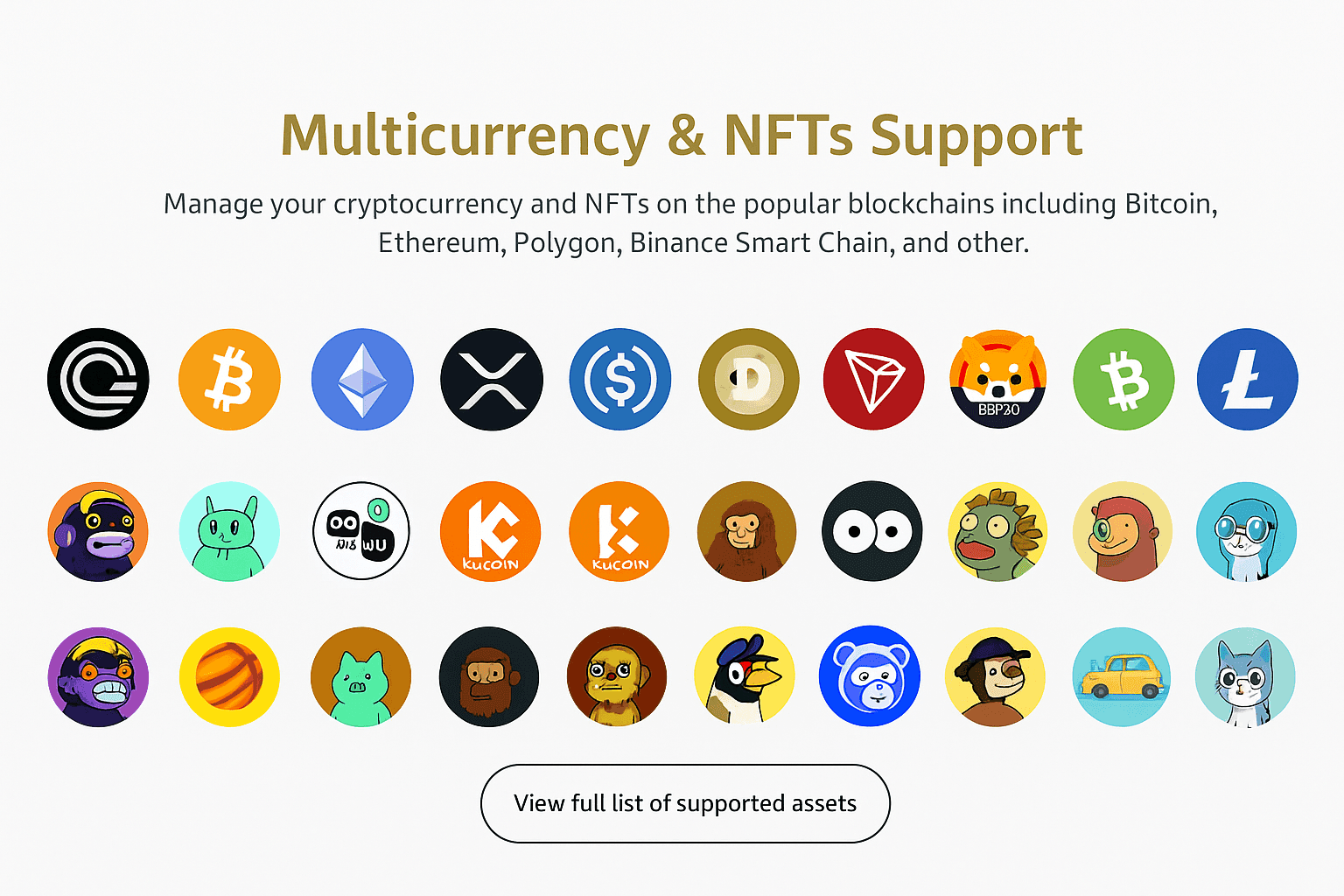
Support is broad, though some local regulations may block certain app functions. In some regions you may be able to store or send an asset while buying or swapping it remains unavailable.
Even with that limitation, Ballet still covers a lot of ground. If your goal is simple cold storage for a mixed crypto portfolio, the wallet handles that role well.
Different Wallet Types
Ballet has more than one product style, and the lineup is aimed at different kinds of users. The main split is between storage you load yourself and products that come prepared for gifting or long-term holding.
REAL Series
The REAL Series is the most practical place to start for new users. It is built as non-electrical cold storage, so there are no batteries, firmware prompts, or update cycles to deal with. That keeps the setup lightweight and lowers exposure to Software flaws.
Because the wallet stays offline and decentralized in use, it is less exposed to the kinds of breaches that affect products needing regular live connections. In everyday terms, it feels refreshingly low maintenance.
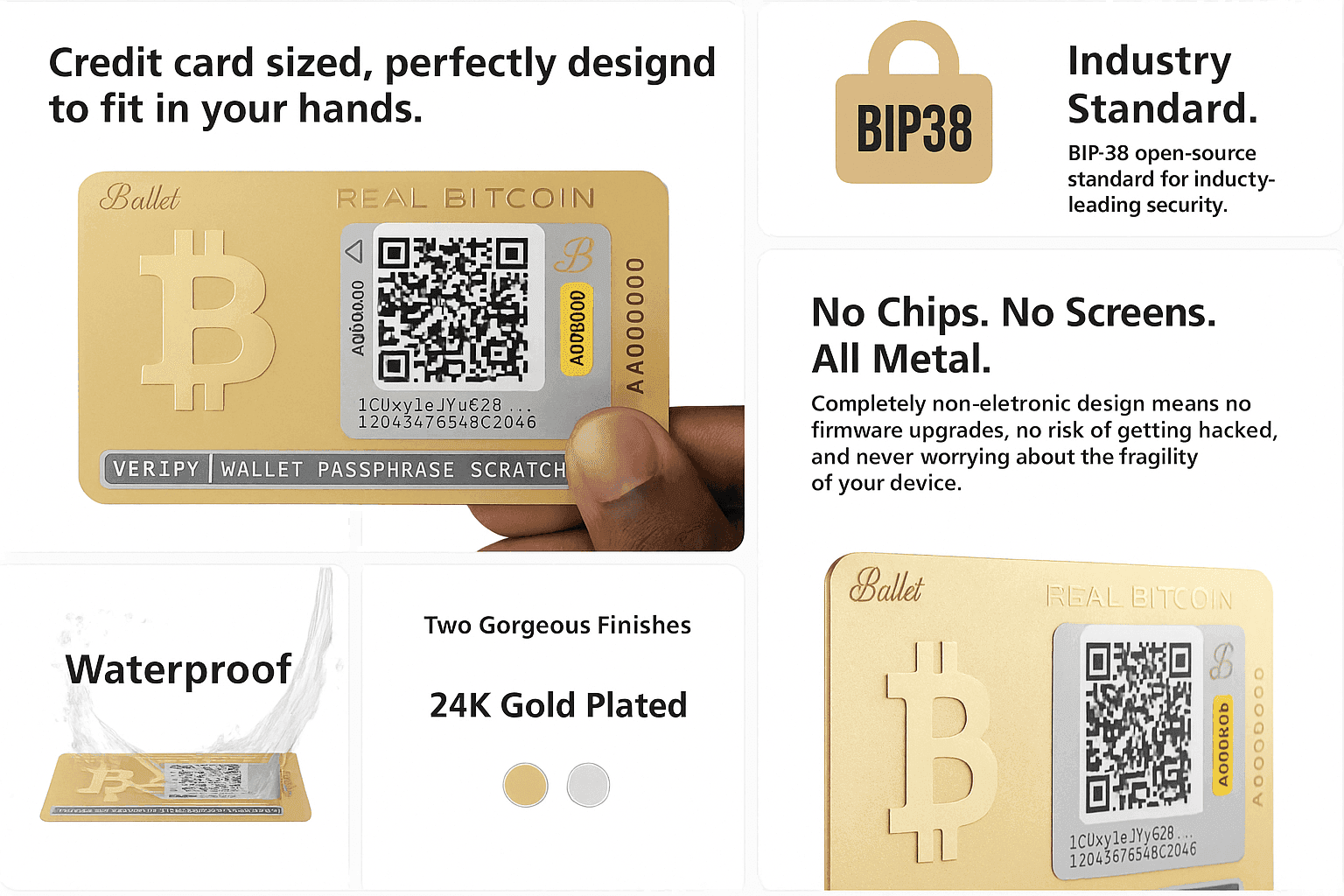
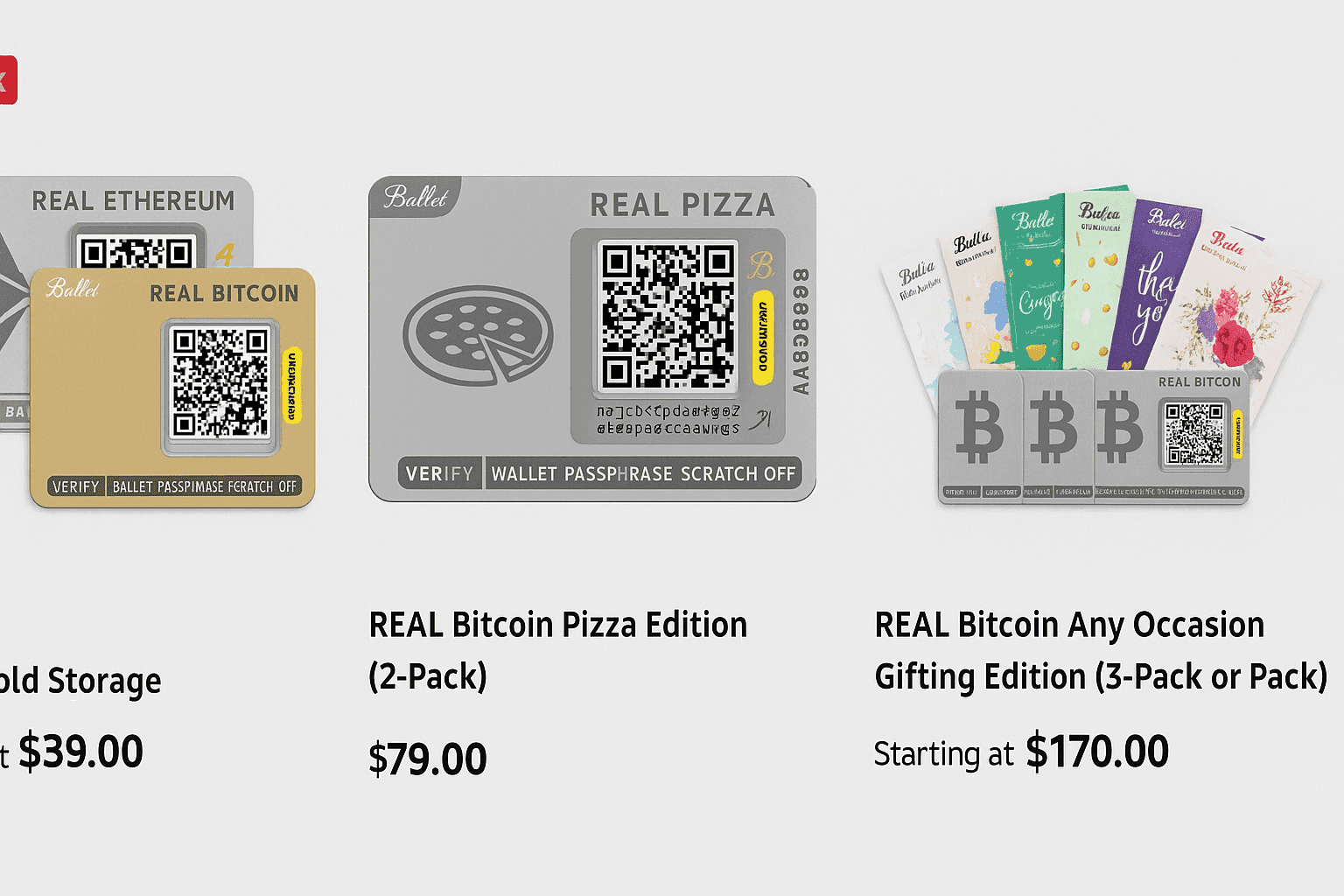
The REAL Series comes in a standard version and a premium version with 24K gold plating. Both are made from Stainless steel, which gives the card a sturdier feel than paper storage. Each card still has one main asset printed on it, while the app can manage other supported assets tied to that wallet.
Unlike the PURE line discussed next, REAL wallets arrive empty. You load them with your own Cryptocurrency, which makes them more flexible for people who want a blank cold storage card rather than a preloaded item.
For beginners, this is likely the strongest Ballet option. It is portable, easy to grasp, and designed around long-term storage rather than constant trading.
PURE Series
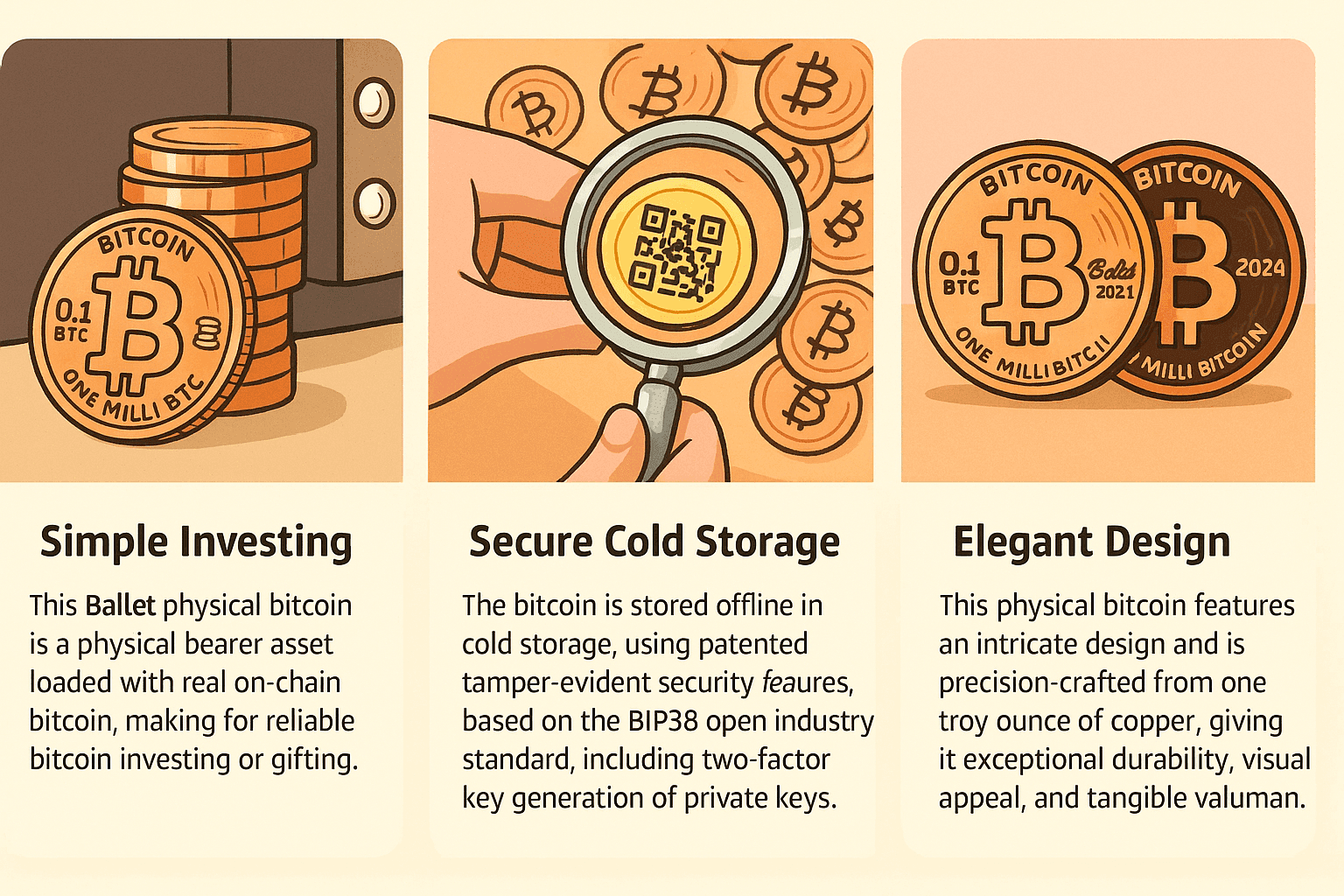
The PURE Series takes a different angle. These are physical Bitcoin products that come preloaded with real BTC, so the item itself acts as both a keepsake and a storage piece.
Ballet presents these products almost like physical Bitcoin. You are still dealing with a digital Asset on the Blockchain, but the Steel card or copper coin gives that value a tangible form. That idea will appeal to collectors and long-term holders more than to active users.
The products still function as offline storage, so the Bitcoin is protected from online attacks. There is a certain appeal in being able to hold the item in your hand while still keeping the funds in cold storage.
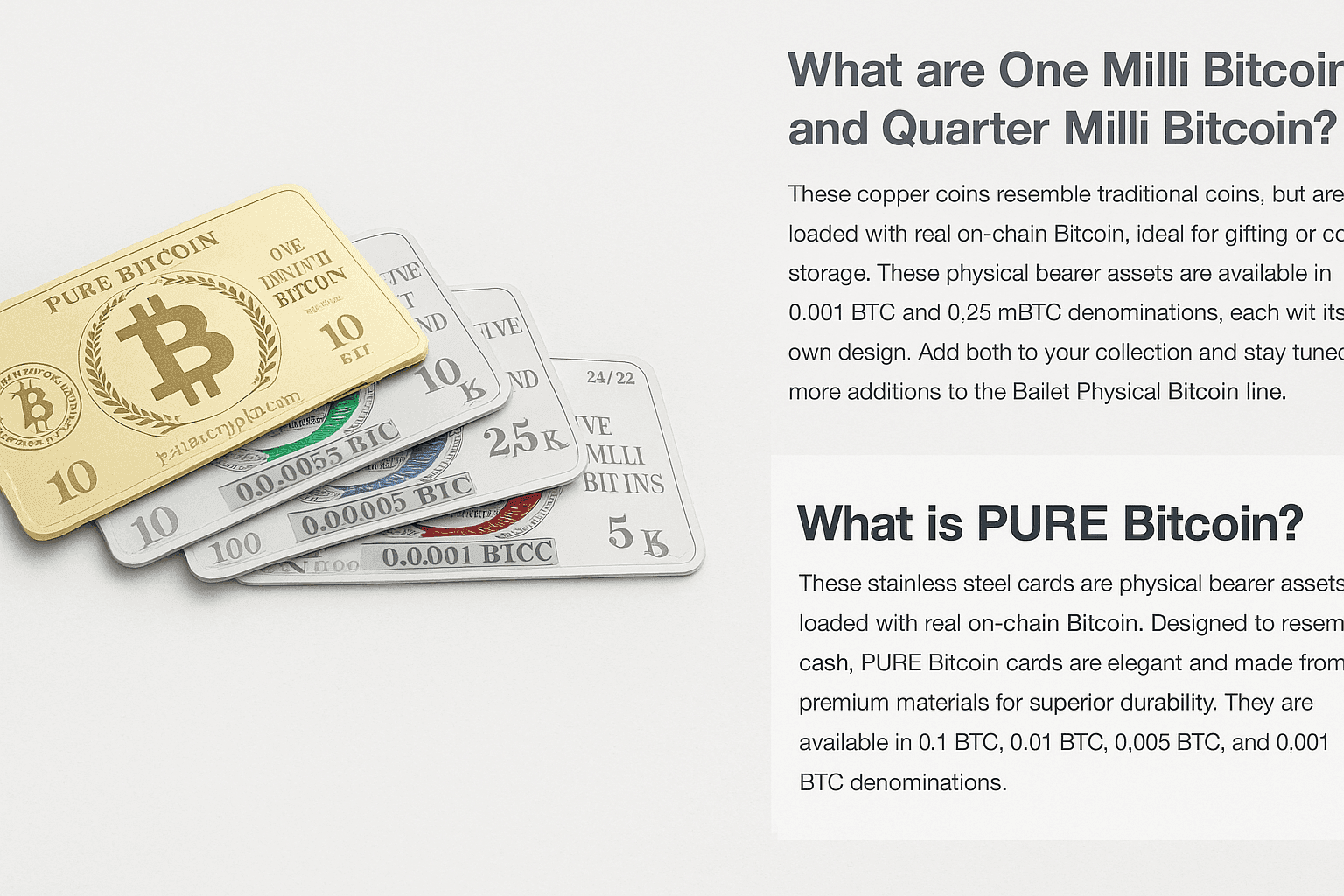
PURE wallets also make interesting gifts. Because they are physical and visually distinctive, they can work well as a crypto present for someone curious about BTC.
These products are preloaded with a fixed amount and are meant more for holding than frequent spending. You can add more Bitcoin later, though Ballet suggests keeping the wallet simple so tracking stays easier.
At the time of writing in 2026, the PURE Series is focused on Bitcoin rather than broader asset support. If you mainly hold Ethereum or Litecoin, this line will feel more limited.
- Collectible coins - copper pieces with preset BTC amounts
- Steel cards - preloaded cards with larger denominations
Overall, the PURE Series is aimed at people who like the idea of owning a physical crypto object while still maintaining offline control of the funds.
Crypto Gift Cards
Ballet also sells crypto gift cards. These are card-sized products that can be loaded with selected digital assets before delivery, which makes them a simple gifting option for someone who does not already have wallet infrastructure in place. The range is narrower than the main wallet app, so support depends on the specific gift card product rather than the full list of assets Ballet can store.
The process is quite accessible. The recipient does not need an existing wallet address before receiving the gift, which lowers the friction for newcomers. That practical angle makes these cards more usable than many novelty crypto products.
There are limits, though. These cards are single-use, and they cannot be topped up again after the fact. They are also locked to the Cryptocurrency chosen at purchase.
That said, the overall product range shows a clear pattern. Ballet is trying to make self-custody approachable through familiar card-based formats and a simple app experience.
If your aim is long-term storage or an easy way to hand over crypto as a gift, Ballet offers a fairly accessible route. New users will probably find that more appealing than a device that expects immediate technical confidence. Availability and activation rules may also depend on your region, and any in-app purchase flow that uses a third-party provider can bring age checks or residency limits.
Ballet Wallet Review Cons
Ballet gets a lot right on usability, though it also has weaknesses that matter in real use. The main drawbacks revolve around discretion and physical durability. Those are not minor issues for a cold wallet.
A Design That Draws Attention
The card looks polished, but it does not exactly blend in. At a glance, it looks like something premium, and that can create unwanted attention. With a wallet tied to private access, visibility itself becomes a risk factor.
Picture taking it out in a public place. The metallic finish can catch the eye quickly, and someone familiar with crypto hardware may recognize that it represents value. If the wrong person notices, that turns into a security concern.
The recovery model adds to the problem. Since Ballet does not store your private keys in the app or on company servers, a stolen wallet is far harder to recover from. If the card is gone, your crypto may be gone with it.
Good crypto security usually benefits from keeping your holdings private. Ballet’s visual design works against that principle a bit, especially compared with devices that look like ordinary USB accessories.
That is one reason some advanced users still lean toward alternatives such as Ledger Nano X or Ledger Nano S Plus. Those devices are less conspicuous in everyday settings.
Risk of Physical Damage
The card body is more durable than a paper wallet, but it is still a physical object with physical limits. Fire and corrosive exposure can still damage it badly enough to create a serious problem.
This matters because Ballet is a self-custody wallet in the strict sense. The company does not retain copies of your private keys. If the card is lost, stolen, or destroyed, there is no company-side recovery path to fall back on.
That makes safe storage essential. A concealed spot with protection from common hazards is the smart move here. Used that way, the wallet makes more sense as a long-term vault than as something you carry around casually every day.
I still think Ballet is a friendly entry point for new crypto users, but the weak points are real. Limited discretion and exposure to physical damage should be weighed carefully before you trust it with meaningful holdings.
Pricing and Fees
Price is one of Ballet’s stronger selling points. The lineup covers a wide range, though the exact cost depends on the product type and the materials used.
Wallet Prices
| Product Line | Starting Price | Premium/Max Price | Notes |
|---|---|---|---|
| REAL Series | $39 | $129 | Themed versions cost more than the base card. |
| PURE Series | $36 | $7,054 | Price includes the physical item and loaded BTC. |
| Crypto Gift Cards | $35 | - | Standard 5-pack entry price. |
Transaction Fees
There is another cost layer to remember, and it does not come from Ballet itself. Sending crypto requires blockchain network fees, often referred to as gas. The exact amount depends on current chain activity.
The app calculates the fee automatically before you send funds, which helps avoid surprises. You still need enough extra balance in the wallet to cover that network charge or the transfer will fail. From what Ballet shows, there is no extra Ballet transaction fee added on top of the blockchain fee.
Overall, Ballet feels competitively priced. Starting near the low end of the hardware wallet category, it gives beginners a relatively affordable way to get into offline storage.
How the Ballet Wallet Works
If Ballet has caught your attention, the setup path is one of the easiest parts of the whole experience. The app does most of the visible work, while the card holds the sensitive information offline.
Setting Up the App
The Ballet Crypto app is designed to work with the non-electronic wallet cards. It lets you track balances, check market values, and interact with the wallet without requiring a desktop setup.
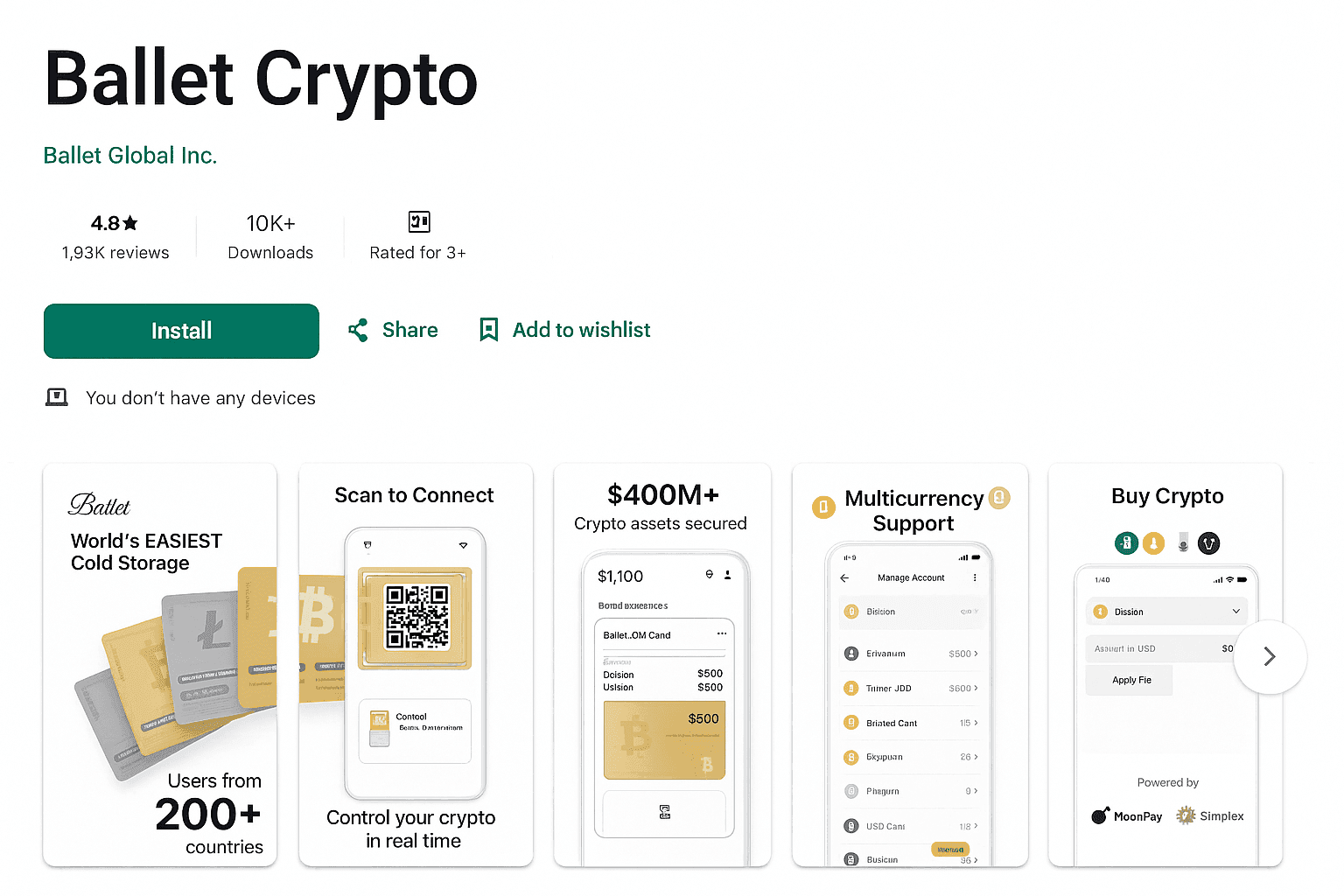
The app is available on Android and iOS. To show how the process works, here is the Android flow.
Step 1- Open Google Play, search forBallet Crypto, and install the app on your phone.
Step 2- Launch the app, tapScan, and scan the QR code sticker on the Ballet card. The app then adds a virtual cold wallet view to the home screen.
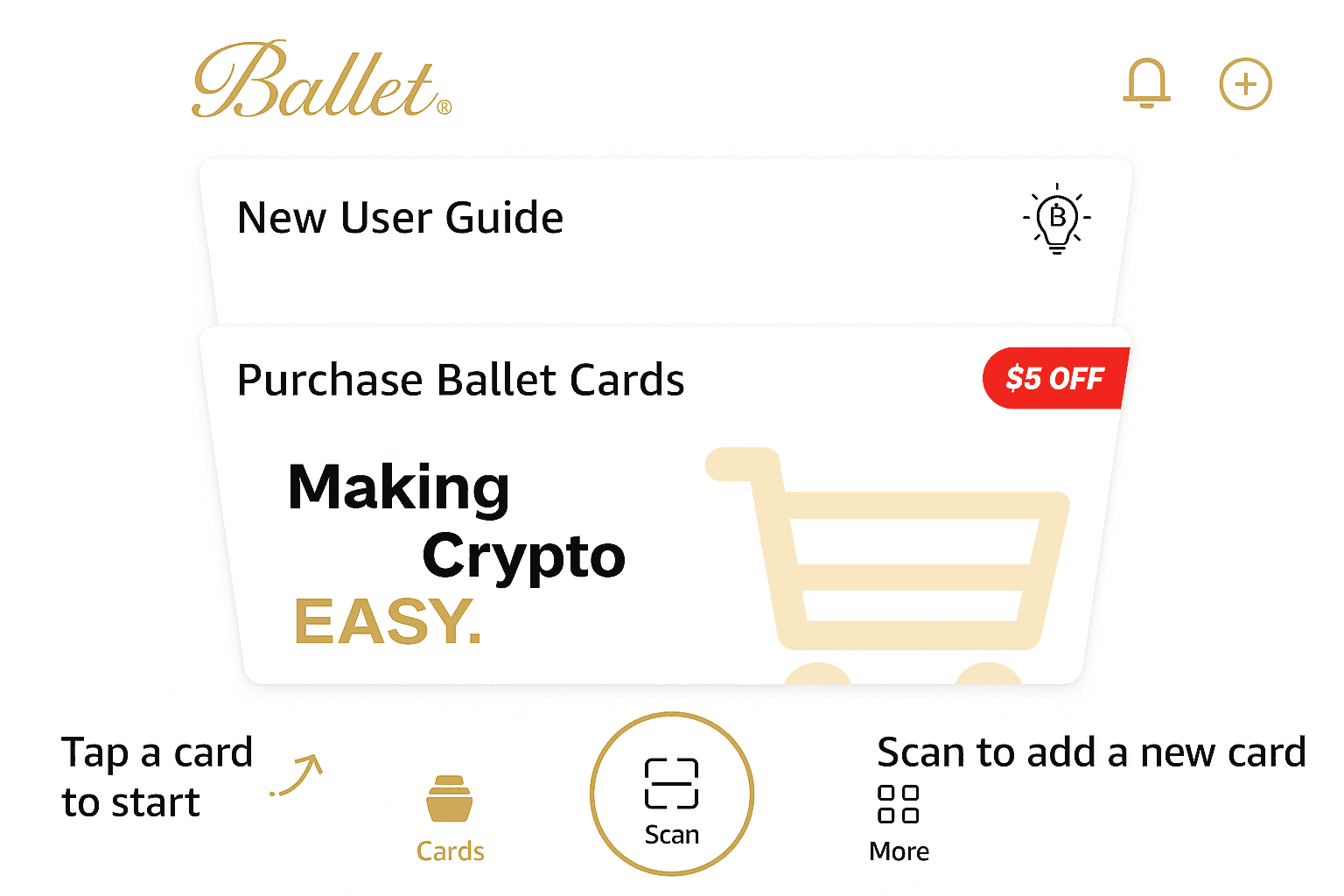
Step 3- Follow the prompts until the wallet information appears on screen.
That is basically it. Ballet is close to plug-and-play. There is no computer setup, no account creation, and no seed phrase notebook routine. Everything revolves around the physical card and its secure QR code workflow.
Buying Crypto in the App
Once the wallet is connected, you can buy crypto directly inside the app. That is handy because it reduces the need to move between services after setup.
There is one privacy caveat. While storing and receiving funds with the REAL Series stays private, buying crypto through integrated providers usually requires KYC checks. That means submitting identity details similar to other purchase services.
Here is how the buying flow works inside the app.
Step 1- Open the app and select the wallet that should receive the purchased asset.
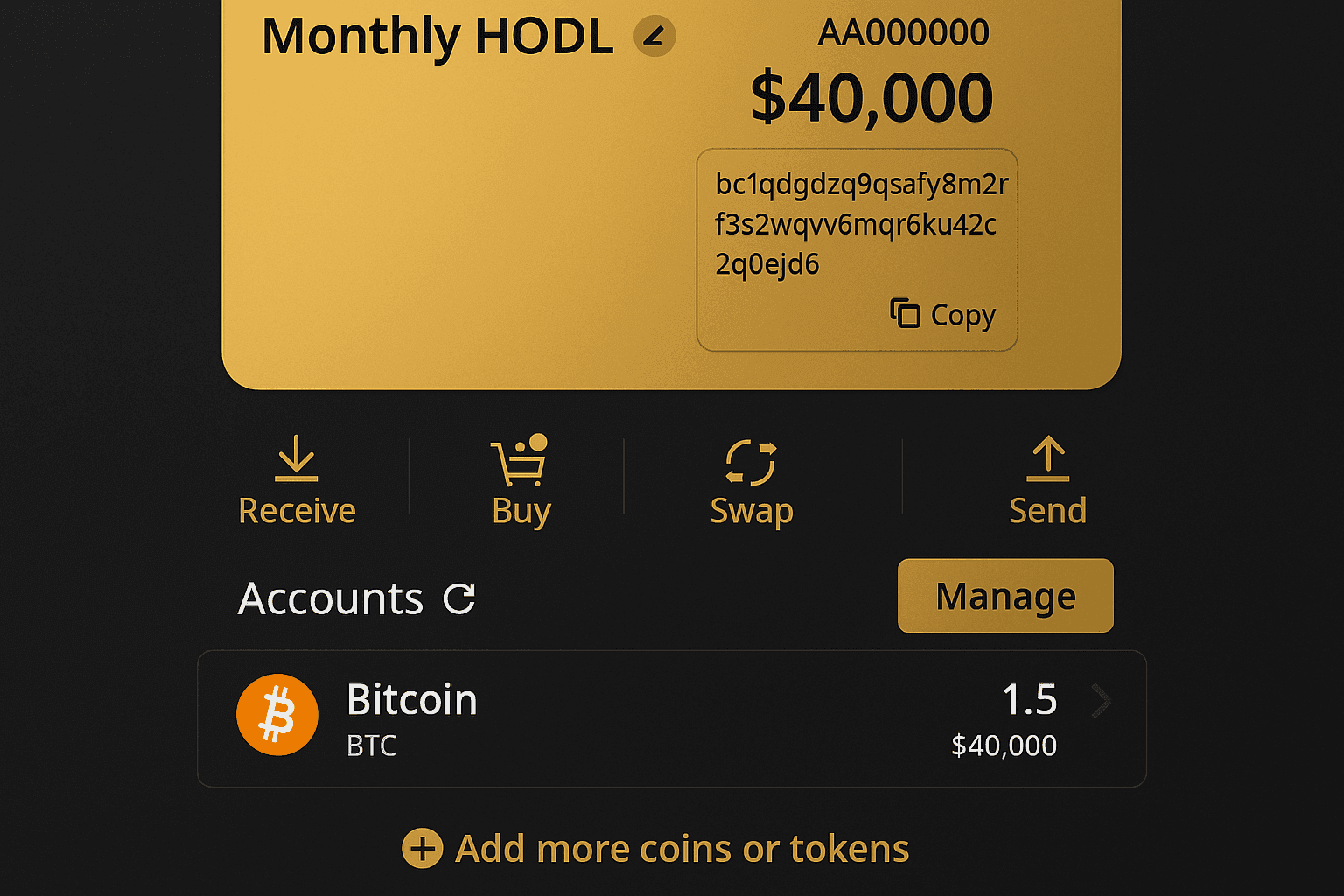
Step 2- TapBuyand choose the Cryptocurrency you want.
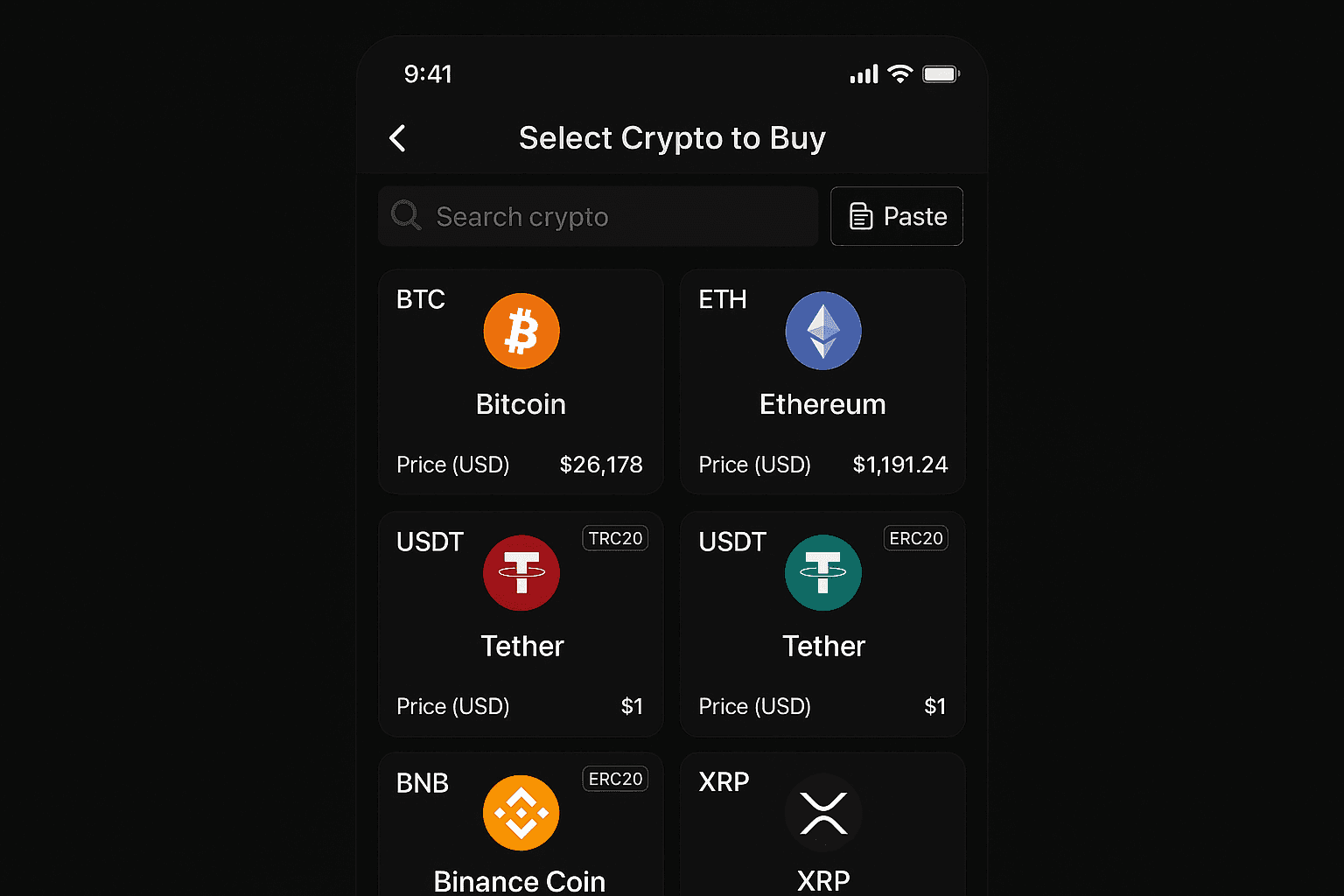
Step 3- Enter the amount you want to purchase, then continue.
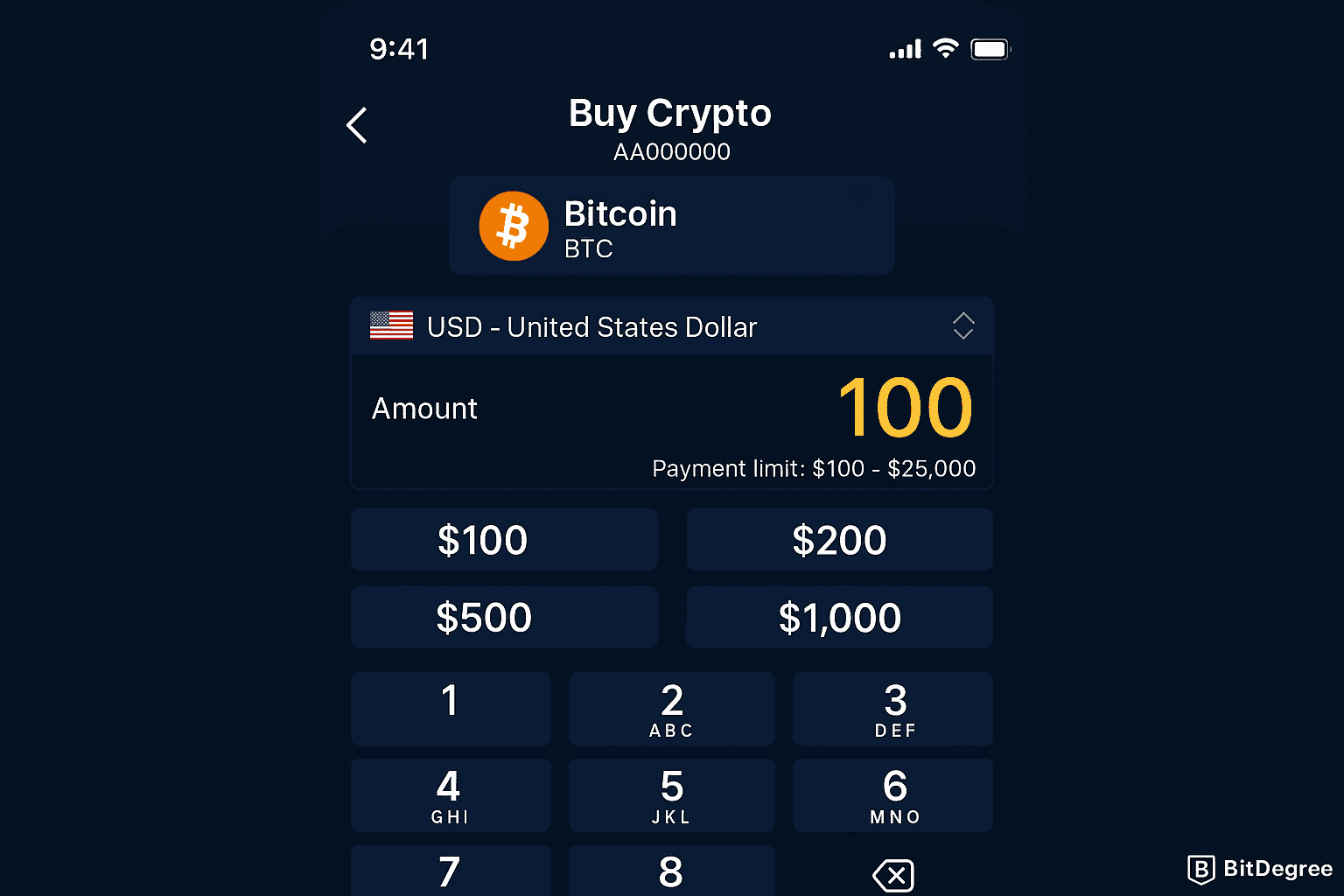
Step 4- Type the last three digits of the wallet serial number, then move forward.
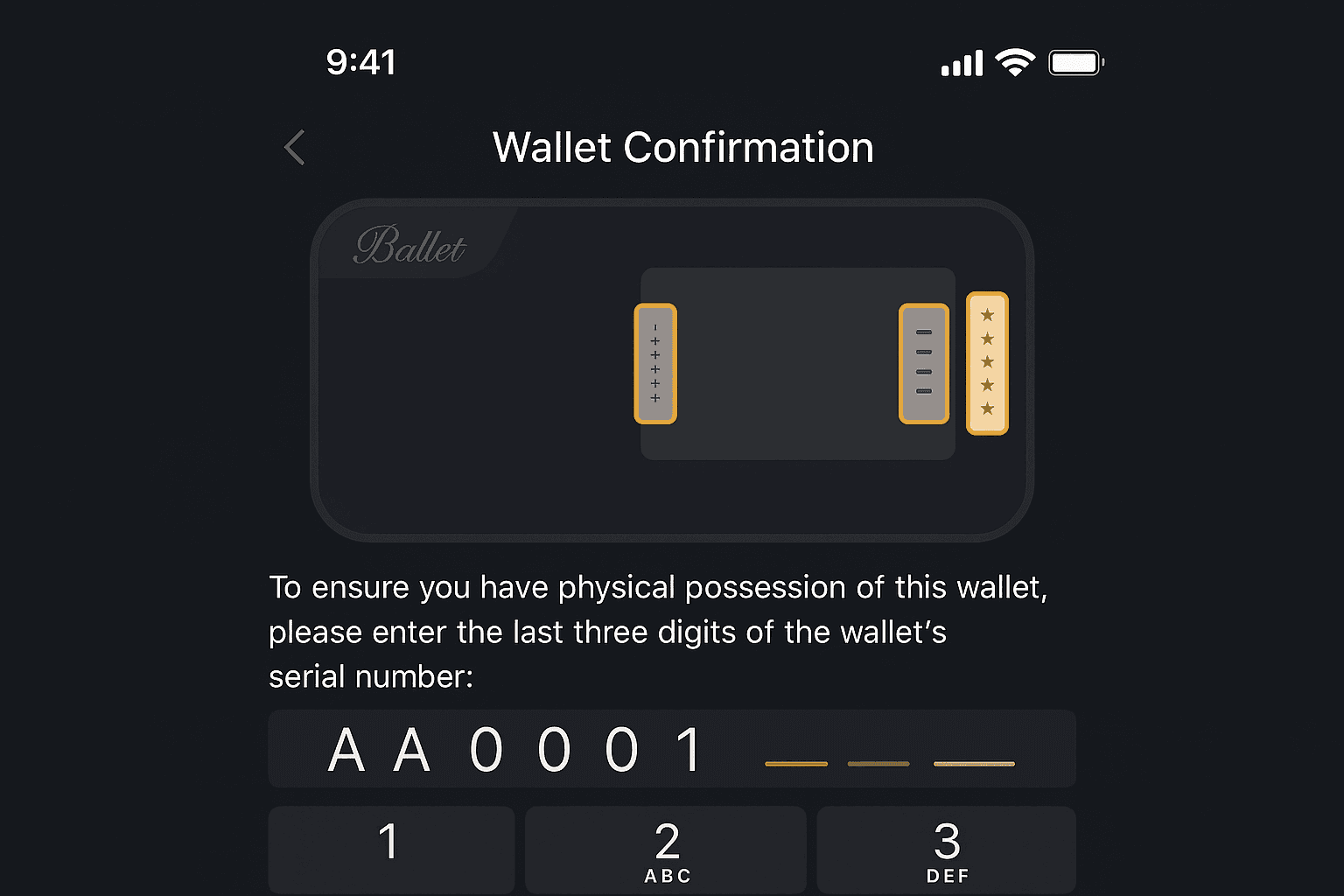
Step 5- Choose a payment route and provider, then confirm. A Credit card is one of the available methods.
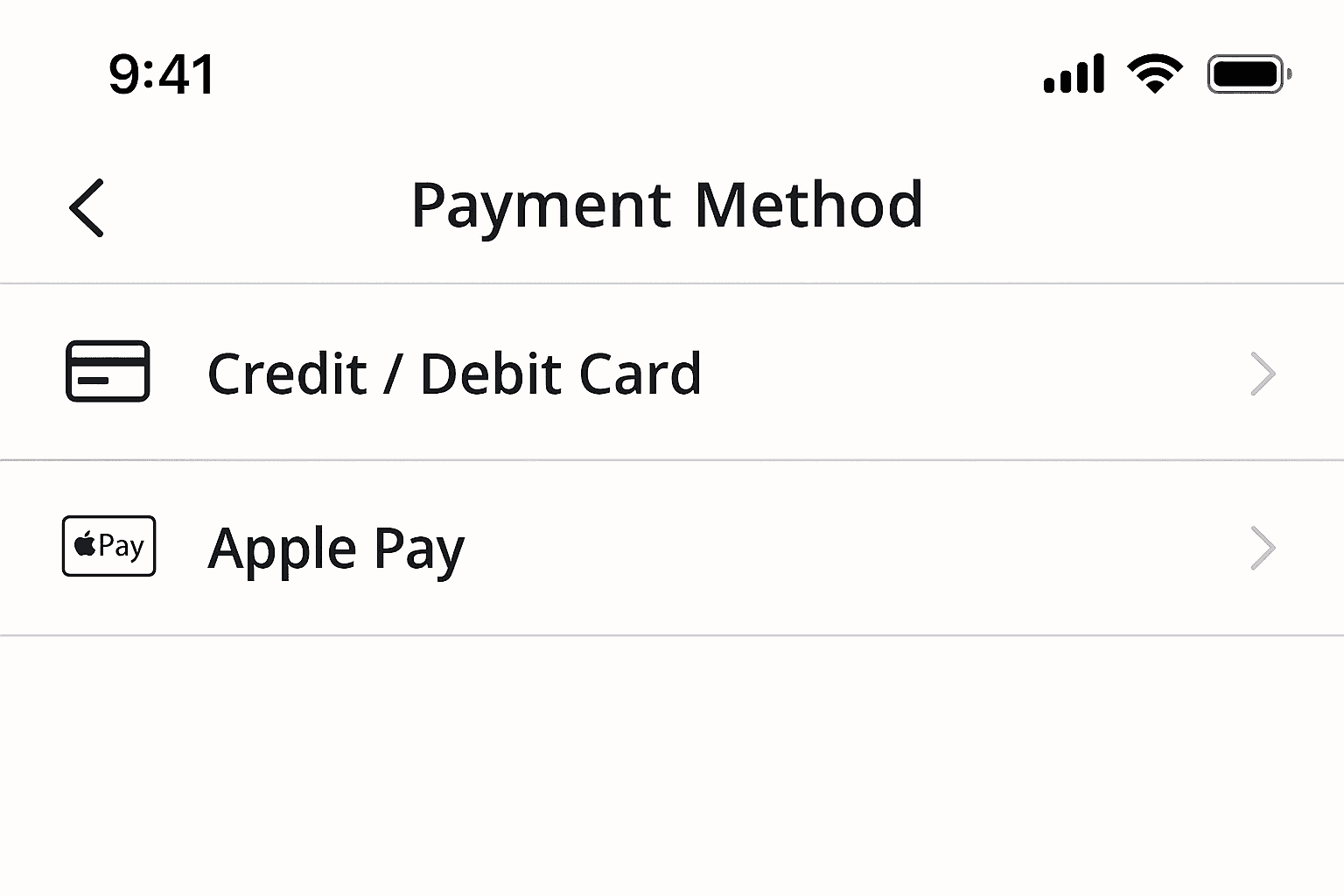
Step 6- Complete the provider’s requested details and verification steps.
Step 7- Review the order and finalize the purchase.
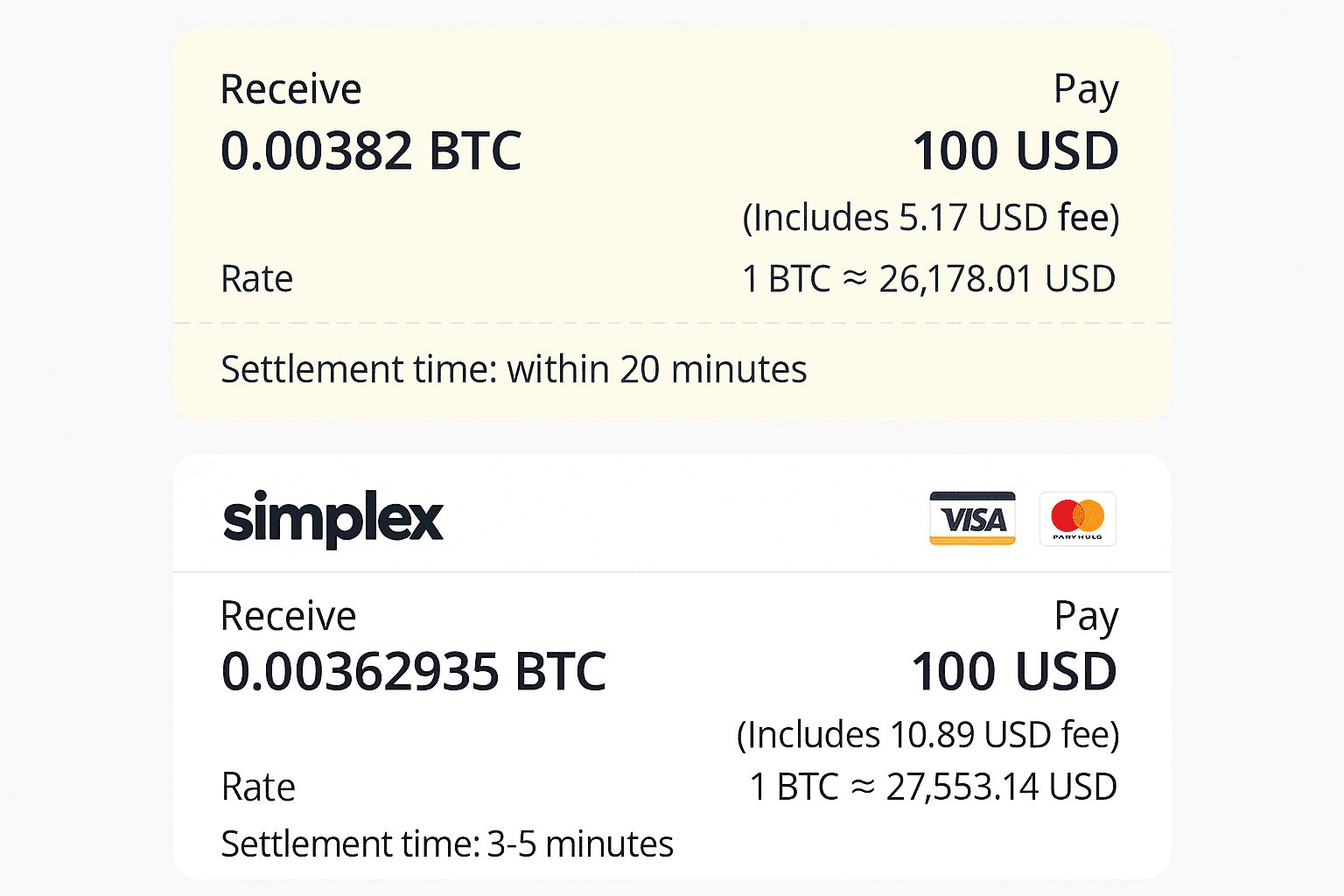
The process is quick and pretty approachable. Ballet’s main idea stays the same from start to finish: keep storage offline, then let the app handle the convenience layer.
Conclusion
My overall take is fairly clear. Ballet is a good fit for beginners and casual holders who want an uncomplicated cold storage wallet with a fast learning curve. The card format, simple setup, and polished app make it easy to start using right away.
That said, the design also creates trade-offs. It is less suitable for active traders or advanced users who want deeper controls and stronger physical discretion. Repeated use of the same card-based setup also makes me more cautious for heavy transaction activity.
For basic offline storage, Ballet does a solid job. If you want more advanced handling and a more discreet hardware design, something like Ledger Nano X or Ledger Nano S Plus may be the better direction.