Few crypto phrases have traveled as far as SAFU. If you are checking the SAFU meaning in crypto, the short answer is this - it can mean funds are considered safe in community slang, and it also refers to Binance’s Secure Asset Fund for Users, a reserve built to protect customer assets in extreme cases. That dual meaning matters because it blends internet meme culture with a real protection mechanism inside a major cryptocurrency exchange.
Origin and Purpose of SAFU
Binance introduced this emergency fund in July 2018 and committed 10% of trading fee revenue to it. The goal was straightforward - create a form of internal insurance that could help cover user losses if the platform faced a serious security event.
- Introduced in July 2018
- Funded with 10% of trading fee revenue
SAFU is an acronym for Secure Asset Fund for Users. From a practical angle, this is why SAFU became important for crypto users and traders. On any cryptocurrency exchange, trust is tied to how user funds are handled during stress. A reserve fund gives Binance an extra buffer, which is especially relevant for an investor holding assets on a centralized platform instead of in a personal cryptocurrency wallet.
SAFU Fund Size and Structure
| Date | Fund Value USD | Assets Held | Storage Method |
|---|---|---|---|
| January 29, 2022 | 1 billion | BTC and BNB | Separate cold wallets |
That size signaled that Binance was treating the reserve as a serious financial backstop rather than a marketing label. That setup also helps explain how SAFU works. Binance feeds a share of trading fees into the fund over time, then keeps those holdings apart from routine exchange operations. In real use, that kind of separation is one of the first things I look for when assessing platform risk, because reserve design matters as much as the headline number.
The Phrase Funds Are SAFU
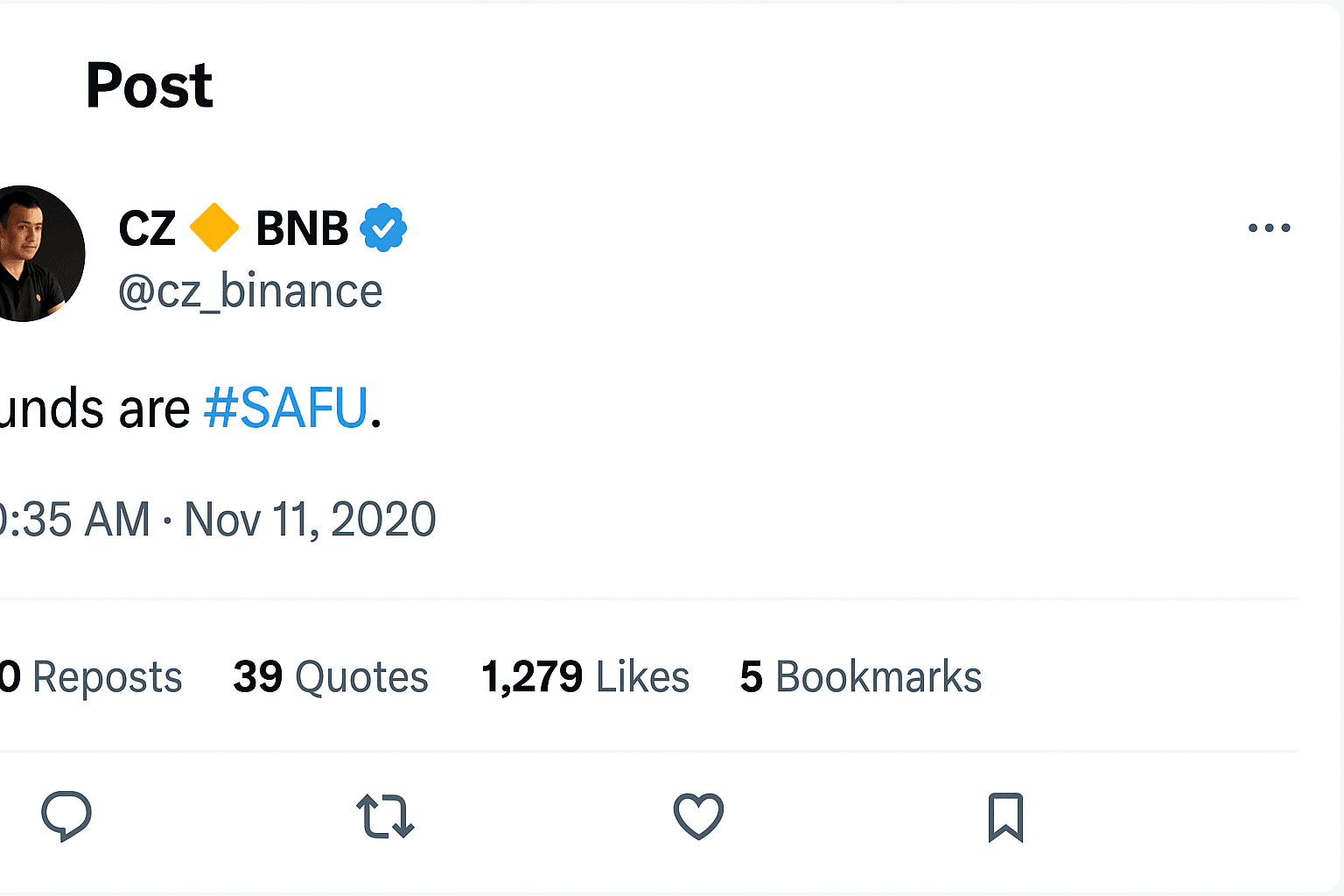
The broader meaning of SAFU in crypto took off through humor. In 2018, content creator Bizonacci released a YouTube video titled Funds are Safu, riffing on a message from Changpeng Zhao, who was Binance’s chief executive officer at the time. During an unscheduled maintenance window, Zhao posted on X that user funds were safe, and the wording quickly evolved into a widely shared crypto catchphrase.
How the SAFU Meme Took Hold
The meme traces back to March 7, 2018, when Binance users ran into unexpected maintenance linked to a problem on the SYS/BTC pair. There were also attempts by attackers to abuse the situation, which pushed concern higher across the platform. Zhao’s reassurance landed at exactly the right time, and the internet meme version of SAFU stuck.
Since then, people have used SAFU in crypto conversations as shorthand for safe.
- Funds are SAFU
- Is this platform SAFU?
You will also see people say an investment is SAFU, but that is where the term gets stretched past its real meaning. In casual use, SAFU can sound like a guarantee when it is really slang or a reference to Binance’s reserve. A promoter can call something SAFU and still offer no proof that the exchange or asset is secure, so the phrase should never replace due diligence.
There is also an important limit to keep in mind. SAFU is a Binance-managed reserve, not government-backed insurance, and it is not the same as FDIC insurance. FDIC coverage applies to eligible bank deposits and carries regulatory backing, while SAFU is an internal Binance fund with no public guarantee of fixed coverage. It can help after an exchange security incident, but it does not remove broader counterparty risk.
Binance has said the fund has been used to make users whole after major platform incidents, with the 2019 exchange hack being the clearest example tied to SAFU. In that case, Binance stated that affected users would be covered through the reserve rather than taking direct losses. That track record matters, but it still depends on Binance’s own management of the fund rather than outside insurance protection.
Last updated on June 8, 2026