A lot of action in digital markets now happens before a human can even react. High frequency crypto trading uses fast code, direct API access, and exchange-level infrastructure to catch tiny price gaps in milliseconds. In crypto, that usually means automated arbitrage, market making, or short-term momentum trades running across fragmented venues where speed still creates an edge.
That edge has changed market structure. High-frequency trading once looked like a niche tactic from the stock world, but it now plays a central role in Cryptocurrency market liquidity and price formation. Tight spreads are one visible result. Another is much tougher competition for any trader trying to work the order book manually.
The key trade-off is easy to see after watching live books for a while. HFT can improve fills and reduce friction, yet some of the displayed liquidity disappears almost instantly. That vanishing depth is often called ghost liquidity, and it matters because the posted size may not still be there when a slower order arrives.
Key Points
High-frequency trading has shifted from a disputed corner of finance into core market infrastructure across both traditional venues and crypto. Firms rely on Algorithm-driven execution to exploit very small Price differences, which usually compresses bid-ask spreads and supports Market liquidity.
There is a downside. Some of that liquidity exists for such a short time that smaller participants cannot interact with it. That can push retail flow to the back of the queue and, during sharp moves, add to intraday Volatility.
Oversight is also getting tighter. Regulators and exchanges are paying closer attention to manipulation, venue fairness, and the growing role of larger quant firms using AI-assisted models. At the same time, the speed race continues, even as costs rise and easy profits get harder to find.

Financial markets reward precision. With enormous volumes changing hands every day, small errors get punished fast, and efficient execution matters as much as the trading idea itself.
Healthy markets depend on liquidity. An Asset has little practical value if nobody is ready to buy or sell it near the quoted Price. That role has long been filled by the Market maker, whose job is to post two-sided quotes and earn a spread or rebate for taking that Risk.
As markets digitized, those intermediaries changed with them. Human dealers gave way to systems that can update quotes continuously and react to incoming Data far faster than any person could.
How High-Frequency Trading Works
High-Frequency Traders use software models, often called algobots, to search for tiny mispricings and Trade on them almost instantly. In crypto, the basic idea is the same as in Nasdaq-listed equities or other electronic venues. The system watches feeds, identifies a condition, then sends orders before the opportunity fades.
In practice, high-frequency trading work in crypto markets depends on two market features. One is fragmentation across many exchanges. The other is 24 hour trading, which means the system must stay stable for long stretches and keep reacting without pause. There is no universal trade-count line that defines HFT, but in crypto it usually means the system is submitting orders continuously through the day and may execute hundreds or far more small trades if the edge is there. That separates it from slower algorithmic trading, where a model might place only occasional orders around a few setups.
Blockchain confirmation time does not stop this style of trading. Actual execution happens inside the Cryptocurrency exchange matching engine, not on the Blockchain itself. On-chain settlement matters for transfers and funding, while the trade itself is handled off-chain at venue speed.
Fast execution has also helped reduce manual inefficiencies. Studies in older markets showed wider spreads after policies that discouraged HFT activity, which supports the view that electronic quoting can improve liquidity. Still, there is a point where more quote traffic does not always translate into a better experience for every participant.
History of HFT
The roots of modern HFT go back to automated trading approvals in the late 1990s. Around that time, exchanges started allowing systems to submit and manage orders electronically, and trade times that once took seconds slowly dropped toward milliseconds.
The New York Stock Exchange also encouraged firms that could add competition to posted quotes. Even a rebate worth less than a cent becomes meaningful when a Hedge fund or specialist shop is processing huge volume every session.
By 2010, execution speed had already collapsed from seconds to milliseconds. Today, decisions can happen in tiny fractions of a microsecond, and every hardware upgrade pushes that boundary a little further.
Why Firms Use This Approach
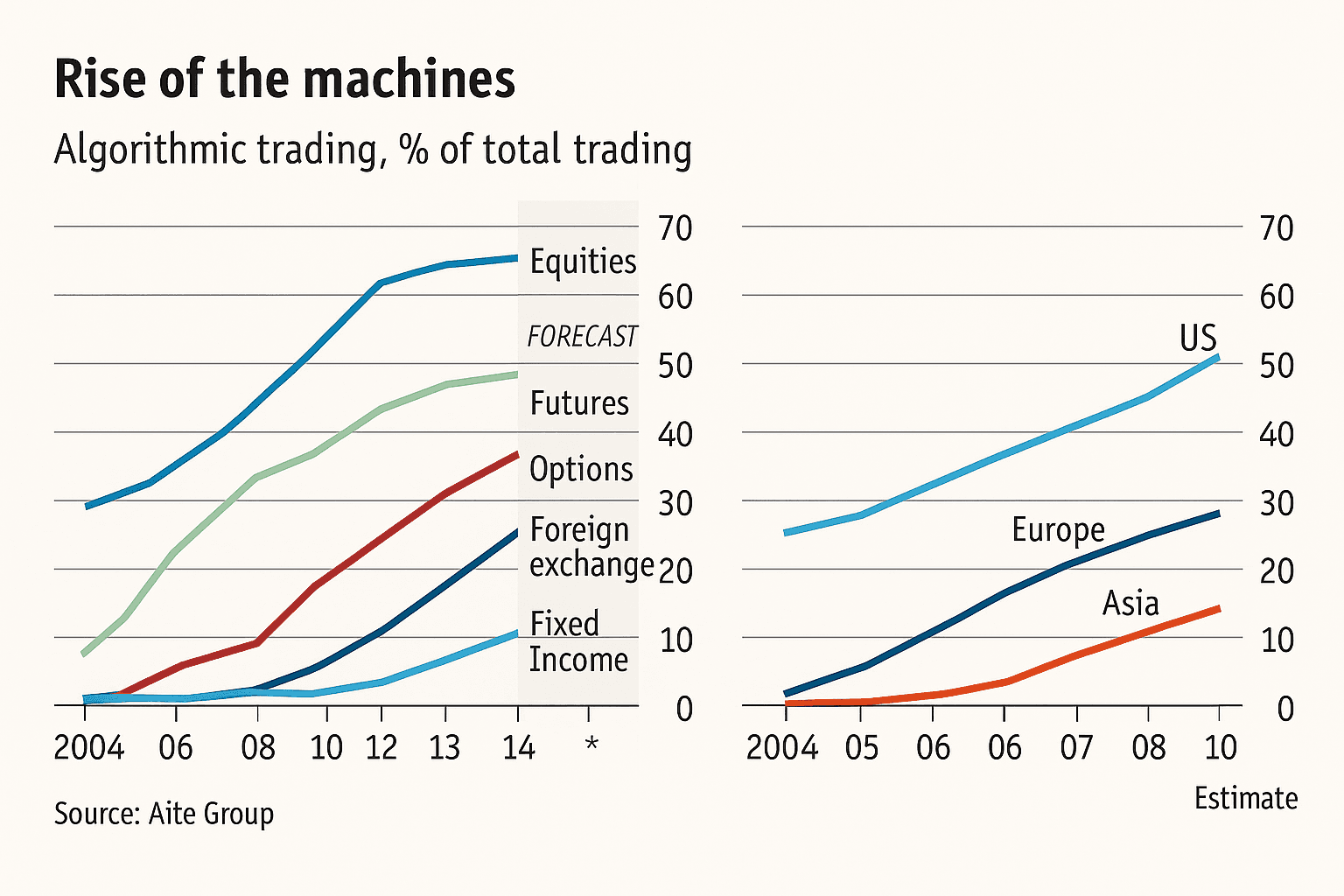
The main attraction is speed. HFT systems can scan more than one market at the same time, compare quotes, and fire orders based on pre-set rules before a manual Trader can even confirm the setup. If the strategy depends on fleeting spreads, faster execution often decides whether the idea works at all.
Another hallmark is very high order flow. These systems place and cancel large numbers of quotes relative to executed trades, especially in market making. That pattern became more common after exchanges started rewarding firms for adding liquidity after the 2008 crisis.
Global expansion also helped. Many venues became more open to automated liquidity providers, though pushback followed as critics argued that some firms were receiving an unfair timing advantage. France introduced a separate HFT tax in 2012, and Italy moved in the same direction soon after.
HFT also became highly dominant for a period. In the U.S., more than half of equity trading once came from this segment. The share later eased, though Algorithmic trading still remains a major force. Large parent orders are commonly sliced into smaller pieces, and the system continues managing those orders after submission.
In crypto, the firms doing this are usually proprietary trading desks or specialized quant teams. Large market makers are common too, because they already have the capital and engineering support needed to compete on speed.
Common HFT Strategies in Crypto
Crypto HFT is better viewed as an execution framework than a single Trading strategy. The same low-latency stack can support several ideas, but the goal stays similar: capture small edges repeatedly and control costs tightly.
| Strategy | Description | Key Features |
|---|---|---|
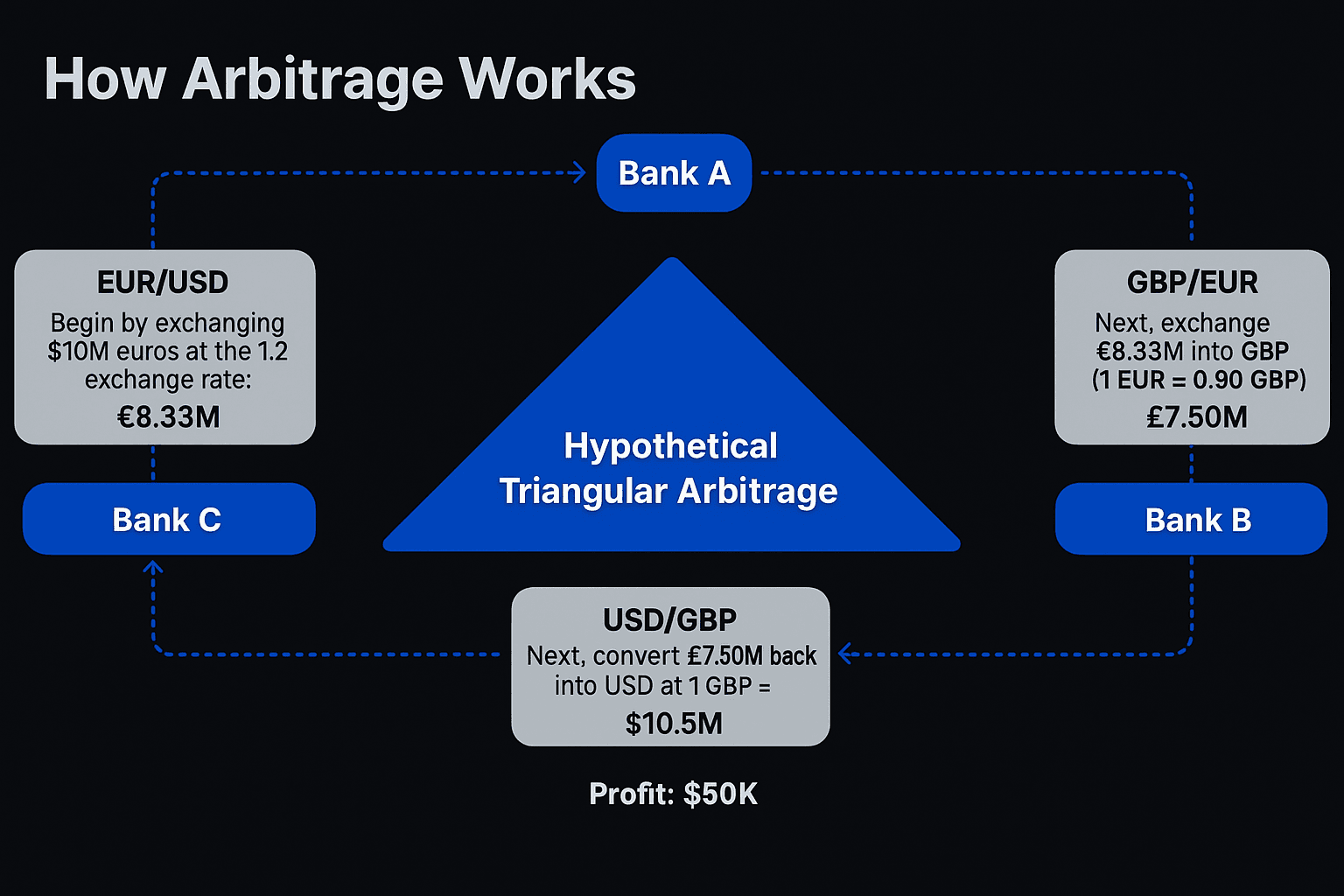
| Arbitrage trading | The bot buys an asset on one venue and sells it on another when a temporary gap appears. | Works across fragmented exchanges and needs very fast execution. |
| Market making | The system posts bid and ask quotes at the same time and tries to earn the spread. | Focuses on quote updates and inventory control. |
| Momentum or scalping | Some firms react to short bursts in flow, while others trade brief dislocations with statistical arbitrage logic. | Depends on clean data and disciplined execution. |
These strategies reflect how fast and fragmented the crypto Market has become. A setup may look simple on paper, yet after fees and slippage the usable edge can be surprisingly thin.
Inside the Algorithms
Large institutional orders can move a market if they hit the book all at once. Automated execution helps reduce that footprint by splitting size over time and adjusting the sending schedule according to live conditions.
The underlying Algorithm usually handles feed reading, signal detection, and order placement as one continuous loop. Some models also react to News and short-term trend signals. Others focus almost entirely on spread capture and queue position.
Many systems post two-sided quotes and then try to infer whether a larger order is building in the background. If the model spots a likely wave of demand, it may reprice ahead of the move and try to sell into that flow. Critics see this as a form of aggressive intermediation, though the inputs often come from public book data.
To run at true HFT speed, firms need specialized infrastructure. The main requirements are easy to spot:
- Fast hardware and low-latency networking.
- Servers placed as close as possible to exchange systems, plus reliable real-time data feeds.
Even small API delays can wipe out the expected edge, so firms keep testing for consistency under load and keep spending on upgrades.
Multi-exchange access matters for the same reason. Crypto prices are scattered across separate venues, so an HFT desk usually connects to more than one exchange and relies on smart routing to decide where the order should go first.
At the retail level, true institutional HFT is hard to match. Individuals can automate slower strategies, but competing with firms that spend heavily on colocation and optimized networking is a different game entirely. The main barriers are infrastructure cost and constant maintenance. Access is another issue, because better API performance and lower fees usually go to larger participants. For beginners, that makes high frequency crypto trading a poor fit in most cases.
Downsides of High-Frequency Trading
Lower spreads and deeper books sound good, but the cost is not always obvious from the outside. When exchanges give favored firms the fastest view of incoming order flow, those firms may react before the wider market can respond.
If heavy buy interest appears on one venue, a fast desk can sweep available shares or coins elsewhere and then resell at a slightly higher Price. Supporters say that is efficient price discovery. Critics argue it is simply paying for an informational advantage.
That imbalance creates adverse selection. Slower participants dislike quoting against a robot that can cancel or reprice before they can act. Rival HFT firms also pressure each other, sometimes through fake quotes or spoofing designed to trigger another system.
Some economists argue that HFT behaves less like a steady liquidity provider and more like a directional speculator during tense moments. The result can be thinner usable liquidity and sharper intraday swings, even if quoted spreads look narrow during calmer periods.
Operational risk is another real issue. In 2012, Knight Capital lost hundreds of millions after a software update malfunctioned and flooded the market with erroneous orders. That example still gets cited because it shows how little room for error exists once a machine is firing at scale.
Profitability has also become harder. Faster links, cleaner code, and lower latency all cost Money, and every improvement triggers a response from competitors. Spread Networks reportedly spent $300 million to cut transmission time between Chicago and New York, which says a lot about how expensive this arms race can get.
There is also a resource question. The gains from reducing arbitrage windows have been dramatic from a speed perspective, yet the total economics have not always expanded in the same way. Under the Efficient-market hypothesis, many of these opportunities should shrink as more capital and better systems chase them.
The trade-offs are fairly direct. The main benefits are tighter spreads and faster price adjustment. The main drawbacks are higher competition and liquidity that can vanish when markets get stressed.
The Future of This Trade Style
High-frequency trading keeps drawing criticism because machine decisions made in milliseconds can shape the broader market long after the order is gone. The 2010 flash crash remains the classic warning sign. A government review found that a very large automated sell program helped trigger a rapid drop in the Dow before prices rebounded.
That event still feeds the debate around ghost liquidity. Firms may post plenty of size, but if those orders vanish the moment stress appears, smaller participants are left with far less real depth than the book suggested. Possible fixes include slowing information distribution to the fastest firms or using periodic batch auctions instead of a fully continuous stream.
The actual effect of HFT on market quality is still difficult to measure cleanly. Some markets benefit from tighter pricing and faster response, while others may see fairness concerns increase as the speed gap widens.
Is high-frequency crypto trading legal? In most jurisdictions, yes, provided the firm follows exchange rules and market-abuse law. The legal issue usually turns on behavior such as spoofing or unfair access, not on the use of automation itself.
Is high-frequency crypto trading still profitable? It can be, though margins are tighter than they used to be and the best opportunities usually go to firms with strong execution and low fees. For a smaller participant, profitability is far less certain because costs and competition eat into the edge quickly.
Is high-frequency crypto trading a good investment? As a business model, it can work for specialized firms. As something an individual should jump into casually, I would be careful. The technical barrier, capital demands, and maintenance load are high, and most people are better served by slower Algorithmic trading setups.
Which brokers or exchanges are best for high-frequency crypto trading? The useful venues are generally the ones with stable API performance, strong matching engines, and fair fee structures. In practice, firms tend to prefer large exchanges with deep liquidity and low-latency connectivity. Binance and Kraken are common reference points, though the real test is execution quality under live load.
Recent Crypto HFT Developments From 2023 to 2026
The past few years pushed crypto HFT further into the institutional mainstream. Traditional firms moved deeper into digital assets and became major liquidity providers on leading venues. That raised the overall level of professionalism, while also increasing scrutiny from regulators.
Regulatory attention expanded across several regions. Exchanges improved surveillance around manipulative behavior, and agencies started applying market-abuse thinking from traditional finance to crypto venues as well. The direction is clear even if the rulebooks still differ from place to place.
The technology race also kept moving. Some exchanges explored hardware acceleration and crypto colocation so participants could cut latency even further. From hands-on testing, one practical bottleneck is often less about the headline speed and more about consistency under load. A fast venue that stalls during bursts is less useful than a slightly slower one that stays stable.
AI and machine learning also became more visible. Some firms used these tools for short-term prediction or strategy tuning, though ultra-short trading still often rewards simpler models that can execute cleanly. In many cases, AI helps more with risk controls and model selection than with magical forecasting.
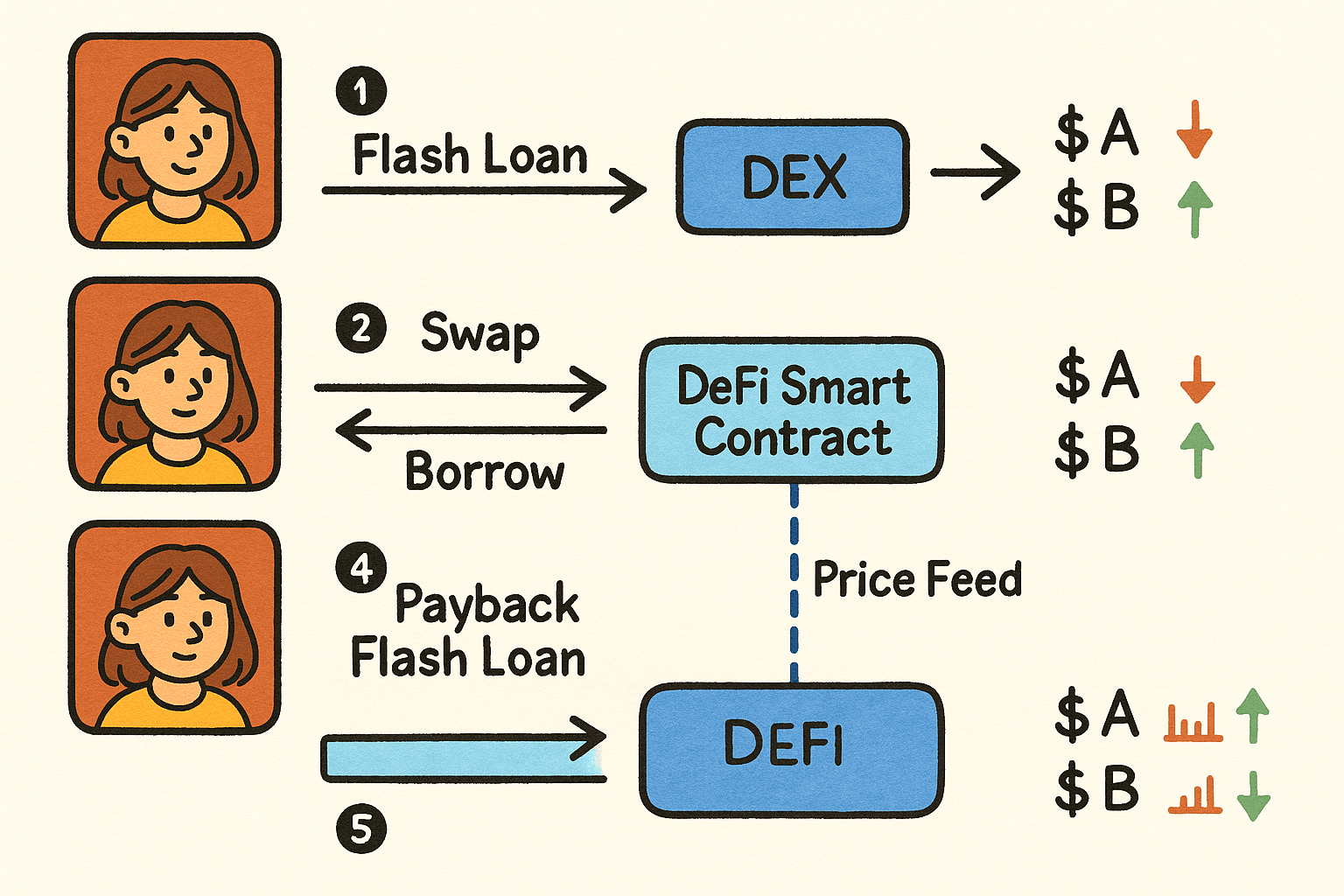
DeFi opened another lane through MEV and on-chain arbitrage. That brought both useful price alignment and more controversial extraction tactics. HFT firms that started in CEX markets are now active around DeFi inefficiencies too, especially where transaction ordering creates a measurable edge.
New venues appeared with features aimed at automated desks, while established exchanges upgraded after the FTX collapse changed expectations around resilience and transparency. On-chain order books also improved, creating more room for low-latency strategies even inside blockchain-based systems.
The broader conclusion is straightforward. HFT is now embedded in crypto market structure. It began as something many users distrusted, especially where bots were involved, and it has become a standard part of how liquidity gets supplied. Crypto still throws unusual shocks at every system, so the firms that last will be the ones combining speed with disciplined risk control.