Fast price moves pull people into both markets, but is trading crypto the same as forex? No. They share the basic idea of trying to trade one currency against another asset at the right price, yet the structure is different. Forex sits inside the Foreign exchange market and deals in Fiat money such as the United States dollar, the Euro, or Pound sterling. Crypto trading focuses on Cryptocurrency and other digital asset markets built around Blockchain networks and decentralization.
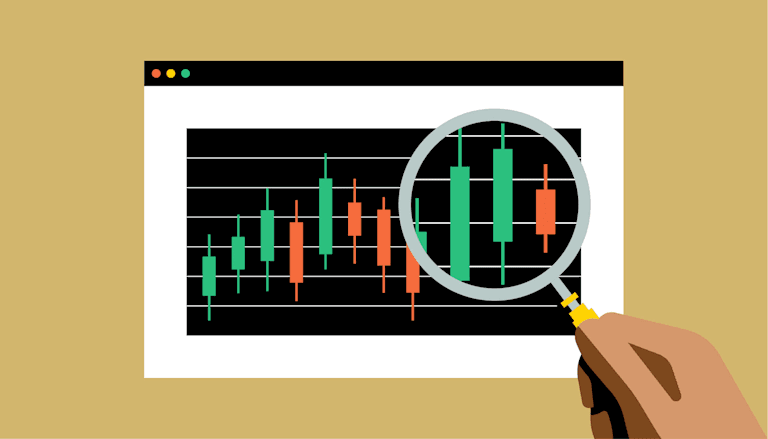
- Forex and crypto trading are both widely used ways to access a financial market, and each brings its own upside and Risk.
- Forex trading deals with fiat Currency pairs, while crypto trading centers on Digital currency and Coin markets.
- The better fit depends on your goals, your comfort with swings in Price, and how well you understand each Market.
Forex Trading Explained
Forex, short for foreign exchange, is the Market where one national Currency is exchanged for another. A Trader in this space usually watches a Currency pair such as EUR/USD or GBP/JPY and tries to profit from changes in the exchange rate. Trading activity runs around the clock during the workweek, with volume shifting as major financial centers open and close.
Most forex decisions are shaped by macroeconomics and policy signals. Interest rates set by a Central bank matter a lot, along with changes in the wider Economy and major Bank commentary. In practice, I find forex screens tend to react sharply around scheduled data, then settle faster than many crypto charts do.
Another core trait is market liquidity. The forex market is extremely deep, so large orders usually have less impact on Price than they would in a smaller Asset market. Many brokers also offer Leverage, often through products such as a Contract for difference or a Futures contract, and that can amplify gains or losses very quickly. Good risk management is part of the job here, not an extra.
Crypto Trading Explained
Crypto trading is the buying and selling of digital assets such as Bitcoin or ETH through exchanges and similar platforms. Unlike Fiat money, these assets are generally not issued by a government or backed by a central banking system. Their value is driven mainly by supply and demand, along with sentiment around each network or token.
The biggest attraction is Volatility in finance terms. A digital asset can move far more in a day than a major forex pair, which creates opportunity but also raises Risk fast. That is why some Investor interest stays high even during weak conditions.
Crypto also runs nonstop. There is no weekend close, so a Trader can access the market at any hour. From a practical angle, that flexibility is useful, though it also means Price shocks can hit while you are away from the screen. Direct ownership changes the experience too. In some setups you hold the Asset in a wallet, which adds custody decisions that many forex users never face.
Forex vs Crypto Key Differences
| Aspect | Forex Trading | Crypto Trading |
|---|---|---|
| Market structure | Government-backed currency trading through regulated brokers or institutions | Digital asset trading tied to decentralized networks, with oversight depending on jurisdiction |
| Liquidity | Deeper market liquidity with large participation from banks and institutional firms | Strong in major assets like Bitcoin, but thinner in smaller coins |
| Regulation | Usually overseen by established authorities such as the Financial Conduct Authority | Less uniform, with policy signals from the United States Securities and Exchange Commission often moving prices |
| Price drivers | Often reacts to interest expectations and broad economic news | More sensitive to platform developments and shifts in online sentiment |
| Access hours | Effectively 24 hours during weekdays | Runs every day without a close |
Which Market May Suit You Better
If you want a more established environment with tighter regulation, forex may feel easier to assess. It is often seen as the safer of the two because the market is deeper, major currencies are linked to real economies, and the overall structure is more mature. That does not remove Risk, especially when Leverage is involved, but it does reduce some of the chaos seen in crypto.
If you are comfortable with larger swings and want around-the-clock access, crypto may fit better. The upside is the chance to trade faster moves. The tradeoff is higher uncertainty, along with added issues such as wallet security, exchange failures, and sudden sentiment reversals.
Beginners usually find forex more predictable than crypto, especially when sticking to liquid pairs like EUR/USD or USD/JPY. Crypto can still be approachable, though starting with major assets and smaller position sizes tends to make the learning curve less punishing. In either market, an Investment approach built on position sizing and risk management matters more than excitement.
People also ask if you can make $100 a day trading crypto. It is possible in raw mathematical terms, but the setup has to match the target. On a $2,000 account, making $100 means a 5 percent gain in a day, which usually calls for high Volatility and aggressive Risk. On a $20,000 account, the same goal is 0.5 percent, which is more realistic but still far from routine. A Trader risking 1 percent per trade would usually need a solid edge and enough movement in the Market to reach that figure without forcing entries.
The bigger problem is chasing a fixed daily number. That mindset can push people into overtrading or larger position sizes after a slow session. In crypto, sudden Price swings can help for a moment, then reverse fast and wipe out progress just as quickly.
Your decision should reflect your financial goals, your tolerance for loss, and how well you understand the Asset you plan to trade. Before placing money at risk, do your own research and consider speaking with a Financial adviser.