Crypto can rip higher or drop hard while your phone sits in your pocket. The best crypto price alerts apps solve that problem by watching the market for you and sending a notice the moment BTC, ETH, or another coin reaches your target. If you want a fast answer, the strongest tools in 2026 are dedicated alert services for flexibility, exchange apps for direct execution, and free trackers for simple monitoring.
Unlike a basic price tracker, a good alert app lets you choose how the message reaches you and what kind of trigger matters. That might be a level on Bitcoin, a sharp move in Ethereum, or even a spike in DeFi gas fees. The practical difference is simple - you stop refreshing charts and let the software do the waiting.
Six Things That Make an Alert App Worth Using
Notification Reach
An alert is useless if it never gets to you. I usually check for push support first, then Email or SMS as backup. Better tools may also support Telegram, browser notifications, or a webhook into your own automation.
There is one annoying issue in the mobile world. In the United States dollar and Canadian markets, carriers sometimes filter crypto-related SMS content. If you plan to rely on text delivery for urgent moves, test it before market volatility forces the issue.
Trigger Variety
Different users need different signals. A long-term investment account may only need a simple level alert, while a short-term setup may need RSI or volume conditions. Some platforms also track wallet movement, exchange listings, or Ethereum gas thresholds, which matters if you use a DEX such as Uniswap.
Market Coverage
Coverage changes a lot from one service to another. Large data aggregators watch huge numbers of assets, while a native Cryptocurrency exchange app usually covers only its listed markets. Before you settle on a tool, compare your watchlist with its supported coin base and exchange sources.
Free Access and Paid Upgrades
Many apps are free at entry level, though limits show up quickly if you set lots of conditions. CoinGecko and CoinMarketCap stay generous for basic use. More advanced services usually charge if you want extra channels, more active alerts, or automation through an API.
Speed and Reliability
Delivery lag matters more than flashy design. In normal conditions, the better systems usually ping within seconds. Native alerts from an exchange often feel quicker in my testing because they read their own price feed and avoid an extra data hop.
Privacy and Sign-Up Rules
Some services let you create alerts with little more than an Email address. Others ask for a full account and verified identity. That trade-off affects both privacy and convenience, so choose based on how much data you want to hand over.
The Best Crypto Alert Tools in 2026
Dedicated alert apps focus on one job. They monitor prices and related market signals across many venues, then push out a message when your condition is hit. You cannot place orders there, but the better ones are far more flexible than a standard exchange app.
| App Name | Market Coverage | Supported Triggers | Notification Methods | Free Features | Paid Features | Pricing |
|---|---|---|---|---|---|---|
| Cryptocurrency Alerting | Thousands of assets across more than 30 exchanges | Price and percentage moves, plus broader market or on-chain signals | Push and Email, plus SMS or calls on higher tiers | Basic alerts with limited rules | More channels and higher alert limits | Roughly $15 to $50 per month in 2026 |
| CoinMarketCap | Very broad coin coverage | Price level alerts | Mostly push notifications | Basic price alerts | No major paid alert layer highlighted here | Free for the alert feature covered here |
| CoinGecko | Broad market coverage with NFT tracking | Price level alerts | App-based alerts | Standard account alerts and watchlists | No advanced trigger layer covered here | Free for the alert feature covered here |
| CoinStats | Large coin coverage with wallet syncing | Portfolio and price monitoring | App notifications | Core alerts | Extra customization through subscription | Paid tier required for deeper customization |
Cryptocurrency Alerting for Maximum Control
Cryptocurrency Alerting is built around notifications from the ground up. It tracks thousands of assets across more than 30 exchanges, including Coinbase and Binance, and it goes well beyond simple price levels. You can set alerts for price or percentage moves, and the platform also watches broader market data such as funding or wallet activity. It can even monitor a Stock or ETF price, which is useful if your investment view crosses between crypto and the stock market.
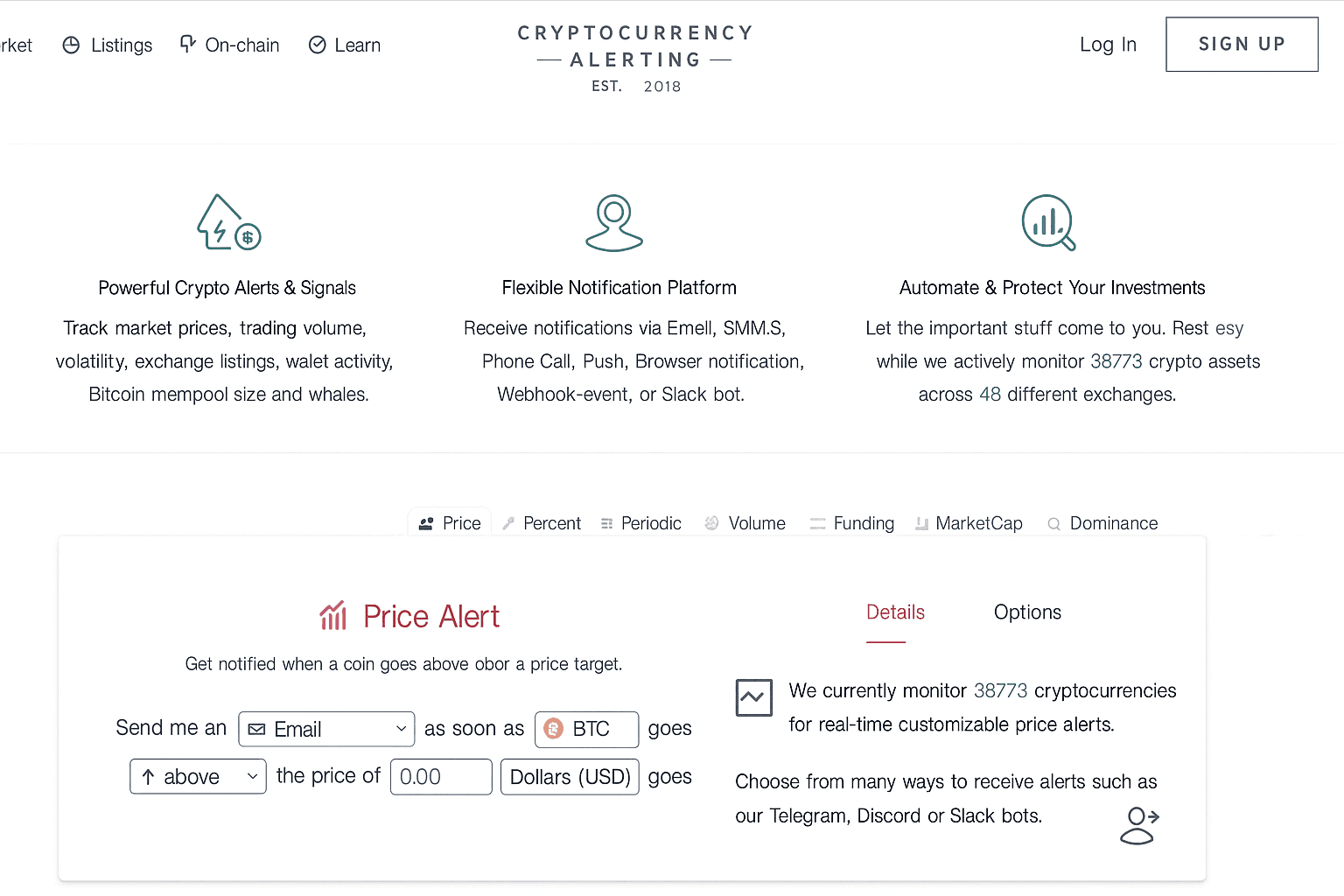
What stands out in real use is the delivery range. The main options include push and Email. Paid tiers add channels like SMS or phone calls, while Telegram or webhooks help if you run alerts into another system.
- Coverage - thousands of cryptocurrencies across more than 30 exchanges
- Triggers - price and percentage alerts, plus broader market or wallet signals
The upside is flexibility. The downside is a steeper setup curve, and some features sit behind paid plans in the rough range of $15 to $50 per month in 2026. SMS support is not equally reliable everywhere. Delivery can be inconsistent in the US and Canada because some carriers filter crypto-related messages, and some services do not support every country at all.
It fits active traders best, especially anyone running across multiple venues or pushing alerts into scripts through a webhook. If you need a call at night when Bitcoin breaks a major level, few tools are better.
CoinMarketCap for Broad Coverage and Quick Setup
CoinMarketCap tracks an enormous range of crypto markets and keeps its alert feature very simple. Open the asset page, hit the bell, and choose the level. That setup takes only a moment on iOS or Android, which is why it works well for casual monitoring.
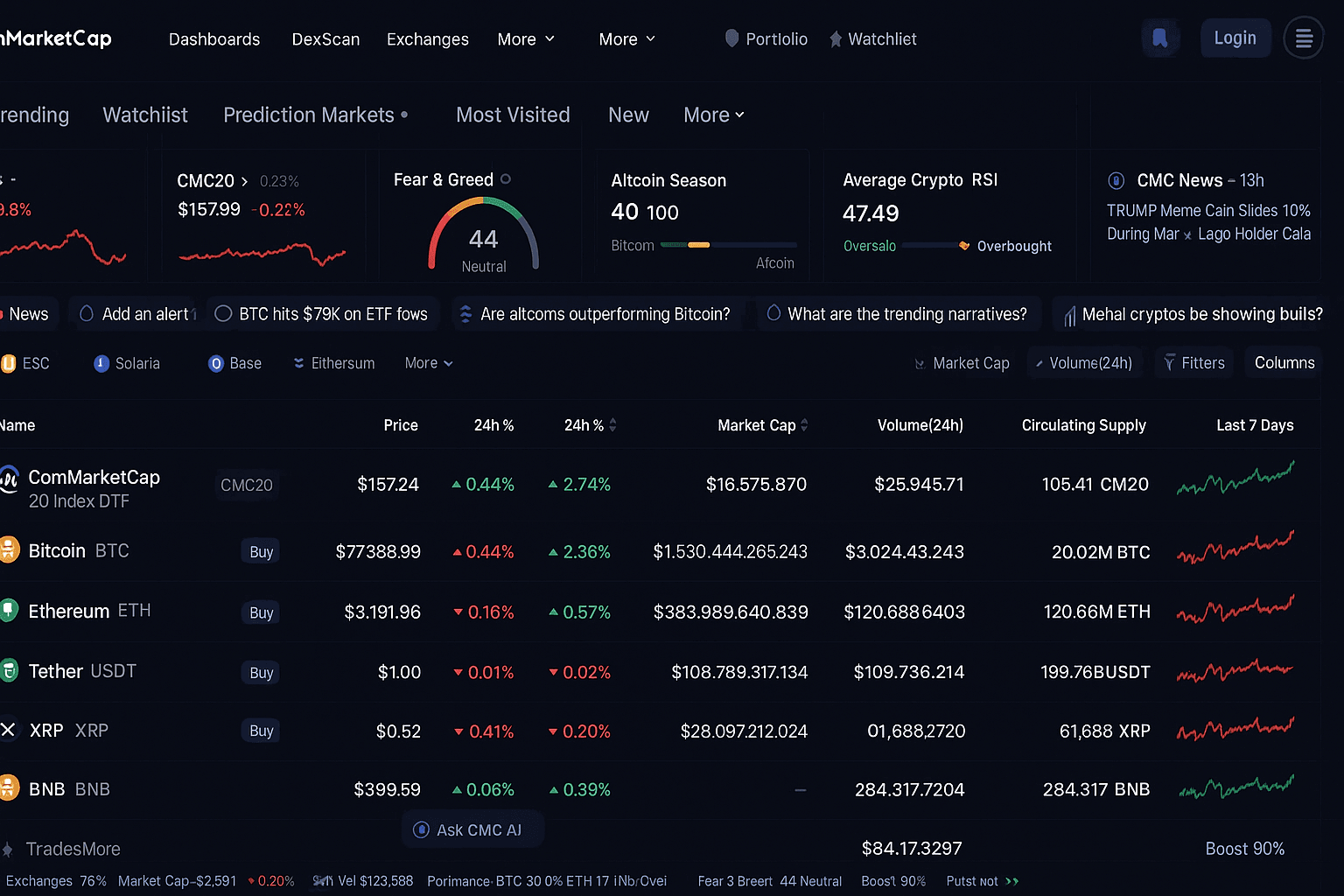
It is a clean product with wide asset coverage and no paid wall for basic price alerts. You also get useful context through dominance data and the Fear & Greed Index. The catch is depth. Alerts are limited to price thresholds, and delivery is mostly tied to push notifications.
- Strength - excellent coin coverage and easy setup
- Limit - no advanced triggers like RSI or volume
This one suits long-term holders and anyone who wants a calm dashboard without extra complexity. If you later want conditions based on volatility or technical data, you will likely outgrow it.
CoinGecko for Free Watchlists and NFT Monitoring
CoinGecko covers a similarly broad market and adds one practical feature that I like. Its Auto Price Alerts can create notifications around assets you recently viewed, which reduces the usual manual setup work. It also supports NFT collections, so collectors can follow floor price changes from the same account.
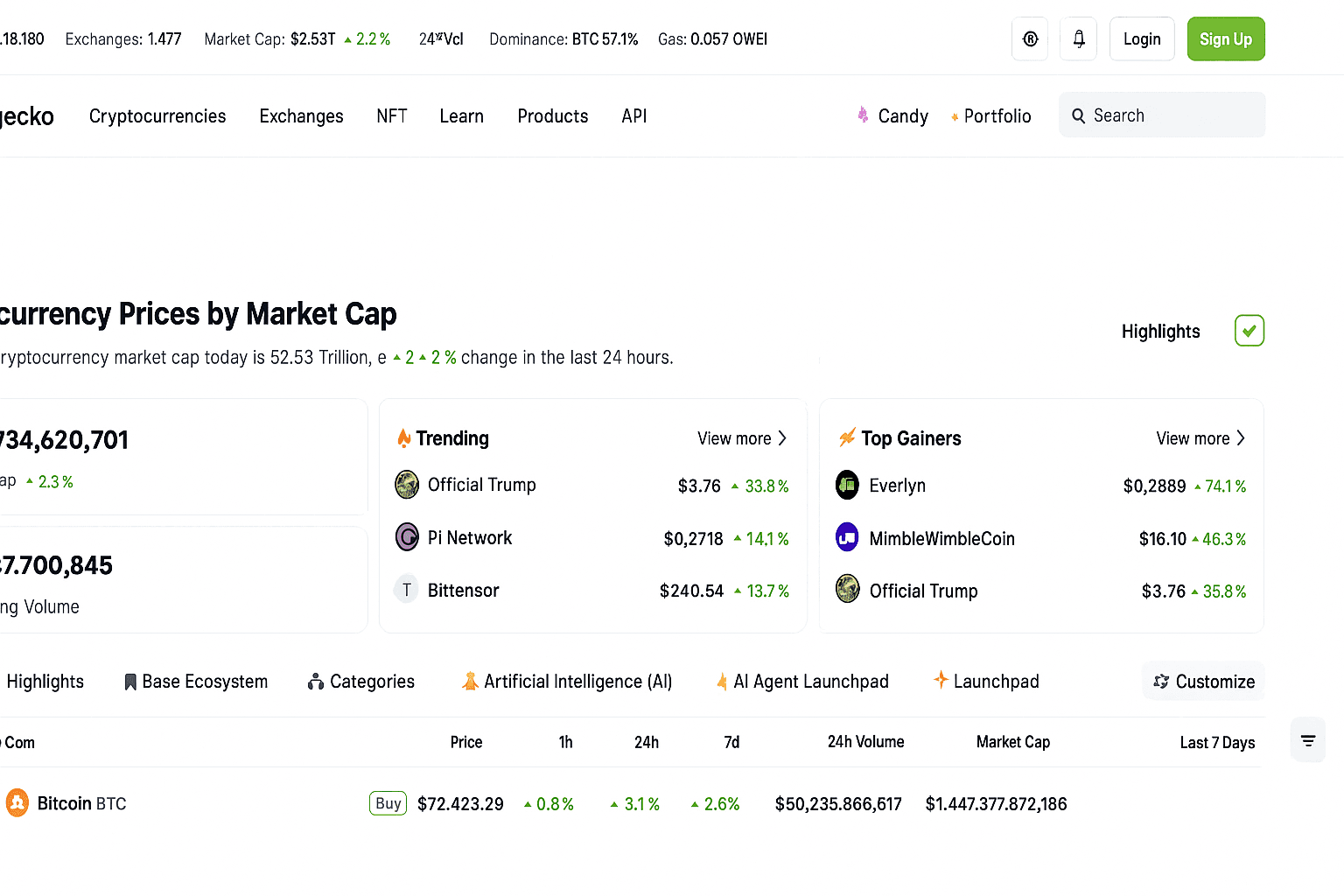
The service is available on the web and through its Mobile app. Alerts remain free with a standard account, which keeps it attractive for users who watch a wide set of tokens or NFTs. As with CoinMarketCap, depth is limited. You get price-level notifications rather than more technical conditions.
- Best use - broad watchlists and NFT tracking
- Main drawback - basic triggers only
CoinStats for Portfolio-Based Monitoring
CoinStats starts as a portfolio tracker and then layers alerts on top. It supports a large spread of coins, wallets, and DeFi protocols, so it works well if your holdings are split between exchange accounts and a Cryptocurrency wallet. The main advantage is context. You are not only watching the market price, you are watching how moves affect your synced portfolio value.
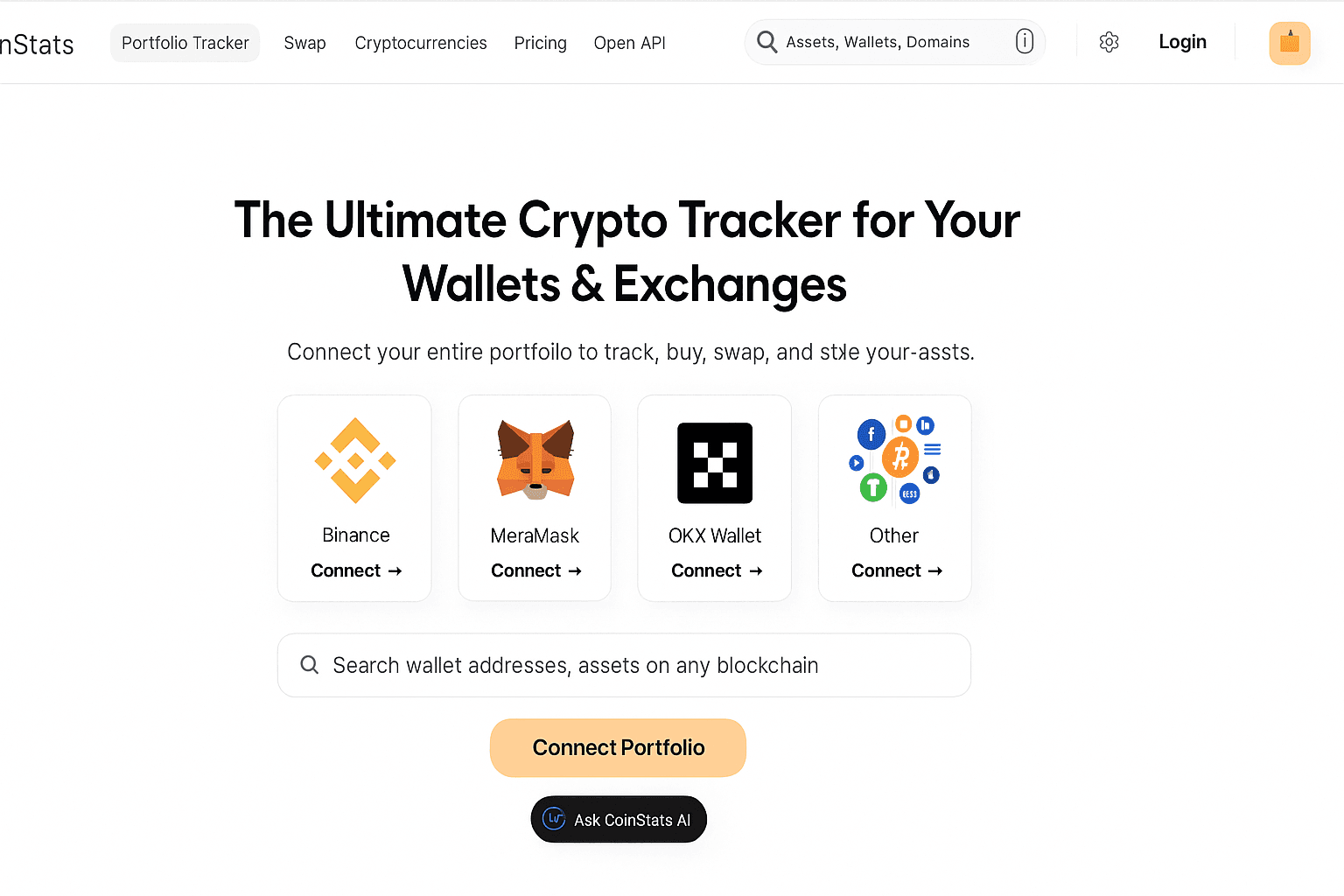
Core alerts are free, while extra customization needs a subscription. Setup takes longer than on simpler apps because you have to connect accounts or wallets, but the dashboard is useful once everything is in place.
- Best use - multi-wallet portfolio tracking with alerts
- Main drawback - less focused for active execution
Top Exchange Apps With Native Alerts
Most major exchanges now include built-in price monitoring. These alerts are usually free for verified users, and they tend to arrive fast because the exchange reads its own order book. They are narrower than a third-party service, though that can actually help if you mainly trade in one place.
CEX.IO for Fast Monitoring and Trading
CEX.IO combines watchlist monitoring with direct execution, which makes it practical for users who already trade there. The app includes live market views, portfolio tracking, and quick actions such as Instant Buy or Spot Trading. In real use, this setup feels smooth because you can go from signal to order without jumping into another app.

The platform covers more than 300 trading pairs and supports fiat balances in USD, EUR, and GBP. Stop-loss and take-profit orders also help if you want the platform to act once price reaches a target. That is close to an alert with built-in execution.
- Strong point - quick path from watchlist to trade
- Trade-off - narrower asset coverage than a large aggregator
CEX.IO works best for users who want their alert workflow and order flow under one roof. If you need deeper market triggers, pairing it with Cryptocurrency Alerting or TradingView makes sense.
Kraken Pro for Native Chart-Based Setup
Kraken Pro has one of the cleanest native alert flows on a major exchange. You can place alerts directly from the chart on the web version, and they sync to mobile. It also includes volatility alerts for watchlist assets, which is handy when you want notice of unusual movement without setting every level by hand.
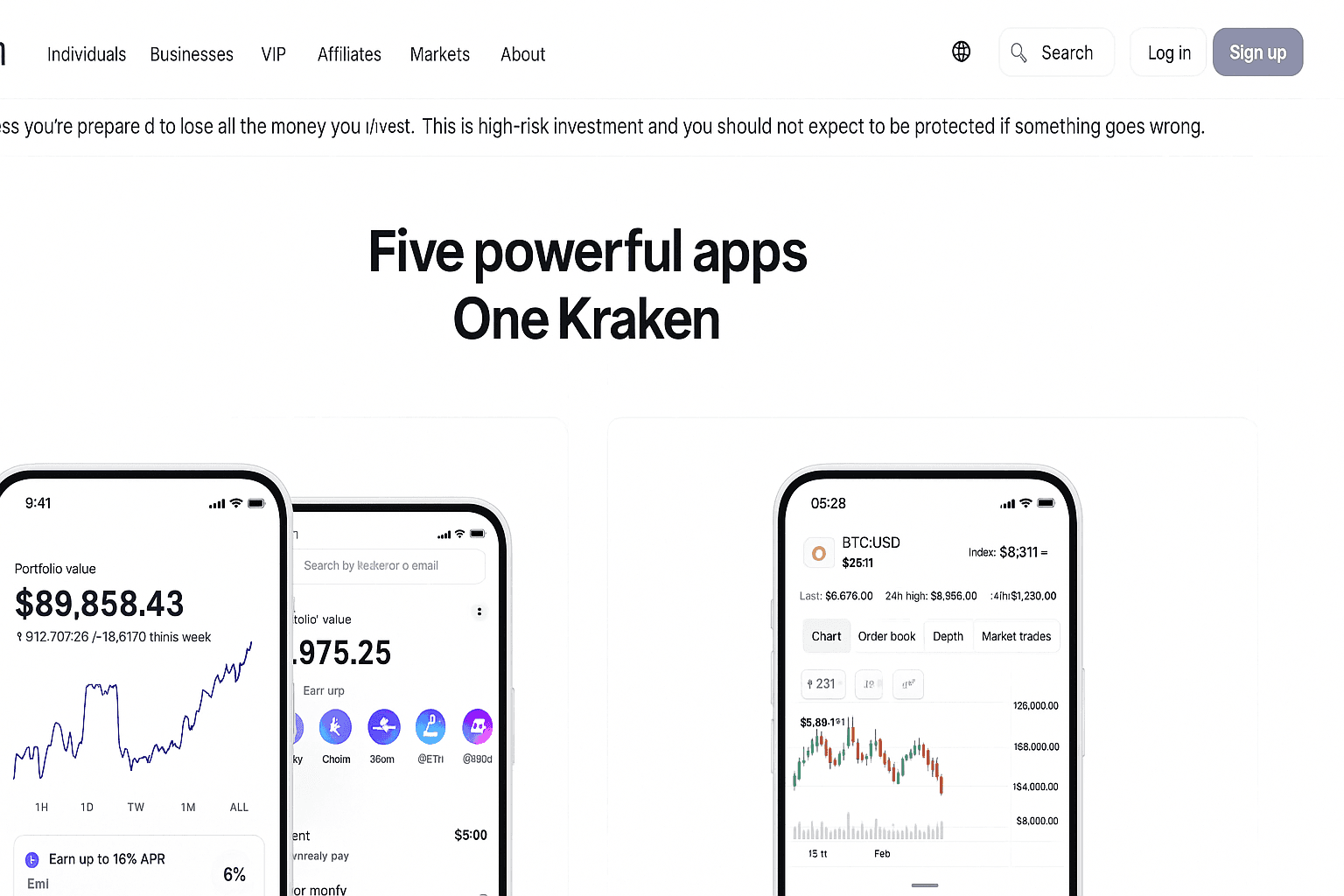
Push and browser delivery are both supported. I found the right-click chart workflow faster than most exchange apps, especially during active sessions. Coverage is naturally limited to Kraken markets, and advanced indicators are still outside the native tool.
- Best part - quick setup from the chart
- Limitation - no SMS or email for alerts
Coinbase for Simple Alerts in a Familiar App
Coinbase keeps things approachable. Its alerts run on the platform price feed and tie into your watchlist, with delivery through push, in-app messaging, and Email. Setup is quick on both mobile and desktop, which makes it a solid starting point for newer users.
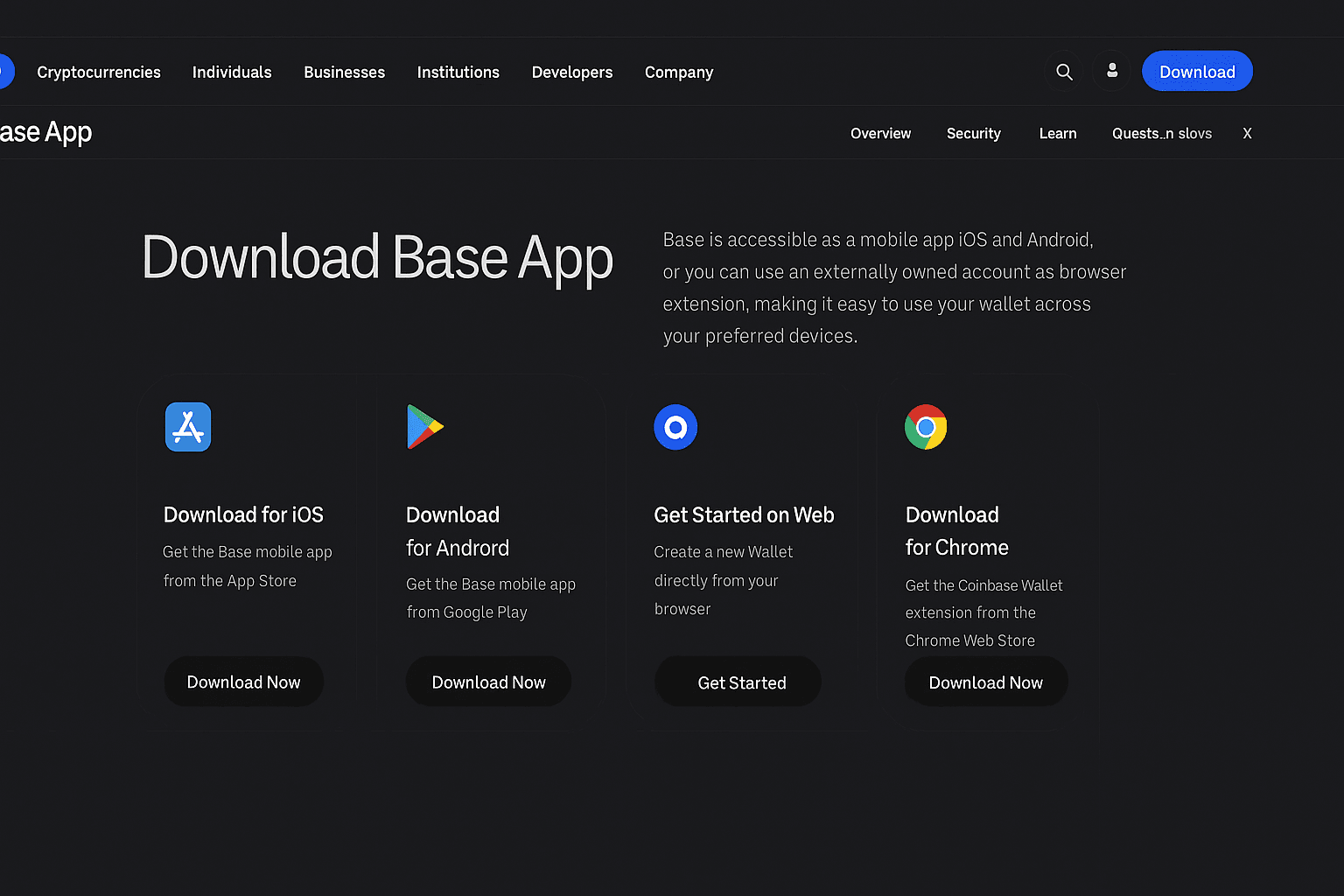
The app supports more than 200 assets. You can set multiple notices per coin and control how often they fire. It is dependable for straightforward tracking, though it does not offer indicator-driven logic and some users report push delivery becoming inconsistent over time.
- Best use - simple monitoring for newer traders
- Main drawback - limited alert depth
Binance for Wider Exchange Coverage
Binance gives users access to alerts across more than 500 cryptocurrencies, which is strong for an exchange-native system. Push and Email are both available, and users can also set percentage-based conditions rather than only fixed price levels.
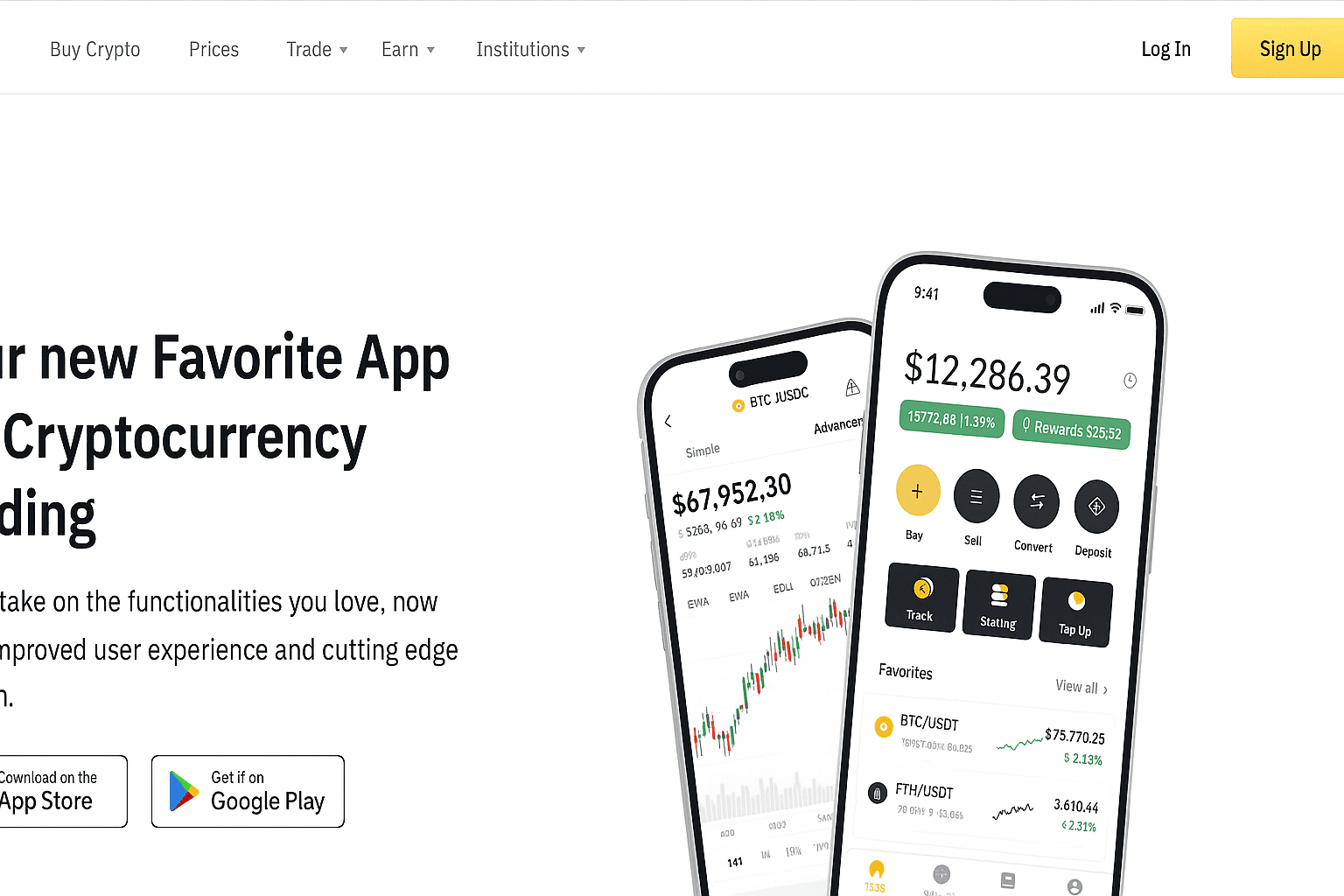
That percentage option is useful during fast volatility because you do not have to keep moving static levels. The product remains free for verified accounts. Regional restrictions still matter, though, and the available assets differ between the global platform and .
- Best part - broad exchange coin coverage
- Limitation - regional product differences
Bybit for Derivatives Traders
Bybit leans more toward active market participants, especially in derivatives. Its native system covers spot, futures, and options, with support for level alerts and percentage alerts. The exchange also integrates well with TradingView, so users can route more technical conditions into automation through an API.
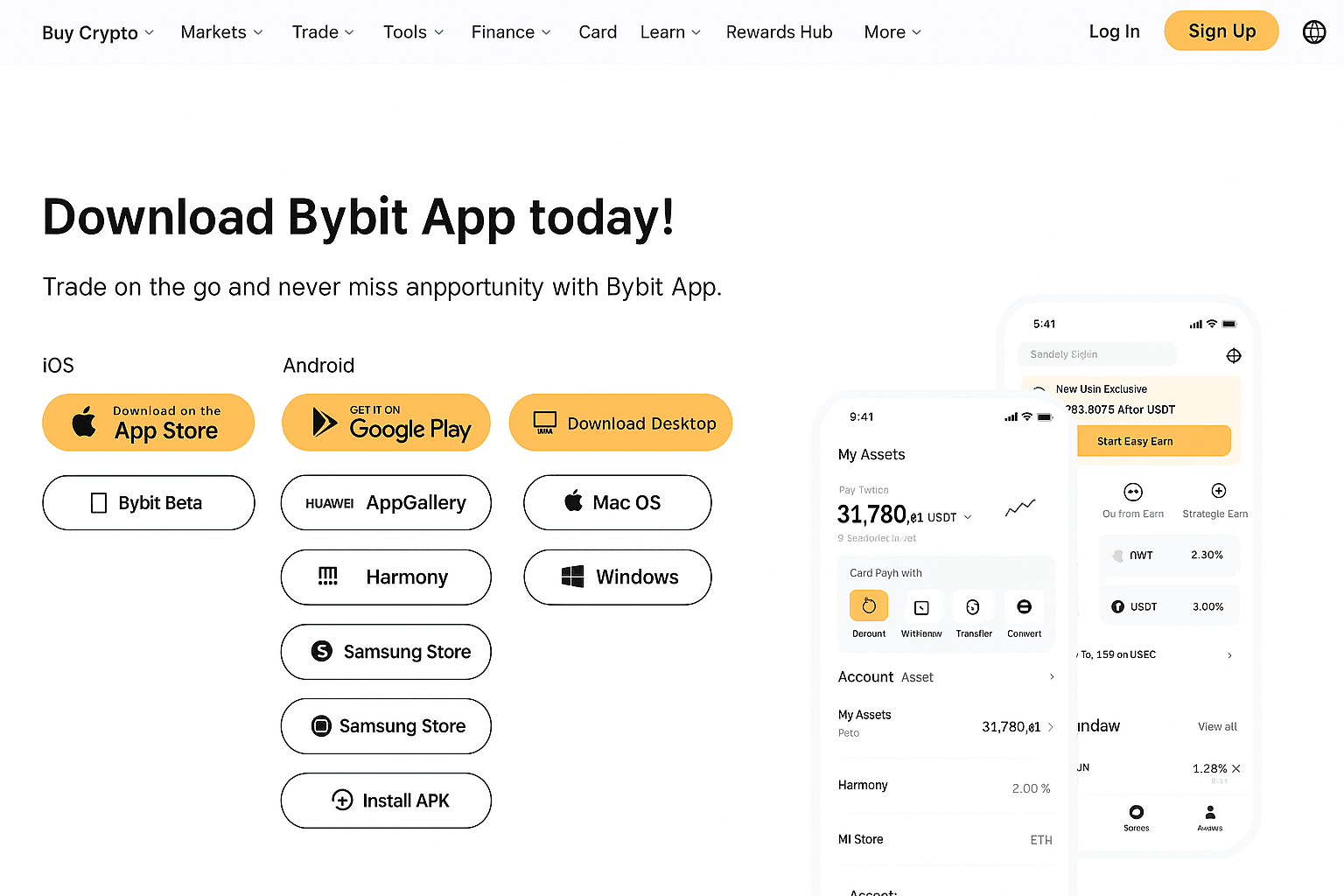
The setup is free with a standard account and works best outside the US. If your focus is spot only, a Kraken or Coinbase flow may feel cleaner. If you trade derivatives, Bybit is the stronger fit.
- Best use - futures and options workflows
- Main drawback - unavailable to US users
How to Pick the Right Tool
The right choice depends on how you trade and how much detail you need. A long-term holder who checks prices once in a while can stay happy with CoinMarketCap or CoinGecko. An active user on one exchange will usually get faster execution by sticking with the native app. If you trade across several venues, Cryptocurrency Alerting stands out because it tracks multiple exchanges and offers more than one delivery method.
Technical users are a separate case. If your setup depends on RSI, MACD, EMA, or custom chart logic, TradingView is still the stronger option. It handles indicator-based conditions better than basic price apps. Users who need emergency notices through phone calls should also lean toward a dedicated alert service rather than a standard exchange app.
People also ask how to get alerts on crypto prices. The short version is simple - install an alert app or open the exchange app you already use, choose a coin, decide if the trigger should fire above or below a level, then pick the delivery channel. Many tools also let you choose the quote currency, such as USD or EUR, and sometimes the exact exchange feed.
Another common question is what the best app is for tracking crypto prices and receiving alerts. There is no single answer for every workflow. For broad market data and simple notifications, CoinGecko and CoinMarketCap are strong. For flexible delivery and more signal types, Cryptocurrency Alerting is better. For direct action inside the same app, and Kraken Pro feel practical.
One more question keeps coming up in 2026 - can AI or ChatGPT predict crypto prices or provide signals. None of the apps covered here stand out for AI-driven predictive alerts as a core feature. In practice, these tools are still built around user-set rules like price levels or percentage moves, while AI stays more useful for research than live execution.
Ways to Avoid Alert Fatigue
Useful alerts start with meaningful levels. Place them around support, resistance, or a personal entry and exit zone. Random numbers tend to produce noise.
It also helps to set one trigger above the current market and one below it. That gives you coverage in both directions without flooding your phone. If you build too many alerts on the same asset, fast market swings can trigger a cascade.
Review your active conditions from time to time. Old alerts tied to a previous thesis become background noise, especially after a major shift in trend or macro sentiment around fiat money and stablecoin flows.
Common Issues and Quick Fixes
Silent push alerts are usually caused by phone settings. Check notification permissions and any battery-saving rules that stop background activity. On Android, that is a frequent reason alerts arrive late or never arrive.
If SMS fails, switch to push, Telegram, or a phone call if your service supports it. Carrier filtering remains a real problem for crypto-related messages in parts of North America.
Another issue is the wrong market pair. BTC and XRP Ledger assets can trade against different quote currencies, and a BTC or XRP alert tied to one pair may not line up exactly with another. Always confirm whether the trigger is reading USD, USDT, or another market.
Repeated firing usually means frequency settings are too loose. Many apps let you limit an alert to a single trigger or a cooldown window, which helps a lot in choppy conditions.
How to Track Prices in the App
The mobile experience is straightforward. You can build a watchlist, open live charts, and monitor your portfolio from one place. The app also supports stop-loss and take-profit orders, so a price move can turn into an automatic response without much delay.
That setup is why many users combine it with a separate alert platform. The dedicated service watches the wider market, and handles the actual trade. If your goal is speed from signal to execution, that pairing works well.
FAQ
What Is the Best App for Crypto Price Alerts in 2026
For deep customization, Cryptocurrency Alerting leads the pack. For direct monitoring and execution in one app, is a strong choice. TradingView remains the better fit for advanced chart signals, while CoinMarketCap and CoinGecko are solid free options for lighter use.
Does Kraken Have Native Alerts
Yes. Kraken Pro supports native alerts for spot and futures markets. They sync between web and mobile, and you can place them directly from the chart. Delivery works through push notifications and browser notices.
Does Bybit Support Alerts
Yes. Bybit supports level alerts and percentage alerts across spot, futures, and options. It also works well with TradingView-based logic through integration tools. The service is not available to US users.
Are Crypto Alerts Free
Many are. Exchange-native tools on , Coinbase, Kraken, Binance, and Bybit are usually free for verified accounts. CoinMarketCap and CoinGecko also provide free options, while advanced services often reserve extra channels or unlimited rules for paid tiers.
How Do I Get Alerts on an iPhone
Install a compatible app from the App Store, enable push notifications during setup, and confirm in iPhone settings that the app can send notices while the device is locked. Without that permission, even a good alert engine may stay silent.
Which Apps Can Send SMS
Cryptocurrency Alerting supports SMS, and some paid competitors do as well. SMS crypto alerts are not reliably available worldwide. North America is the main problem area mentioned here because carrier filtering can block messages, and some providers also limit delivery by country.
Can I Set Percentage-Based Alerts
Yes. Several tools support this, including Cryptocurrency Alerting, Binance, and Bybit. A percentage trigger is useful if you want an alert when Bitcoin moves a set amount within a chosen time window.
Should I Trust an Exchange App or a Third-Party Service
Exchange-native alerts tend to be faster because they use the platform’s own feed. Third-party services usually win on flexibility and coverage. Many active users keep both running at the same time.